
Ministry of Finance updates 3 inflation scenarios for 2026
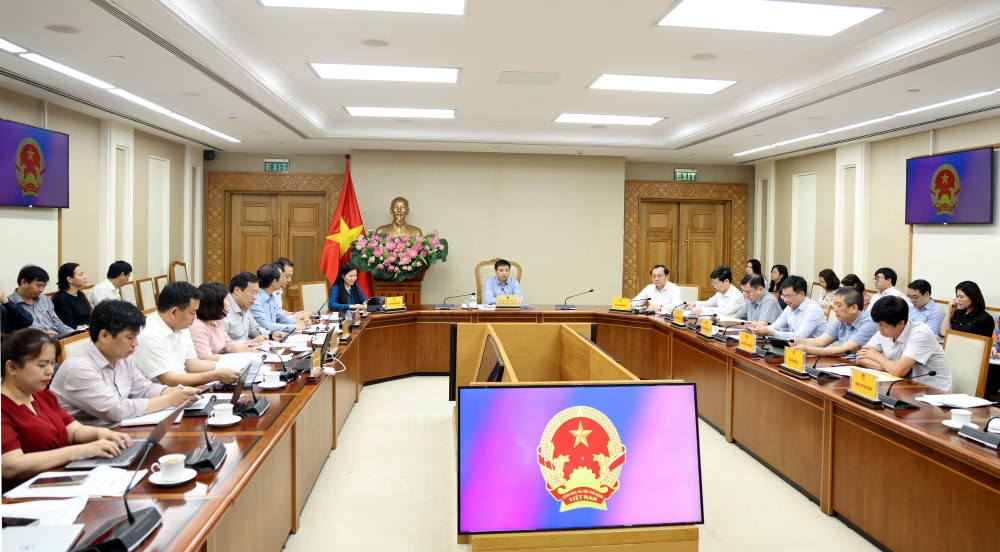
On April <>an>23, at the Government Headquarters, Deputy Prime Minister Nguyen Van Thang chaired a meeting of the Steering Committee for Price Management.
Reporting at the meeting, Deputy Minister of Finance Le Tan Can said that there have been many solutions to support people and businesses, stabilize the macroeconomy such as continuing to reduce 2% value-added tax, exempting and reducing 47 fees and charges until the end of 2026; supplementing 8,000 billion VND of state budget expenditure estimates to advance to the Gasoline and Oil Price Stabilization Fund.
The Ministry of Finance updates 3 scenarios of inflation in 2026 increasing in the range of 4.5%; 5% and 5.5%. The State Bank of Vietnam forecasts average inflation in 2026 to increase in the range of 5±0.5%.
International organizations recently updated Vietnam's average inflation forecast at about 3.8-4.9%.
According to a representative of the Ministry of Construction, in April, the Ministry organized a number of inspection teams in localities on price listing and declaration and issued documents to rectify existing problems.
The Ministry is mobilizing businesses to reduce parking prices, costs related to loading and unloading, or reduce prices of services not related to gasoline prices to share difficulties with transport businesses.
Do not take advantage of cost fluctuations to increase prices unreasonably
At the meeting, Deputy Prime Minister Nguyen Van Thang requested ministries and sectors to carefully assess the factors that are having major fluctuations such as fuel prices, construction materials and some other factors when the base salary is expected to increase from July 1. 2026. From there, the Steering Committee agreed on operating scenarios for the remaining months of 2026.
Ministries and sectors need to be proactive and flexible in price management and administration; direct and require businesses to strictly implement price declaration and listing according to regulations and not take advantage of cost fluctuations to increase prices unreasonably.
Focus on solutions to ensure supply and demand regulation, especially for essential commodity groups such as gasoline, electricity, food, and input materials for production.
Promote inspection, examination and market supervision, inspect the compliance with the law on prices to promptly detect and handle acts of speculation, hoarding goods to manipulate prices or violations of the law on prices, cases of not promptly reducing prices for goods with input costs that have been adjusted down according to world prices.
Inspect and strictly handle violations in gasoline and oil transportation business in border areas to enjoy price differences.
The Ministry of Industry and Trade presides over and coordinates with relevant agencies to implement solutions to ensure the supply of gasoline and LPG to the domestic market in all situations and manage gasoline and oil prices according to regulations...


