
The arrangement of villages and residential groups in 2026 is identified as an important step in the roadmap for rearranging units at the grassroots level nationwide. The merger of villages and residential groups is not only aimed at streamlining the apparatus but also towards improving the efficiency of community governance, in line with the requirements of decentralization and delegation of power to grassroots levels.
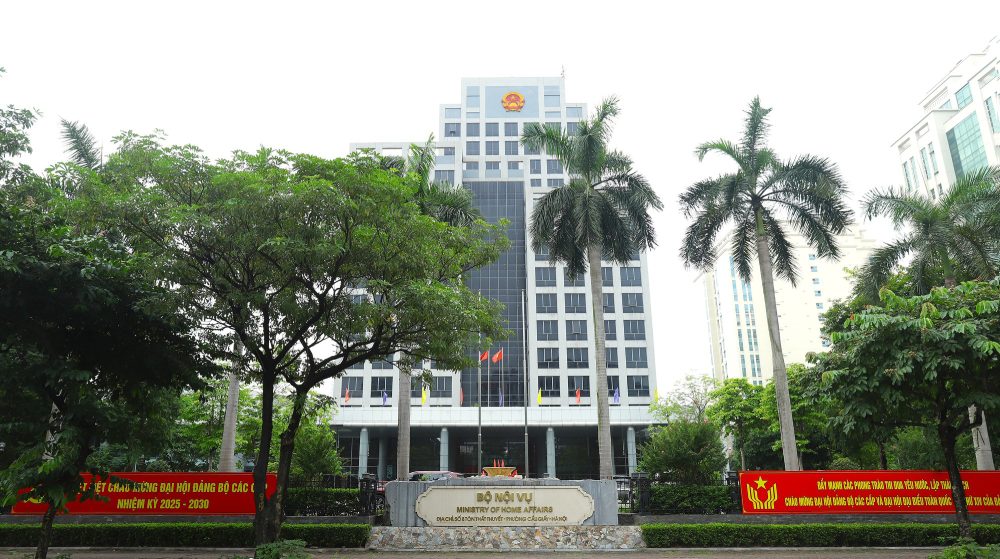
According to Notice No. 143/TB-VPCP dated March 20, 2026, Deputy Prime Minister Pham Thi Thanh Tra requested the Ministry of Home Affairs to urgently complete many key tasks on institution building in 2026.
First of all, urgently complete and submit to the Government a Decree regulating the organization and operation of villages and residential groups and some regimes and policies for non-specialized workers in villages and residential groups before April 30.
At the quarterly meeting in the first quarter of 2026 with provincial and city Party committees, Party committees, Party committees, 4 Offices, and non-business units directly under the Central Government, on April 23, Politburo member, Standing Secretary of the Secretariat Tran Cam Tu requested the Central Organization Committee to promptly summarize one year of operating the 3-level government; propose solutions to remove difficulties and obstacles to improve the operational efficiency of commune and ward-level governments.
Notably, the Standing Committee of the Secretariat requested to urgently complete the arrangement of residential groups, villages, and public non-business units according to regulations.
Thus, the review and arrangement of villages, hamlets, and residential groups will be implemented nationwide in 2026. Currently, many localities are developing projects to rearrange villages and residential groups.
By the end of 2021, the whole country had 90,508 villages and residential groups. Of which, there were 69,580 villages and 20,928 residential groups.
Article 7a of Circular 04/2012/TT-BNV (amended and supplemented by Circular 14/2018/TT-BNV) stipulates the conditions for merging villages and residential groups as follows:
- For villages and residential groups with a household size of less than 50% of the household size specified in Clause 1, Article 7 of Circular 04/2012/TT-BNV, they must merge with adjacent villages and residential groups;
- For villages and residential groups reaching 50% or more of the scale of households according to the provisions of Clause 1, Article 7 of Circular 04/2012/TT-BNV in places that meet the conditions, mergers are carried out;
- In the process of implementing village and residential group mergers, it is necessary to consider the specific factors of geographical location, terrain and customs and habits of the residential community in the locality;
- The project to merge villages and residential groups must be approved by over 50% of voters or voters representing households of each merged village or residential group.
Notably, the names of villages and residential groups established or merged must not coincide with the names of existing villages and residential groups in the same commune-level administrative unit;
The scale of households for villages in communes is specified in Clause 1, Article 7 of Circular 04/2012/TT-BNV (amended and supplemented in Circular 14/2018/TT-BNV) as follows:
- Villages in communes in the midlands and northern mountainous provinces with 150 or more households;
- Villages in communes of the Red River Delta provinces with 300 or more households;
- Villages in communes of central provinces with 250 or more households;
- Villages in communes of southern provinces with 350 or more households;
- Villages in communes in the Central Highlands provinces with 200 or more households.


