
On the afternoon of September 17, in Hanoi, Politburo Member, Secretary of the Party Central Committee, Head of the Central Propaganda and Training Commission Trinh Van Quyet had a working session with agencies on promoting the role of culture in contributing to the economic growth goal in the spirit of the 14th Party Congress Resolution.
According to the report of the Central Propaganda and Training Commission, in recent years, especially since the 14th Party Congress, the requirement to promote cultural resources to serve national development has been particularly concerned and directed more and more specifically and drastically by the Central Government, the Politburo, the Secretariat and the General Secretary and President.
Culture is not only identified as the foundation and goal of development, but also as "an important endogenetic resource, great driving force, pillar, regulating system for rapid and sustainable development of the country"; it must be exploited and promoted effectively to create products, services, jobs, income, added value, improve competitiveness, brand and national soft power.
In which, the National Assembly has promptly institutionalized the Party's policy, creating a legal corridor and new resources for cultural development.
The Government and ministries and sectors focus on concretizing, organizing implementation, and gradually promoting cultural resources associated with socio-economic development.
Press, publishing, and media agencies promote the role of both creating direct value and spreading cultural value.
The policy of promoting the role of culture in economic growth has been increasingly identified and gradually transformed into mechanisms, policies, resources, and action programs.
Some industries and fields have formed markets, generated revenue, jobs and had a clearer spillover effect on tourism, trade, services, and national image and brand promotion.
However, the current results only show the scale and trend, not enough basis to accurately determine how much culture contributes to GDP/GRDP and how much to annual growth.
Therefore, the requirement is not only to continue to expand cultural activities, but also to simultaneously improve the capacity to transform cultural resources into added value and build a data system, unified measurement methods to manage, allocate resources and evaluate results.
In the new period, the rapid development of science and technology, innovation, digital transformation and international integration are profoundly changing the methods of creating, producing, distributing and consuming cultural products, opening up new development spaces, and at the same time posing requirements to improve creative capacity, master technology, data, copyright, intellectual property and the market.
Cultural development must be more closely linked to science and technology, innovation, private economic development and international integration; forming products, services, brands and value chains with high quality, competitiveness and added value.
The urgent requirement is to simultaneously improve the capacity to create value and the capacity to identify, statistically, and measure the value created by culture.
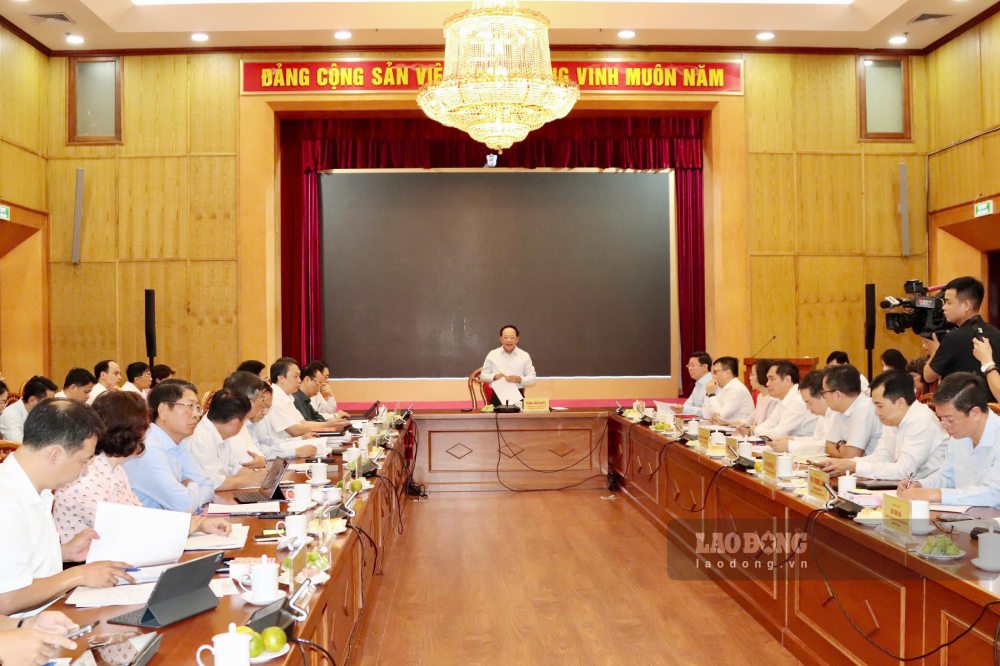
Speaking to orient the working session, Head of the Central Propaganda and Training Commission Trinh Van Quyet proposed to focus on discussing and clarifying 5 issues:
First, identify and quantify the contribution of culture to growth.
Second, clearly identify areas that are likely to become new growth drivers.
Third, correctly identify and remove key bottlenecks that are hindering the transformation of cultural resources into values.
Fourth, identify the position of digital transformation, data, intellectual property and innovation in creating a leap in scale.
Fifth, coordination, monitoring, evaluation and communication mechanisms.


