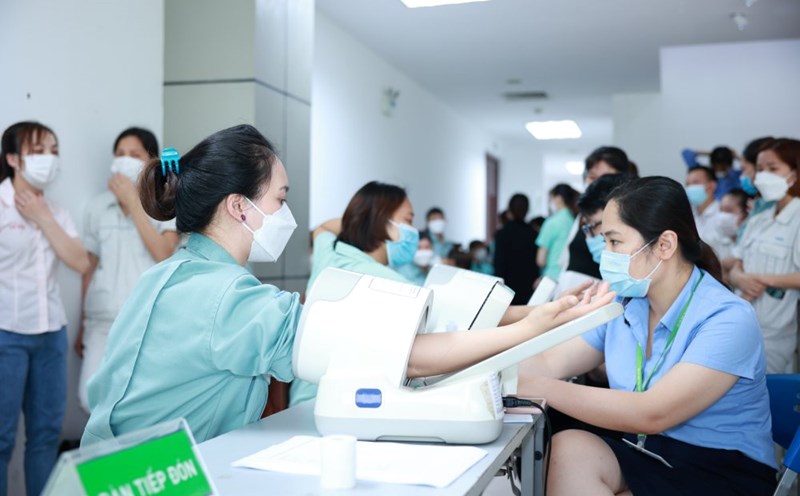
The National Assembly has just discussed a draft Resolution on a number of breakthrough mechanisms and policies for the work of protecting, caring for and improving people's health.
Delegate Nguyen Anh Tri (Hanoi Delegation) agreed with the goal of exempting hospital fees for all people by 2030, but suggested implementing it earlier for people with incurable cancer, chronic diseases and especially patients on dialysis.
According to the delegate, these are people in very difficult circumstances, the cost of medicine and treatment services is very high.
Speaking with Lao Dong on December 3, delegate Nguyen Hoang Bao Tran (HCMC Delegation) said that considering early exemption of hospital fees for people with incurable cancer, severe chronic diseases and especially patients on dialysis is worth paying attention to.
To implement this important policy soon, the delegate said that it is necessary to calculate resources very carefully. Exemption from hospital fees for severely ill groups will increase the cost of payment from the Health Insurance Fund (HI) and the State budget.
Along with the policy consensus, the Government and ministries need to review the number of patients, total treatment costs, ability to balance funds, as well as consider solutions to reduce the burden such as negotiating drug prices, adjusting technical norms, and increasing the efficiency of health insurance fund management.
The feasible option is to implement according to the roadmap earlier than 2030 but with focus. The delegate gave an example of giving priority to patients with dialysis and terminal cancer; applying the ceiling for payment or support level according to disease groups; combining support from socialized sources and charity funds.
"The proposal is reasonable, timely and humane, but to do so, it requires a careful calculation of finances and a suitable roadmap to ensure the sustainability of the health insurance system," the delegate emphasized.
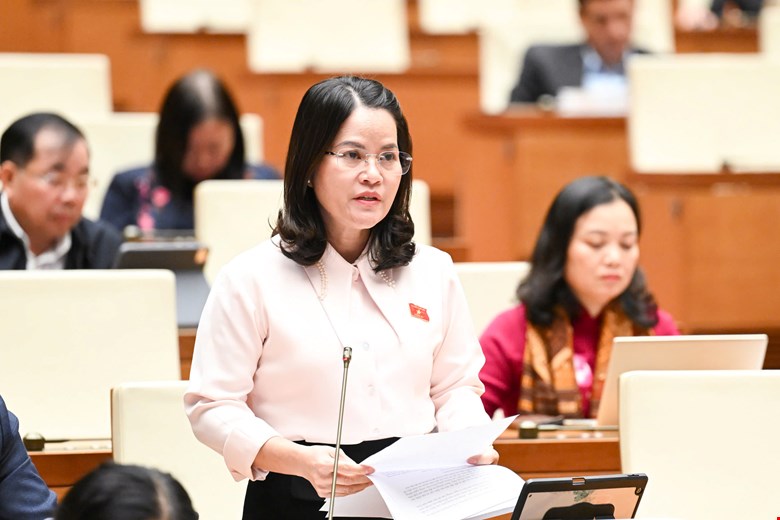
Discussing, delegate Nguyen Thi Viet Nga (Hai Phong delegation) agreed with the proposal of National Assembly delegate, Professor, Dr. Nguyen Anh Tri on the above content.
Delegate Nguyen Thi Viet Nga said that any delay in the policy would mean that they would continue to suffer pressure beyond their family's ability to self-reliance.
In fact, serious chronic diseases and cancer are not only a continuous battle, but also a journey of economic exhaustion. The cost of medicine, periodic tests, hospital stays, travel and care, for many families, is a burden beyond their ability to pay.
For patients on dialysis: week 3 sessions, month 12 sessions, treatment rounds take up almost all of their life. If we have to bear a large hospital fee for each blood filtration, it is no different from a form of "double disadvantage": both suffering physical pain and having to worry about every cost to maintain life.
"The National Assembly and the Government always emphasize the goal of taking people as the center of all policies, and in that spirit, this group of patients completely deserves priority.
Some opinions are concerned that early hospital fees may put pressure on the Health Insurance Fund. However, we need to look at the problem from an overall perspective," said the Vietnam-Russia delegate.
According to the female delegate of Hai Phong delegation, the number of cancer patients or chronic diseases at the severe stage is not small, but this is a group that is clearly identified and managed with verified medical records, not a group prone to fraud.
Moreover, the cost of supporting this group is essentially an investment in social security and stability, because when patients are well cared for, the burden on the family is reduced, the quality of life is improved and the positive consequences are great.
The delegate said that the Government needs to conduct thorough research but should not delay until 2030, because for many patients, 2030 may be too late. It is necessary to develop a shortened roadmap, possibly from 2026 or 2027 and at the same time calculate additional financial mechanisms for the Health Insurance Fund in the initial stage to ensure sustainability.