
Eastern Hanoi area and price increase cycle according to infrastructure: "Drifting point" 2026 – 2027
Observing the previous development cycles of Hanoi real estate, from the West to the Southwest, shows a fairly clear rule: real estate prices usually increase the most not when the infrastructure is completed, but during the period when the infrastructure enters the peak of deployment and starts operating.
For example, in the West Hanoi area, an apartment project in Tay Mo ward recorded a current price level of 70-120 million VND/m2, while about 5 years ago it only fluctuated at 28-30 million VND/m2, which is more than 3 times higher in 5 years. This increase is associated with the advantage of directly benefiting from major infrastructure axes such as Thang Long Avenue, Le Quang Dao extended, Ring Road 3.5 and National Highway 70.
Similarly, in the Southwest area, where public transport infrastructure, especially the metro line, plays a role in repositioning the price level, a project about 1km from La Khe station has increased from 27-28 million VND/m2 in 2021 to 60-70 million VND/m2 at present, equivalent to more than double after about 4 years. These developments show the direct impact of transport infrastructure on real estate price levels in the "fall point" of the growth cycle.
This development is repeating in the East as a series of large-scale infrastructure projects are being simultaneously accelerated, creating a "double boost" in both urban connectivity and market psychology. Projects such as Tu Lien bridge, Thuong Cat bridge, Hong Ha bridge, Metro Line 2 and Metro Line 5, along with Ring Road 3.5 and Ring Road 4.
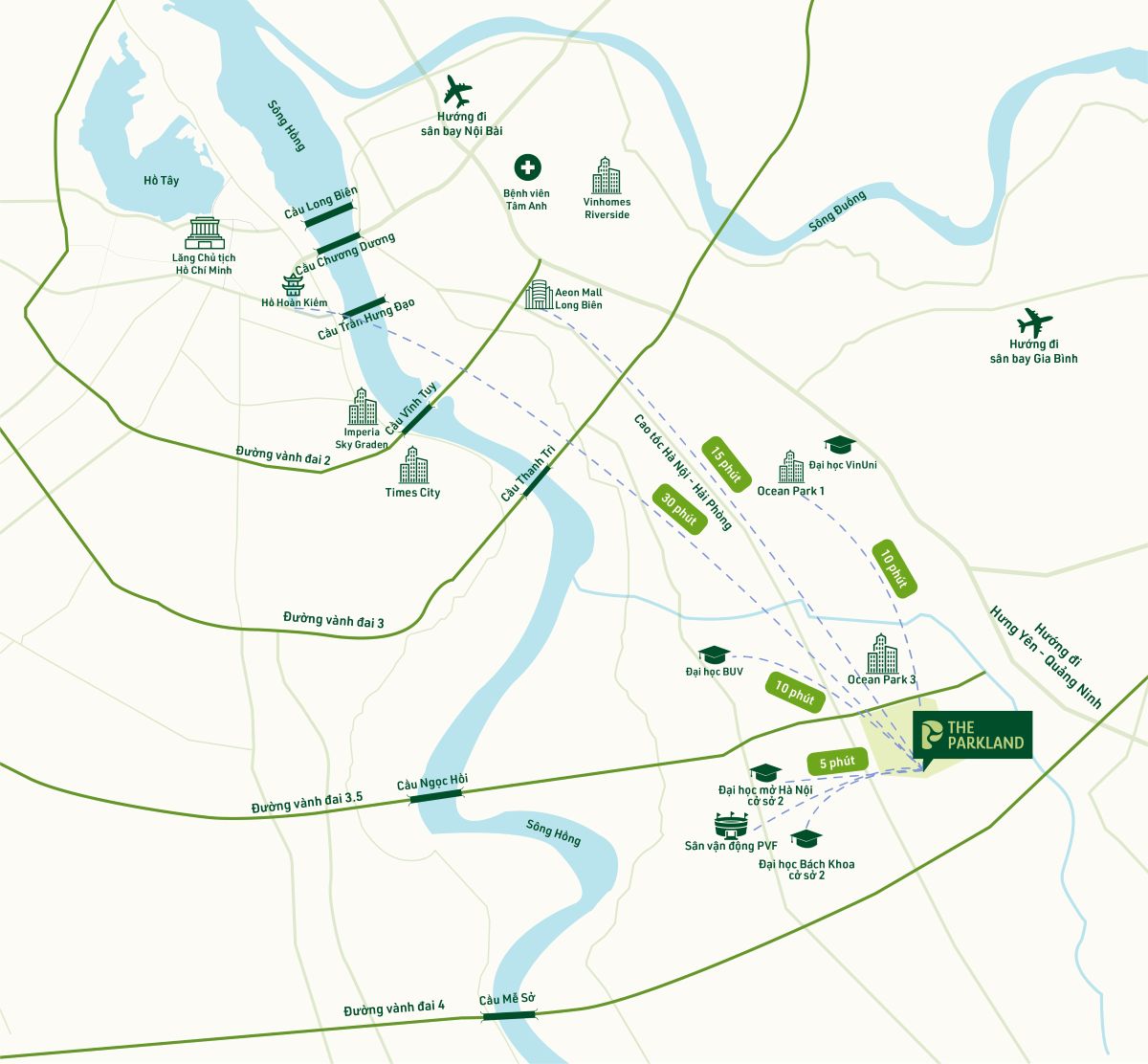
According to the plan, most of these projects will gradually be completed in the period 2026 - 2027, a time considered by many investors as a milestone to establish a new price level for the East. At that time, real estate will not only benefit from shortening travel time, but also from population movements, capital flows and commercial - service activities according to infrastructure.
It is noteworthy that currently, real estate prices in the East are still in the "pre-completed infrastructure area". The price level does not fully reflect the connection factors in the future, while the infrastructure deployment roadmap has been clearly established. Veteran investors assess: this is the stage where the opportunity cost is lower than waiting for the infrastructure to be completed, but the potential price increase range is greater. In other words, the current period allows investors to assess real estate price growth based on actual infrastructure deployment factors, instead of just relying on expectations as in earlier cycles.
Pre-purchase of completed infrastructure: the advantage belongs to products with sufficient competitiveness
The Parkland belonging to Imperia Ocean City complex is one of the few projects located directly on the strategic infrastructure shift axis to the East of Hanoi. The location of the project is assessed to benefit directly from the key infrastructure chain being activated, including Gia Binh airport in the future, metro lines oriented to the East, along with the Ring Road 3.5 and Ring Road 4 system being accelerated. When these infrastructure projects are gradually completed, the area will witness a clear shift in population and investment activities, leading to changes in the price level in the medium and long term.
Based on that strategic connection, The Parkland continues to benefit from the existing amenities and infrastructure that has been put into operation in the area. From the project, residents can quickly access the amenities of Ocean Park 2 & 3, connect to AEON Mall Long Bien in about 15 minutes, universities and sports complexes in a radius of 5 minutes.
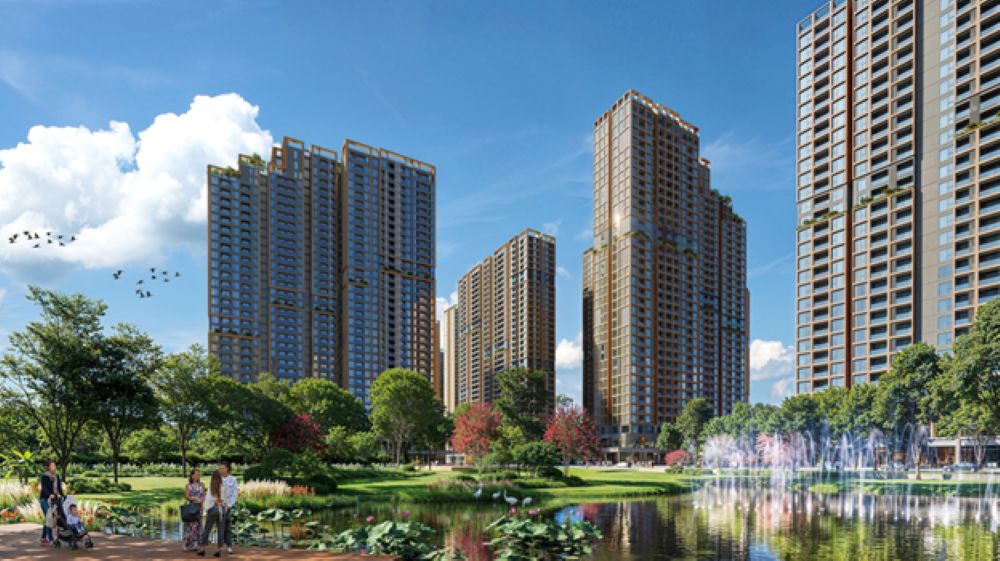
The next difference of The Parkland lies in the overall planning quality. On the 33.68 ha land fund, the project is developed according to the urban archipelago model. Instead of spreading density, the building blocks are planned into separate clusters, each cluster playing the role of a "living island" with clear spatial characteristics, and is connected by a green landscape and water surface in a soft linkage form.
The focus of the plan is the 3.6-hectare central park, which is also the first central park in Ocean City to play the role of a green core regulating the entire living space. From this green axis, a series of satellite parks are arranged interspersed in each building cluster, creating a continuous landscape network, helping green space to be present throughout instead of being locally concentrated.
In addition, the project's utility system is developed in a modern and multi-layered direction, covering from walking spaces, water surfaces, exercise and relaxation areas to community living spaces, fully meeting the living - resting - connecting needs of residents.
The Parkland is a project with the participation of international consulting units in key items. The overall planning is undertaken by NBBJ, a global architectural brand behind many urban projects and iconic works. The interior space is designed by Ong&Ong (Singapore), an experienced unit in the Asian market, aiming for flexibility and sustainable usability for many residential groups, from young people to multi-generational families. The presence of leading international brands is a guarantee of product quality.
In the context of the Eastern region's infrastructure accelerating and expected to be completed in the period 2026 - 2027, projects like The Parkland converge three important factors: location directly benefiting from infrastructure, price level still in the pre-new cycle stage, and planning quality sufficient to serve real housing needs and long-term investment. As the market increasingly prioritizes quality over quantity, this is a product group that is assessed as having a basis for deciding to spend money early.
It's a bit of a bit of a bit of a bit of a bit of a bit.


