
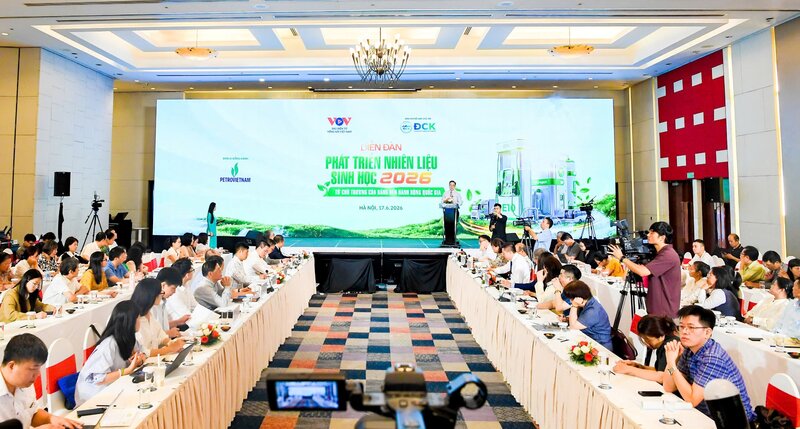
On the morning of June 17 in Hanoi, VOV in coordination with the Department of Innovation, Green Transformation and Industrial Promotion organized the "Biofuel Development 2026" Forum, with the companionship of BSR.
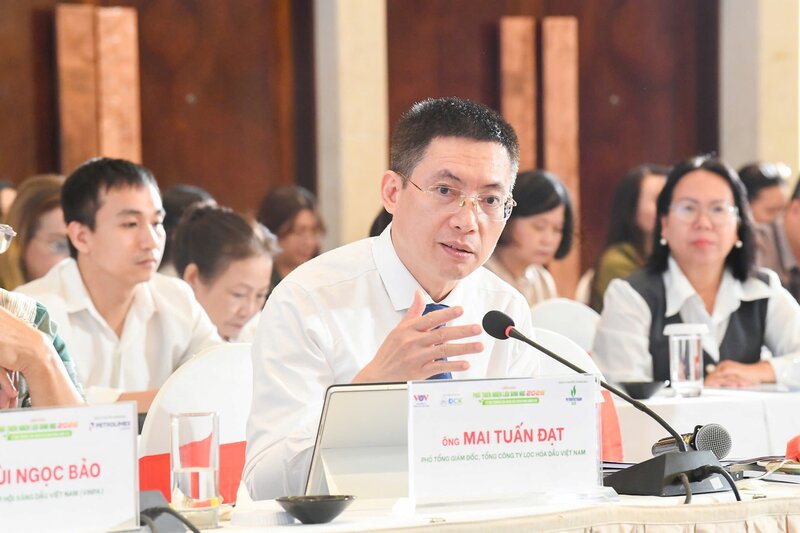
Speaking at the forum with the theme "What to do to build a sustainable and competitive biofuel ecosystem", Mr. Mai Tuan Dat - Deputy General Director of Vietnam National Refinery and Petrochemical Group (BSR) shared highly practical insights from the perspective of a fuel producer and supplier.
Looking back at the fuel conversion process, Mr. Mai Tuan Dat affirmed that BSR has always been a pioneer. Since 2015, implementing Decision 53 of the Government, Dung Quat Refinery has deployed the production and distribution of E5 gasoline in Quang Ngai. Over a decade, reality has proven that bio-gasoline operates smoothly, without any incidents related to consumers' engines or vehicles.
With careful preparation from early on, BSR has now developed additional capacity to blend E10 gasoline. Currently, our E10 gasoline blending capacity reaches about 150,000 cubic meters/month, the rest still maintains traditional gasoline lines. The supply preparation process, under the close coordination of the Ministry of Industry and Trade, is taking place very smoothly and stably," Mr. Dat emphasized.
Beyond the "shadow" of cassava to solve the food security problem
When E10 is covered nationwide, the demand for Ethanol (E100) is forecast to reach about 1 million cubic meters per year. At current prices, this market will create an economy of approximately 20,000 billion VND. If raw material costs account for about 70%, more than 10,000 billion VND will directly flow into the pockets of farmers, fishermen and forestry workers. This is a huge number, opening up sustainable livelihoods for millions of people.
However, the Deputy General Director of BSR also frankly pointed out major bottlenecks if only developing biofuels according to the old path. Currently, Ethanol production materials in Vietnam mainly still rely on cassava, sugarcane or corn.
If we only use cassava, we will face fierce competition with the cassava starch industry - an industry that brings higher profits to farmers. If we use sugarcane and corn, the story will directly collide with food security issues. Therefore, biofuels in the future cannot and should not only be associated with cassava or corn," Mr. Dat analyzed.
Agricultural waste treatment technology: Key to the future
Referring to the successful lesson of Brazil - a country that turns biofuels into a national advantage, BSR representatives proposed that Vietnam should expand the concept of "biological materials". That must be the full exploitation of biological factors from both plants and animals, from land to water. In particular, by-products and waste products from agricultural, forestry and fishery products such as fish fat or straw should be considered a priceless resource.
Mr. Dat gave an intuitive example of the situation of burning straw after each harvest in rural areas today. This not only causes waste but also creates major consequences for environmental pollution and urban dust.
The optimal solution at this time is to prioritize investment and development of technology to process agricultural by-products and by-products into biofuels. Converting straw into energy is one arrow that strikes two targets. Therefore, I really hope that state management agencies will have policies to create and encourage businesses to develop this technology, helping to thoroughly exploit Vietnam's resource advantages," the Deputy General Director of BSR proposed.


