The nightmare of recurrence of disease due to severe spinal stenosis
After the first lumbar spinal disc herniation surgery, Ms. Trang continued to fall into a state of severe back pain, her right leg was numb and weak, and walking became increasingly difficult. There were days when she could only lie on her side, contracting her right leg, not daring to change positions for fear of the pain breaking out.
The most painful thing is the back area, then pulling down to the legs, sometimes it's so painful that I can't walk. I've had surgery once before, so when I feel pain again, I'm devastated and worried, afraid my back will be completely damaged, I don't know if there's any other place to treat it," Ms. Trang shared.
After a period of medical treatment but the condition did not improve, she and her family decided to travel hundreds of kilometers from the Central Highlands to Vinmec Da Nang General Hospital, hoping to find the cause and appropriate treatment direction.
Disc hernia is a common disease. However, in cases of recurrence after surgery like Ms. Trang, treatment becomes much more complicated.
Through clinical examination and in-depth diagnostic imaging techniques, doctors determined that her condition was much more complicated than a typical disc herniation case. The recurrent hernia in the right center combined with severe spinal stenosis caused serious compression of the nerve root. This is the cause of severe pain, causing the right leg to numb and limit mobility.
Not only that, the treatment team also has to face underlying diseases that she is suffering from, including diabetes and hyperlipidemia. For patients with metabolic diseases, the indication of a second surgery needs to be calculated very carefully. The process of controlling blood sugar, limiting the risk of slow healing or surgical wound infection, as well as building a post-operative rehabilitation strategy all require close coordination between many specialties.
Difference from Vinmec Da Nang's minimally invasive endoscopic technology
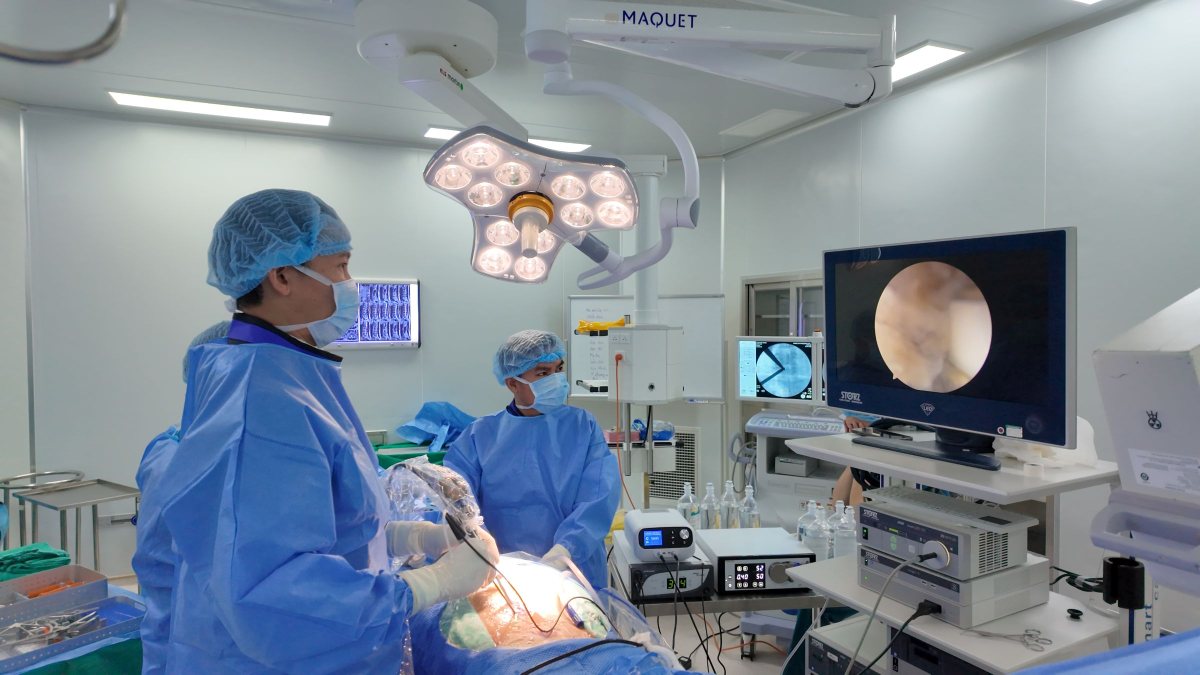
The biggest challenge for the team is to release the squeezed nerve root but still minimize damage to the surrounding healthy tissues, which have become adhesive after the previous surgery. After a comprehensive consultation, the doctors decided to choose endoscopic surgery to remove the herniated disc, a technique that approaches the injured area through a small surgical route, helping to limit invasion of the surrounding muscle system, ligaments and spinal structure.
To ensure safety for the second surgery, before surgery, patients are strictly controlled for blood sugar and blood lipid levels, bringing the body to the most stable state.
During the surgery, Specialist Doctor Duong Thanh Ha - Neurosurgeon, Vinmec Da Nang, used a modern endoscopic system to accurately access the damaged disc area. Although the herniated mass relapsed with fibrous tissue after the first surgery made the nerve root almost completely attached, under sharp endoscopic images, the surgeon still skillfully dissected, completely removed the herniated mass and safely released the nerve root, while preserving the neighboring nerve structures.
For cases of recurrent disc herniation after surgery, the anatomical structure in the intervened area has changed, accompanied by adhesions at many different levels. This makes access much more difficult. Endoscopic surgery is the optimal choice to help reduce postoperative pain, limit the risk of slow healing or surgical wound infection in patients with diabetes mellitus, and help them return to normal life soon," BSCKI Duong Thanh Ha said.
Immediately after surgery, the patient's pain condition improved significantly, making it easier to rotate and move. In parallel with closely monitoring vital signs, blood sugar and surgical wound care, the patient was also implemented with a rehabilitation program and early physical therapy right in bed, helping to quickly regain the mobility range of the legs.
By the second post-operative day, the patient could stand up and walk gently on her own, something that just a few days before seemed very far away. Ms. Trang's journey across hundreds of kilometers closed with a happy smile on the day of discharge, when the pain that had haunted her for many months had receded.
Ms. Trang's case is evidence that recurrent pain after spinal surgery can be recovered if the patient is examined and treated in the right direction. Symptoms such as back pain spreading down to the legs for a long time, numbness, weakness of the legs or recurrent pain after surgery are all warning signs that should not be subjective. Patients need to avoid self-treatment or use unverified methods. Early examination and development of appropriate treatment plans at reputable specialized facilities are decisive in improving treatment effectiveness, preserving motor function and preventing the risk of permanent neurological damage.
Vinmec Da Nang General Hospital is currently one of the addresses for examination and treatment of spinal diseases sought after by many people from the Central and Central Highlands provinces, especially for complex cases requiring multidisciplinary coordination. With the orientation of specialized development in the treatment of spinal diseases, Vinmec Da Nang continues to invest in technology, people and multidisciplinary coordination procedures, aiming to accompany patients in each treatment and recovery stage.