
SJC gold bar price
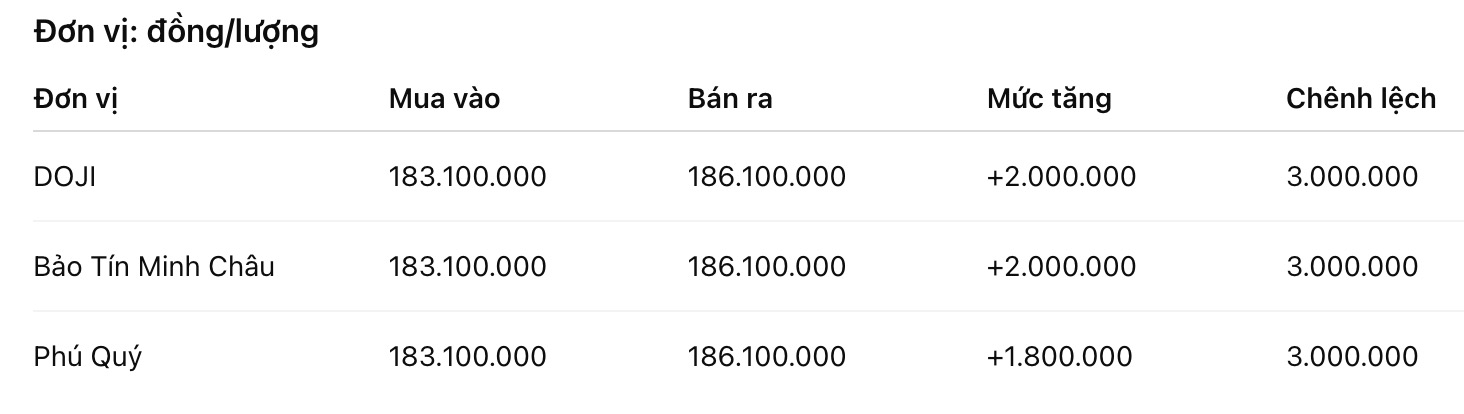
As of 6:00 PM, SJC gold bar prices were listed by DOJI Group at the threshold of 183.1-186.1 million VND/tael (buying - selling), an increase of 2 million VND/tael in both buying and selling directions. The difference between buying and selling prices is at the threshold of 3 million VND/tael.
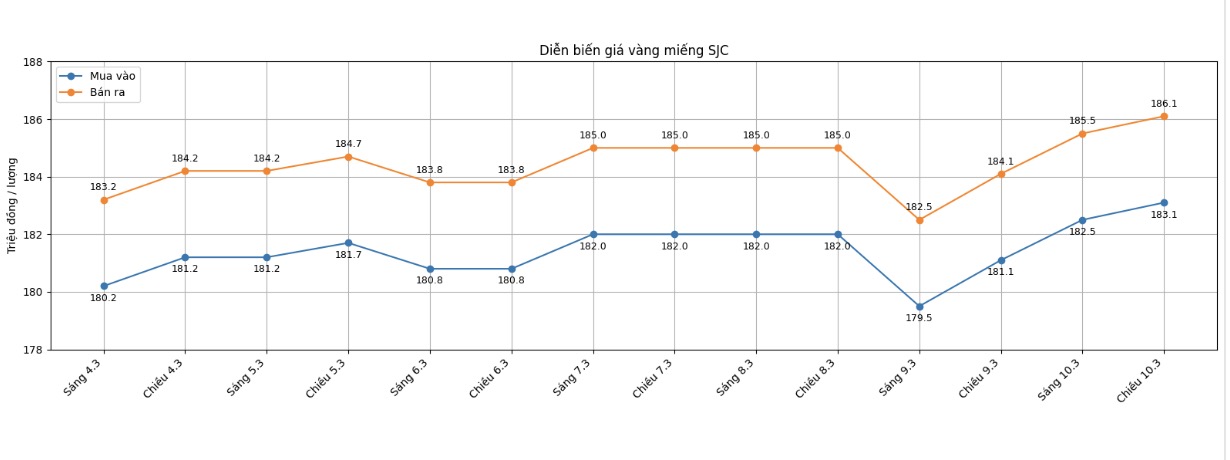
SJC gold bar prices were listed by Bao Tin Minh Chau at the threshold of 183.1-186.1 million VND/tael (buying - selling), an increase of 2 million VND/tael in both buying and selling directions. The difference between buying and selling prices is at the threshold of 3 million VND/tael.
Phu Quy Jewelry Group listed SJC gold bar prices at 183.1-186.1 million VND/tael (buying - selling), an increase of 1.8 million VND/tael in both directions. The difference between buying and selling prices is at 2.8 million VND/tael.
9999 gold ring price
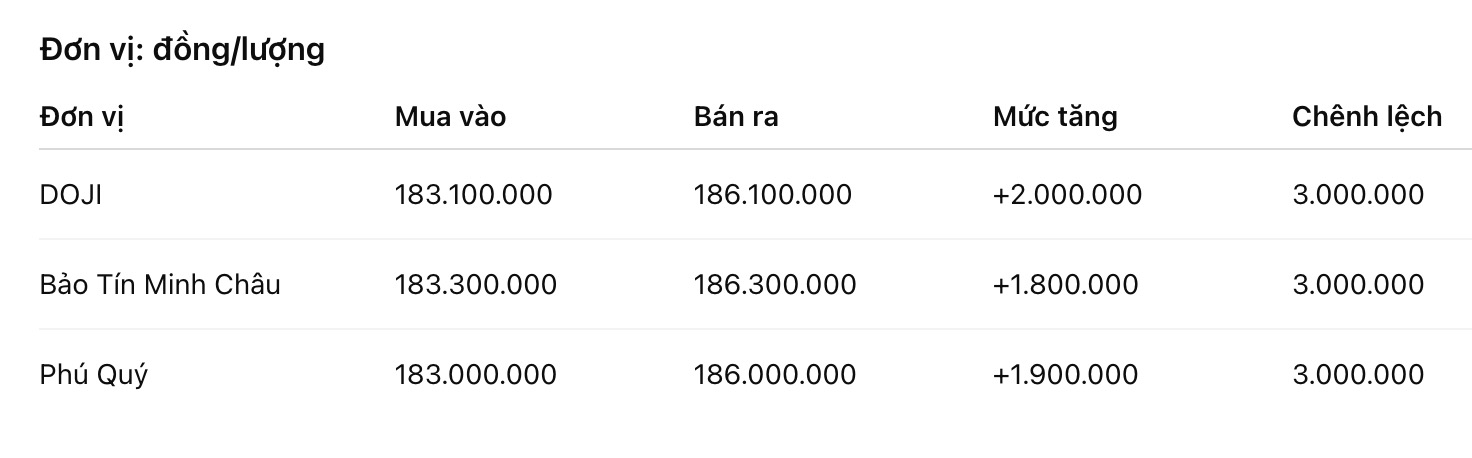
As of 6:00 PM, DOJI Group listed the price of gold rings at the threshold of 183.1-186.1 million VND/tael (buying - selling), an increase of 2 million VND/tael in both buying and selling directions. The difference between buying and selling prices is at the threshold of 3 million VND/tael.
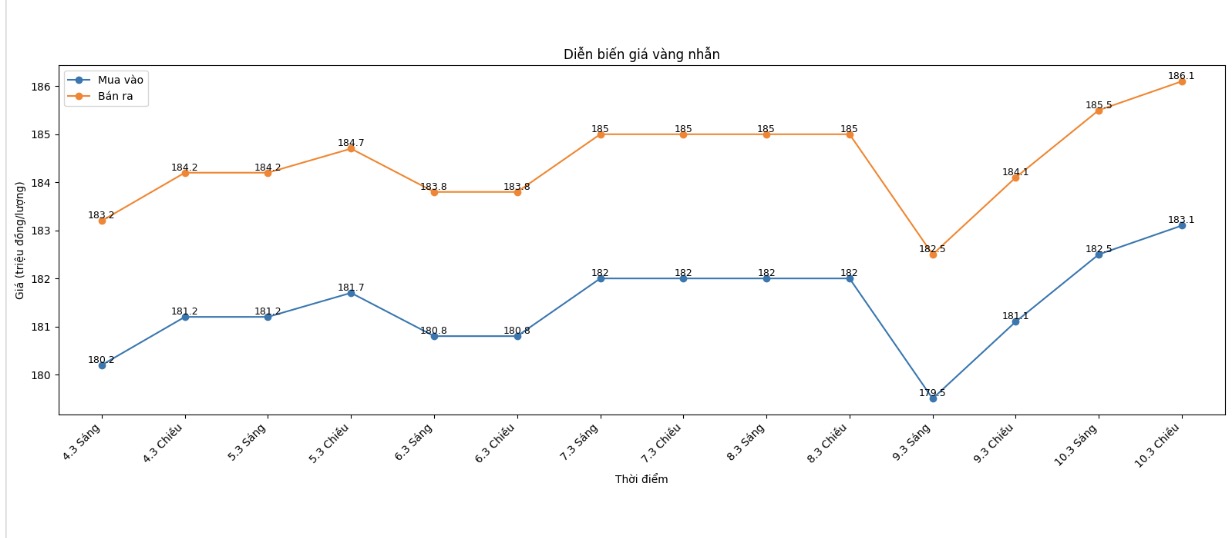
Bao Tin Minh Chau listed the price of gold rings at 183.3-186.3 million VND/tael (buying - selling), an increase of 1.8 million VND/tael in both buying and selling directions. The difference between buying and selling prices is at 3 million VND/tael.
Phu Quy Gold and Gems Group listed the price of gold rings at 183-186 million VND/tael (buying - selling), an increase of 1.9 million VND/tael in both buying and selling directions. The difference between buying and selling prices is at 3 million VND/tael.
Currently, the buying - selling price difference of gold is at a very high level, around 3 million VND/tael, posing a risk of losses for investors.
World gold price
At 6:00 PM, world gold prices were listed around the threshold of 5, 176.4 USD/ounce, up 67 USD.
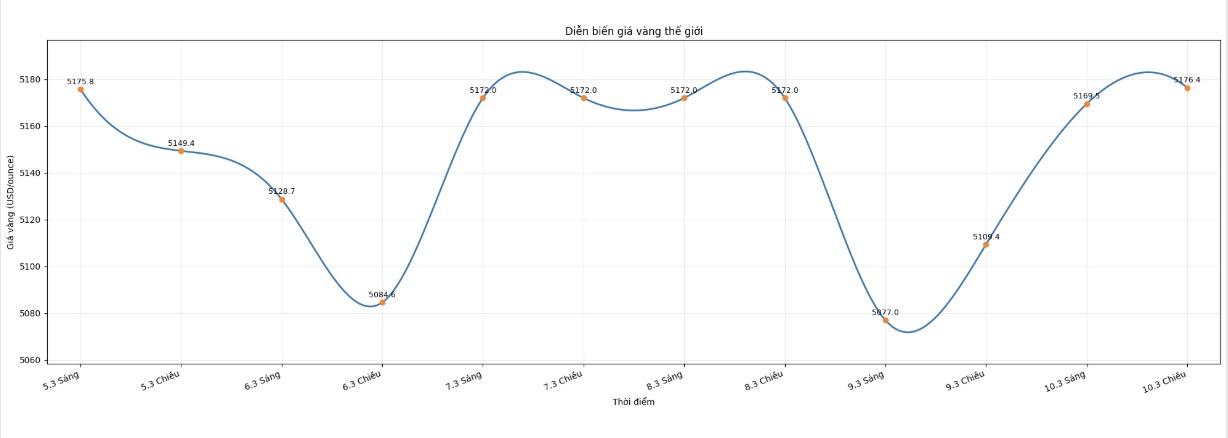
Gold price forecast
The world gold market is facing many opposite factors as the upward momentum shows signs of weakening after a strong upward period before. Some analysts believe that investor caution is increasing in the context of global economic risks and geopolitical fluctuations still present.
According to Mr. Bob Savage - chief market strategist at BNY, gold is still seen by many investors as an alternative channel to the legal tender in the uncertain period. However, after the previous prolonged increase, buying power in the market is showing signs of decreasing. He believes that factors related to energy and interest rates may significantly impact the prospects of the precious metal. "For the correlation between oil and gold to return to its historical trajectory, either oil prices must increase more sharply, or gold prices will need to adjust down," he said.
In addition, the recovery of the USD is also putting pressure on gold prices. When the greenback appreciates, the cost of holding gold for international investors is usually higher, thereby causing the demand for investment in precious metals to decline in the short term. Many experts believe that the market is currently closely monitoring the developments of inflation, interest rates and energy prices - factors that can determine the next trend of gold.
However, some long-term supporting factors still exist. Recent data shows that the People's Bank of China (PBOC) continues to add gold to foreign exchange reserves for the 16th consecutive month. This move is seen as part of a strategy to diversify reserve assets and reduce dependence on the USD. The fact that central banks maintain the gold buying trend is considered a factor that can support the market in the medium and long term.
From another perspective, Mr. Bernard Dahdah - a precious metal analyst at Natixis - believes that gold prices are still likely to rise again if energy prices continue to escalate and put inflationary pressure on the global economy. According to him, in this scenario, the precious metal may head towards the 5,500 - 5,800 USD/ounce range.
However, this expert also noted that safe-haven demand due to geopolitical events is often short-term and gold prices may adjust as tensions cool down.
Gold price data is compared to the previous day.
The world gold market operates through two main pricing mechanisms. The first is the spot market, where prices are quoted for transactions and immediate delivery.
The second is the futures contract market, where prices are set for futures delivery. Due to year-end closing activities, December gold futures contracts are currently the most actively traded type on the CME.
See more news related to gold prices HERE...


