
The global precious metals market is witnessing unprecedented fluctuations as gold prices stabilize in the low to mid range of 5,000 USD/ounce, while silver strongly breaks through to the 90 USD/ounce range in just one volatile trading session.
In an exclusive exchange with Kitco News ahead of the PDAC 2026 conference in Toronto (Canada), Canadian investment billionaire Eric Sprott - founder of Sprott Inc., said that the Western banking system and exchanges are gradually losing control of the "material supply tightening" wave in the silver market.
Tightening material supply and incidents on CME
The sudden increase in silver coincided with increasing tensions on Western exchanges. This week, the Chicago Mercantile Exchange (CME) unexpectedly encountered a technical problem on the Globex system, forcing it to temporarily suspend metal and natural gas trading for about 90 minutes.
According to the official announcement, metal trading was suspended from 12:15 pm and only reopened at 1:45 pm (US Central time). Although CME affirmed that this was just a technical error, this event followed a similar disruption in November last year, raising suspicions about the actual liquidity of the paper metal market.
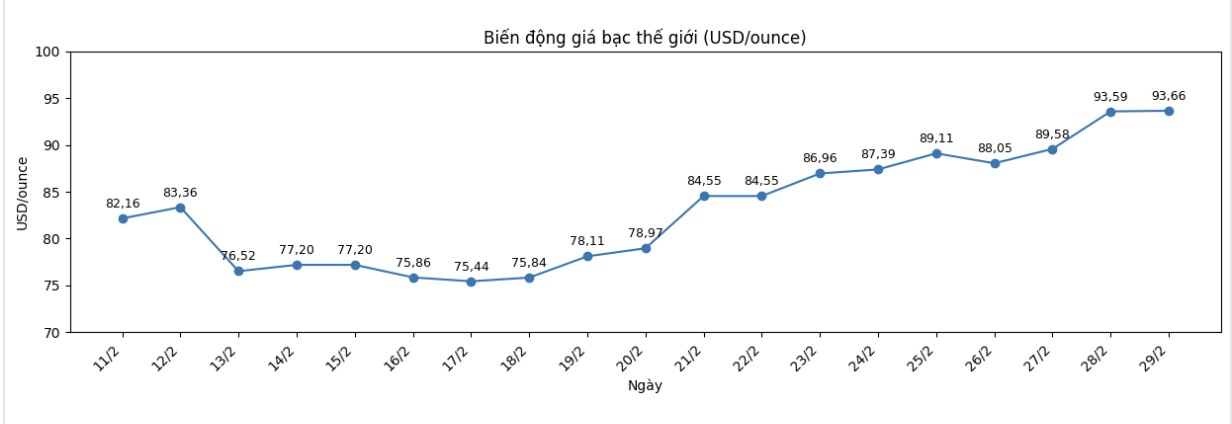
Mr. Sprott said that this is a manifestation of a "physical short selling wave" taking place. According to him, silver inventories at the London Bullion Market Association (LBMA), the CME and the Shanghai Gold Exchange are all declining rapidly.
In China alone, inventories on the Shanghai Exchange are said to have decreased by 10% in just one day, to about 11 million ounces – a level he assessed as "nearly zero for a scale economy like China".
Notably, Mr. Sprott estimates that there are still about 500 million ounces of silver being dumped on Comex, mostly held by banks. In the context of shrinking physical supply, these dumped positions are at risk of being "stuck" if buyers request real delivery.
India changes rules of the game, shifts pricing rights to the East
One of the factors considered a turning point for the market is the new policy decision from India. On February 26, the Securities and Exchange Commission of India (SEBI) officially amended regulations, allowing stock funds to actively allocate up to 35% of total assets to gold and silver instruments.
According to Mr. Sprott, the scale of this asset volume is up to 385 billion USD, opening up a huge demand channel for precious metals. Not only that, from April 1, 2026, funds in India will value gold and silver at spot prices announced by domestic exchanges, instead of relying on London's LBMA standard.
This move is seen as a step away from the Western valuation system, shifting the focus of power to Asia. According to analysts, if institutional capital in India really flows strongly into precious metals, the global supply-demand structure may change deeply.
Gold - silver ratio and scenario 300 USD/ounce
For many years, the ratio of gold to silver price has always been a closely monitored indicator. History shows that silver is often mined at a ratio of about 8:1 to gold, but the market price ratio has been strongly stretched.
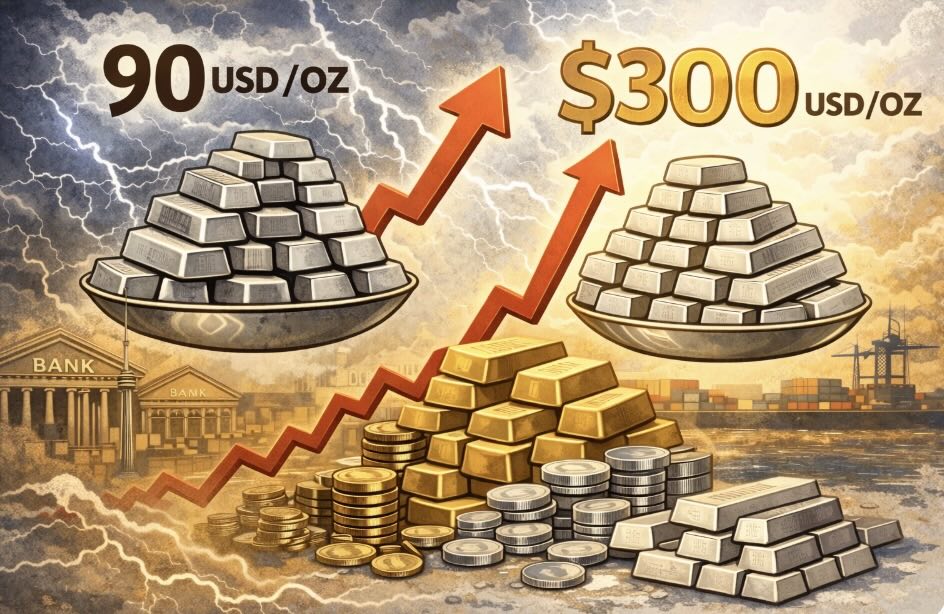
Mr. Sprott believes that the reasonable ratio should return to 15:1 and may even "overstep" to 10:1 during the euphoric period. With gold anchored above 5,000 USD/ounce, the 15:1 level means silver prices may exceed 300 USD/ounce.
Industrial demand is also a supporting factor. Silver is widely used in the production of solar panels, electric vehicles and electronic components. According to Mr. Sprott, some technology and manufacturing enterprises have signed agreements to buy silver production in advance from mining companies, and even advanced capital to ensure supply.
What disappointed Mr. Sprott is that large mining corporations have not actively acquired new mines despite creating record cash flow. He said they understand mining but have not grasped the metal market cycle.
In the context of investment funds trending towards reducing the proportion of US stocks and shifting to safe-haven assets, he believes that the "paper market control" period is gradually coming to an end. If material supply continues to run out, silver could enter a historic revaluation cycle.


