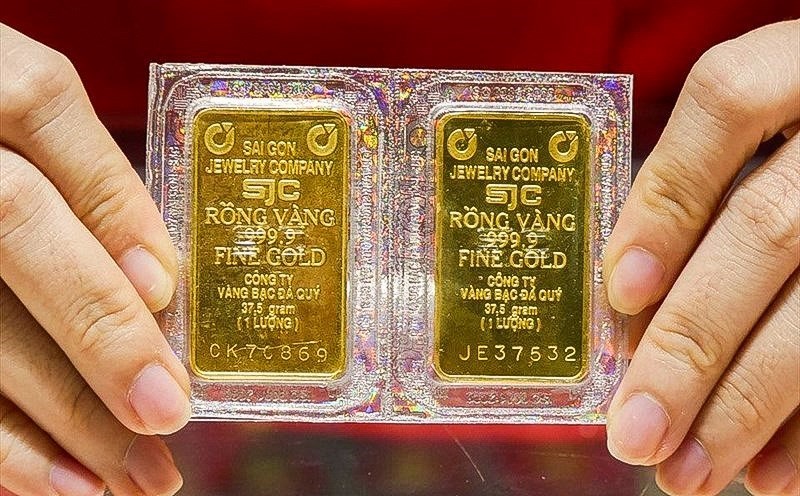
In the latest research report, Bernard Dahdah - Precious metals analyst of Natixis has given three scenarios for gold's potential decline. The report comes as spot gold is at $3,996.6 an ounce, up more than 1% on the day.
He said the last straw of gold prices was right above production costs, around $2,000 an ounce, well above the average maintenance cost of the mining sector about $1,600 an ounce.
In the second scenario, Dahdah believes that high gold prices could weaken central bank demand, while boosting capital outflows from gold ETFs - currently less than 2% away from a historical peak. In this case, gold prices could fall to $2,800/ounce.
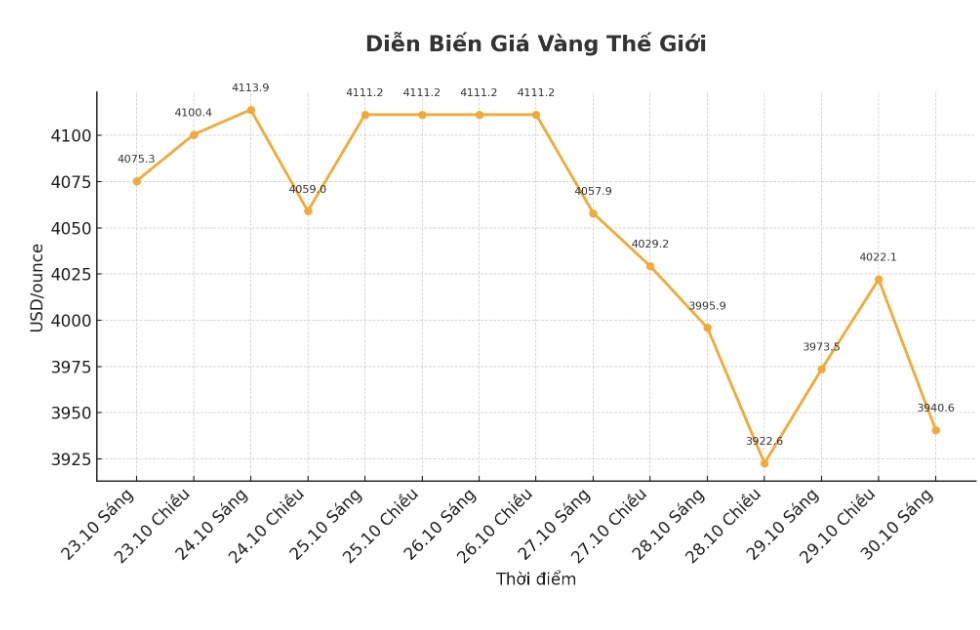
In the third scenario, if investment demand does not change much but central bank buying power slows down, the market can check the support zone around 3,450 USD/ounce.
However, Dahdah believes these scenarios are unlikely, as the gold market has changed significantly in recent years.
I think if gold prices fall below $3,400/ounce, Chinese investors will take a strong buy. We will also see a significant recovery in jewelry demand, he said in the interview.
Despite the downside risk, Dahdah believes the base scenario is that gold prices will move sideways around the current level until 2026. He forecasts an average of $3,800/ounce next year.
He said he did not see enough momentum for gold to continuously break out to over $4,000/ounce.
I think the recent increase of over $4,000 was largely due to the phenomenon of short-squeeze, but that factor is now over. For gold prices to continue to rise, there needs to be an expansion of real demand, and that has not happened at current prices.
Many investors have bought gold because they believe the US dollar and the US economy will weaken seriously, but that crisis scenario does not seem to happen," he said.
Dahdah also predicts that central banks' demand for gold - although still high - will slow down as prices remain high. Analysts estimate that central banks will buy about 900 tons of gold this year, down slightly from the average of 1,000 tons per year in the past three years.
At current prices, a billion dollar can no longer buy as much gold as before. Central banks will still buy, but the volume will be less, he said.
Although Natixis is neutral on gold next year, Dahdah believes the risk is more on the upside than the downside. He predicted that investment demand will continue to be the main driver of the gold market until 2026.
In addition, any fluctuations in the bond market can force investors to withdraw capital from short-term monetary funds, thereby pushing gold prices up by about 10%.
It is not necessary to have too much cash flow out of the bond market to have a big impact on gold. With high levels of uncertainty and rising US public debt, this is a scenario that investors should pay attention to, he said.
See more news related to gold prices HERE...