
Mr. Robert Minter - ETF Strategy Director at abrdn - said that despite the fact that gold prices have fallen sharply compared to the historical peak set in January, investors still see gold as an important "safe net" in the context that many risks in the financial market have not been properly reflected.
There are many risks being undervalued in global financial assets. Investors are seeing gold as a core asset in their portfolios," Mr. Minter said.
According to Mr. Minter, the biggest problem currently is that investors overreact to short-term fluctuations and instability. Instead, they need to ignore immediate "fluctuations" to focus on long-term trends.
There are many things that are no longer moving in their usual way. Many correlations have changed. But if the reaction is too short-term, investors may misjudge the correlation, mistrade and mistrend. Considering the 20-year period, the correlation between gold and stocks is almost 0. Despite all fluctuations, gold is still a safe haven asset," he said.

Although gold prices have just experienced a disappointing sell-off, Mr. Minter believes that this precious metal still maintains its appeal thanks to solid demand from central banks, including China. He said that the Central Bank of China took advantage of the price adjustment in the previous month to buy in.
In March, China bought the most gold in a month since January 2025. When gold prices fell 19.2% compared to the historical peak, that was the correction to buy in. The market has not yet recovered too strongly, so gold is still in the buying range when prices fall" - Mr. Minter said.
One of the reasons why gold has been struggling in the past two months is the expectation of changes in inflation and interest rates. However, Mr. Minter believes that these are only short-term concerns and should not dominate long-term prospects.
Military tensions between the US - Israel and Iran have significantly disrupted the global energy supply chain. The sharp increase in oil prices has led to concerns about inflation, thereby changing expectations about US monetary policy. Some experts believe that the US Federal Reserve (Fed) is unlikely to cut interest rates in the current environment.
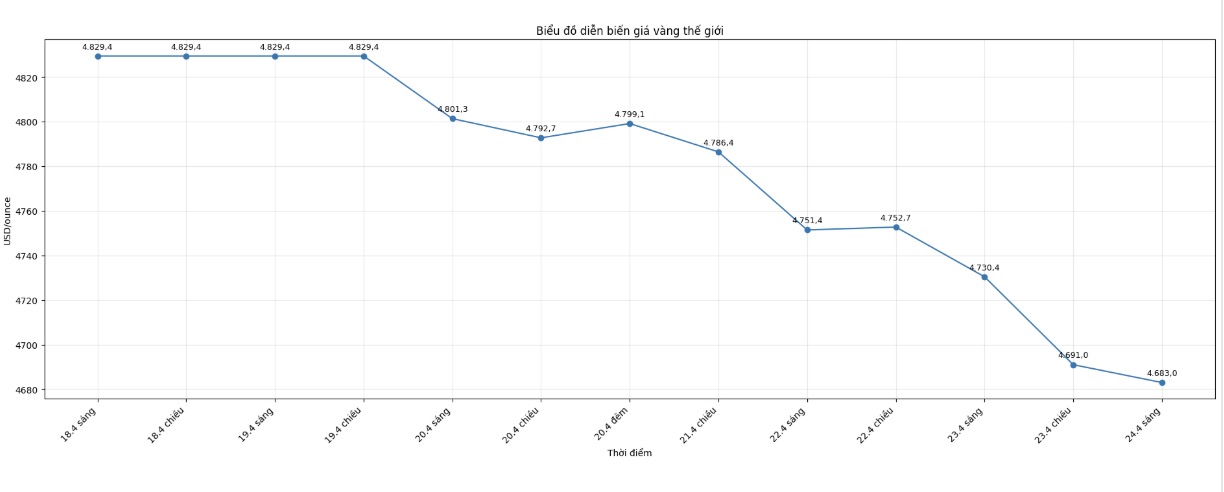
However, Mr. Minter said that the mismatch between past inflation data and future-oriented interest rate expectations is distorting the valuation, thereby creating opportunities for investors. He also said that it is very difficult for interest rates to continue to rise as US public debt grows, while the current conflict continues to exacerbate debt pressure.
According to Mr. Minter, the next stage of gold will depend on whether the larger financial market begins to fully reflect the inherent risks in the commodity market. He warned that the stock market may be underestimating the scale of current disruptions, and this slow response could become a catalyst for gold prices.
I think there will be a moment that startles the market. Then, demand for gold will return," he said.
Mr. Minter also emphasized that structural pressures such as high public debt, energy restrictions and supply disruptions are likely to continue.
How can we get out of this crisis without causing the debt level to increase further?" - he raised the issue.


