
World gold prices continued to rise in the trading session on August 13, maintaining above the 4,400 USD/ounce mark after US inflation data cooled down, strengthening expectations that the Fed does not need to tighten monetary policy.
As of 9:32 am Vietnam time, spot gold prices increased by 0.48% to 4,402.39 USD/ounce. Meanwhile, December gold futures fell 0.15%, to 4,460.87 USD/ounce.
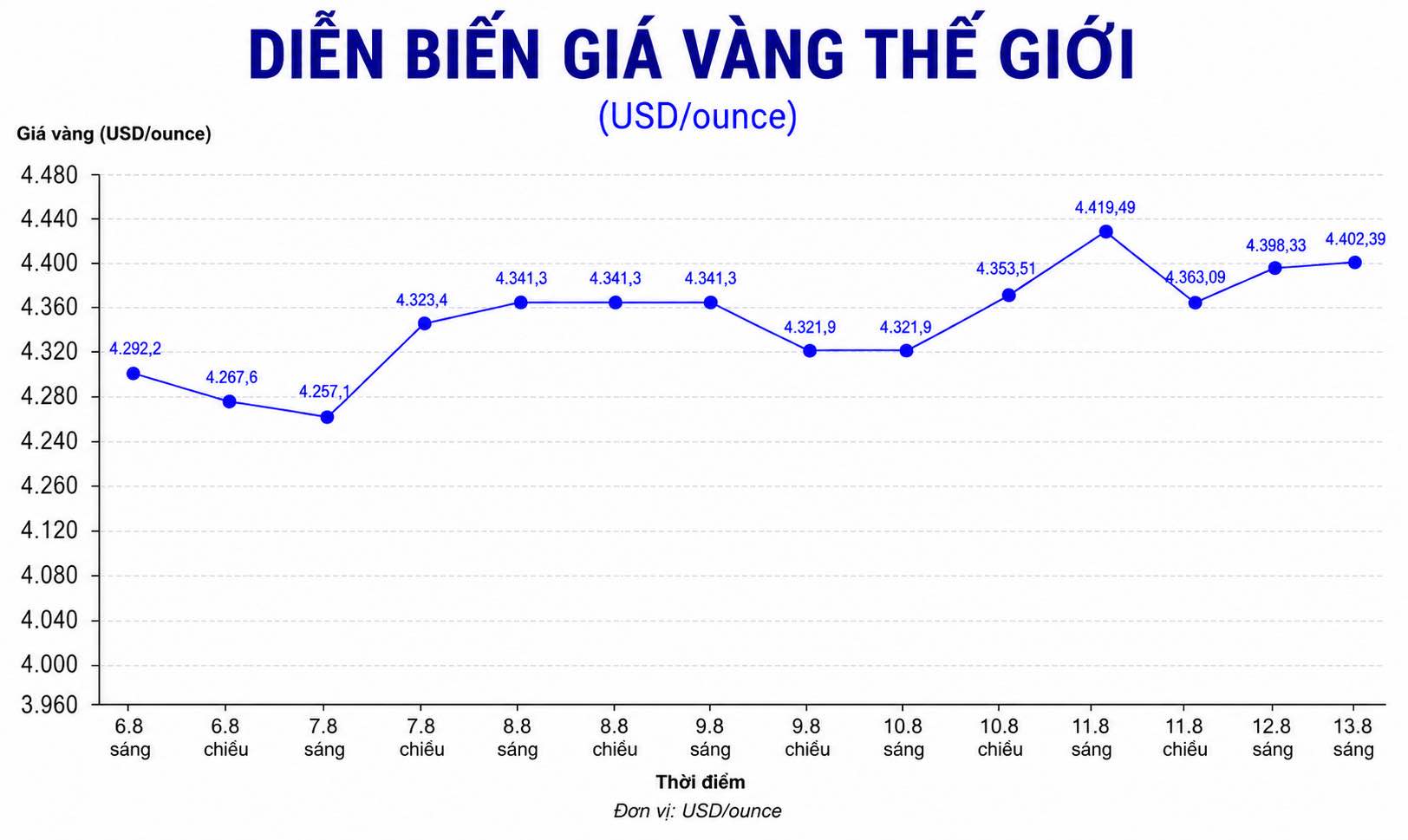
Gold prices had previously increased sharply to their highest level in about 2 months, at times approaching the 4,450 USD/ounce mark. The upward momentum was supported after new data showed that the US consumer price index in July only increased by 0.1% compared to the previous month, showing that the impact of the energy price shock related to the conflict in Iran continued to weaken.
Cooling inflation data reduces pressure on the US Federal Reserve (Fed) to continue tightening monetary policy in the September meeting. Before this meeting, the market will continue to monitor reports on jobs, inflation as well as Fed Chairman Kevin Warsh's statements at the Jackson Hole conference at the end of the month.
Gold is inherently not profitable, so it is often under pressure when interest rates rise. Meanwhile, the prospect of less tight monetary policy is supporting the attractiveness of the precious metal.
Gold prices are also supported by buying demand from central banks, notably China. The increase this week has pushed gold above the 100-day moving average for the first time since April.
On the precious metals market, morning developments on August 13 were mixed. Spot silver price decreased by 0.37% to 65.10 USD/ounce. Platinum price decreased by 0.65%, to 1,745.29 USD/ounce, while palladium price decreased by 0.55% to 1,363.75 USD/ounce.
In the energy market, oil prices simultaneously went down. WTI oil for September delivery fell 1.36% to 82.14 USD/barrel, while Brent oil for October delivery fell 1.21% to 87.90 USD/barrel.
The oil market continues to monitor developments in the Middle East and the efforts of the US and Iran to end the conflict and reopen the Strait of Hormuz. Any new tense developments could push energy prices back up, thereby increasing inflation risks and impacting the Fed's monetary policy outlook.


