World gold prices continue to face short-term adjustment pressure as US bond yields remain high, the USD strengthens, and interest rates are expected to remain high longer. However, many major banks and financial institutions remain optimistic about the long-term outlook for the precious metal.
According to analysts, although some organizations have lowered their short-term gold price forecasts due to weakening investment demand, most still expect precious metal prices to recover in the late 2026 period.
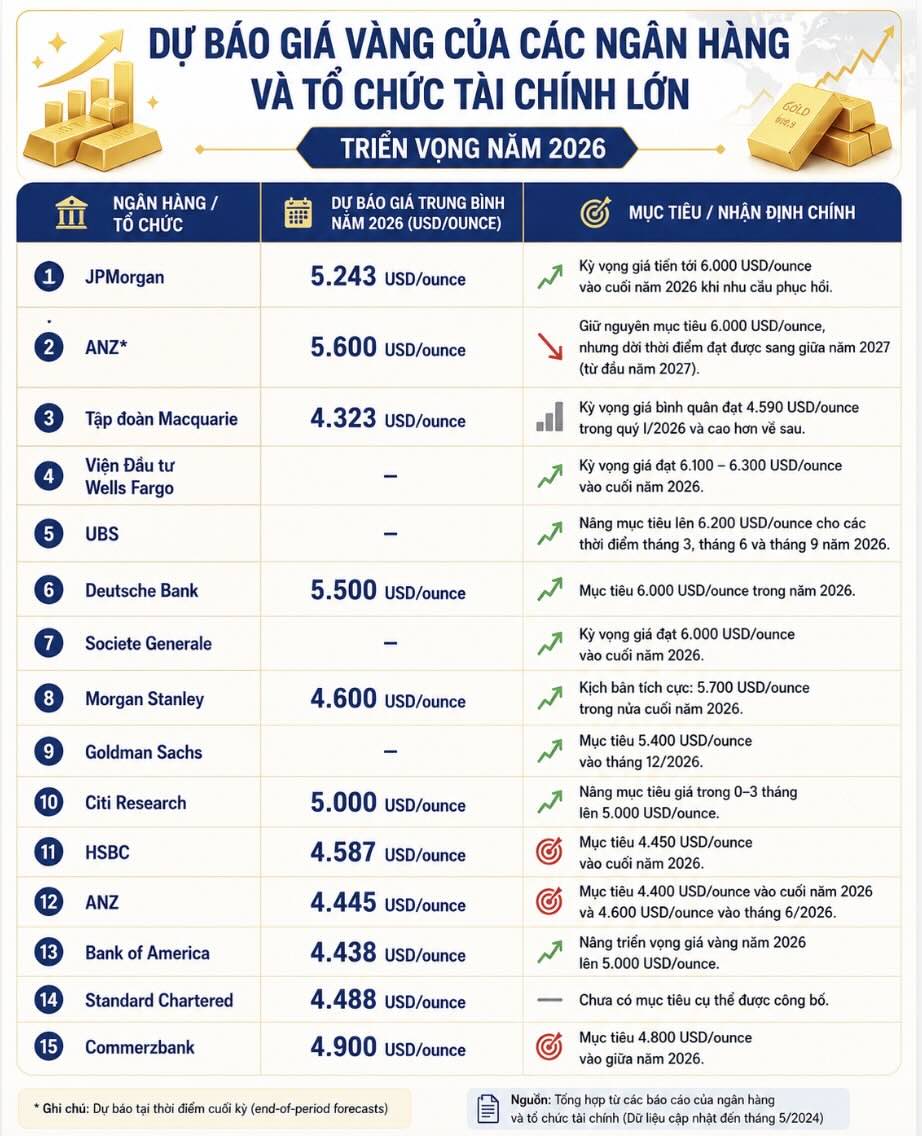
JPMorgan Bank recently lowered its 2026 average gold price forecast to $5,243/ounce, lower than the previous forecast of $5,708/ounce. The reason given is that short-term gold investment demand is weakening, as customer interest is decreasing significantly.
JPMorgan experts said that trading activities on the gold market are quite quiet. Trading volume and open positions of COMEX gold futures contracts are still low. Capital flows into gold ETFs have not improved much.
Previously, ANZ bank also adjusted down the year-end gold price target to 5,600 USD/ounce. This organization believes that pressure from inflation, increased bond yields and a strong USD may continue to negatively affect gold prices in the near future.
However, JPMorgan still maintains a positive outlook in the medium and long term. The bank expects gold prices to approach the $6,000/ounce mark by the end of 2026 as investment demand recovers in the second half of the year.
According to JPMorgan, as instability related to energy prices and inflation gradually cools down, gold buying demand from investors and central banks may increase sharply again.
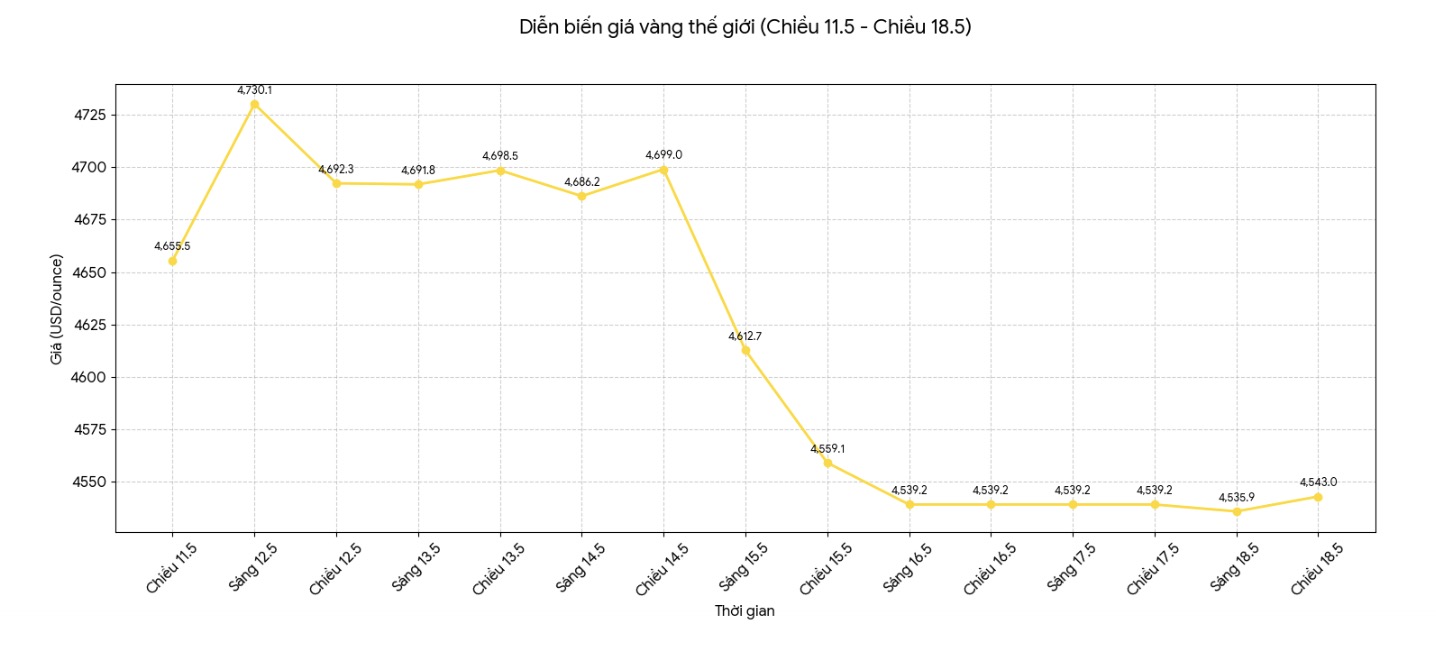
The gold market has recently been greatly affected by geopolitical tensions and global economic fluctuations. Since the conflict between the US and Iran broke out on February 28, spot gold prices have fallen by about 14%.
Analysts believe that the sharp increase in oil prices amid escalating conflict has raised concerns about inflation. This makes the market increasingly believe that the Fed will maintain a higher interest rate level longer than expected, putting pressure on gold - a non-performing asset.
However, in the context of many geopolitical and economic risks still existing, gold is still considered an important safe haven channel for many global investors.