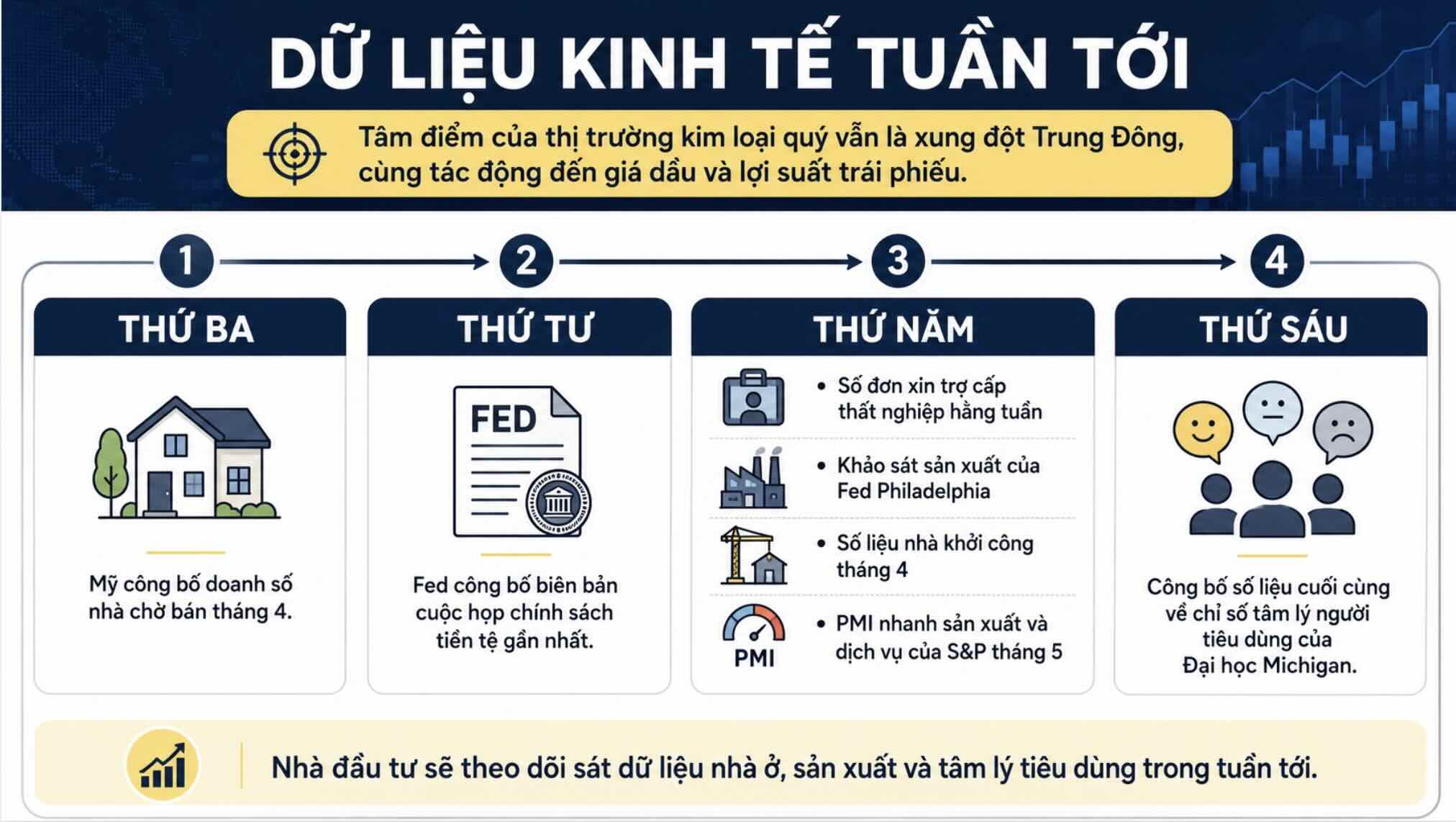
The upward momentum of the precious metal group suffered a strong shock this week, when gold prices fell nearly 4%. This development shows that pressure on the precious metal market has not cooled down, in the context of an increasingly unfavorable macroeconomic environment.
According to analysts, the strong fluctuation of gold prices is not too unexpected. The precious metal is being affected by persistent inflation concerns, thereby changing market expectations about US monetary policy.
Instead of betting on the possibility of the US Federal Reserve (Fed) soon cutting interest rates, investors are adjusting expectations in the direction that the Fed may maintain a tighter stance for a longer time. Some opinions even suggest that the market does not rule out the risk of further interest rate hikes if inflationary pressure is not controlled.

This change is clearly shown in the US Treasury bond market, especially in long-term terms. 30-year bond yields have exceeded the 5% threshold, reaching the highest level in many years. This development reflects that financial conditions are tightening, thereby putting pressure on non-profit assets such as gold.
Notably, the increase in nominal yields mainly comes from real yields, rather than long-term inflation expectations soaring. As real interest rates rise, the opportunity cost of holding gold also increases, causing the attractiveness of precious metals to decline, especially for institutional investors.
In addition, high long-term interest rates can also negatively affect risk psychology in financial markets. This reduces speculative demand for gold and silver in the short term.
Adam Button - Currency Strategy Director at Forexlive. com, said that the market has entered a "good news is bad news" phase for interest rate expectations, because positive economic data may create conditions for the Fed to consider the possibility of raising interest rates. He noted that US retail sales are quite positive, while the market seems to be seeing an increased risk of inflation.
According to Button, developments in the bond market show that investors are no longer ignoring inflationary pressure, as the yield of 30-year US Treasury bonds has risen to 5.11%. This makes the market begin to consider a possible interest rate increase scenario.
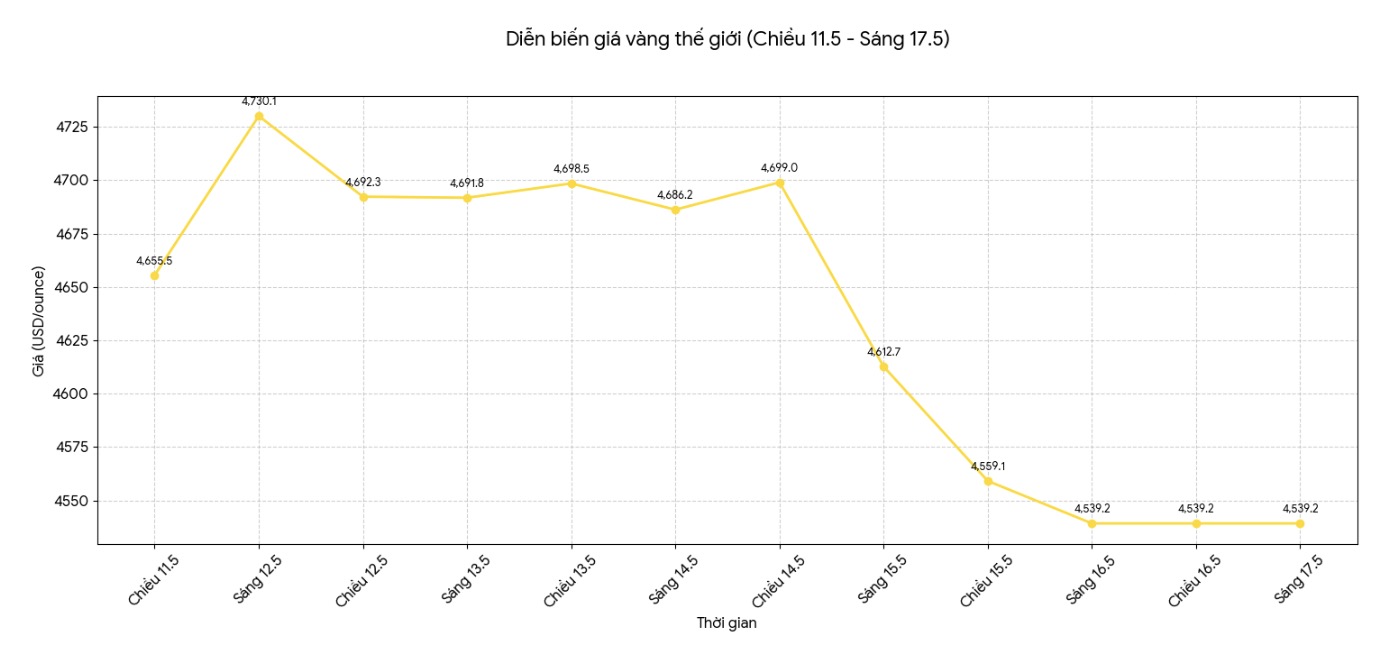
Analysts warn that gold prices may still be under downward pressure if real yields continue to rise. In case of breaking important support zones, the precious metal is at risk of retesting the lower zone in the wide trading range. Some investors are monitoring the $4,000/ounce mark as a potential support zone.
However, the long-term outlook for gold is still not completely negative. Factors such as tightened financial conditions, prolonged inflation risks and increased macroeconomic instability can still strengthen the safe-haven role of gold in the investment portfolio.
In the short term, market momentum still leans towards a downward trend. Gold prices are unlikely to regain their upward momentum if there is no clear change in the Fed's interest rate outlook.