
Rising oil prices change interest rate expectations
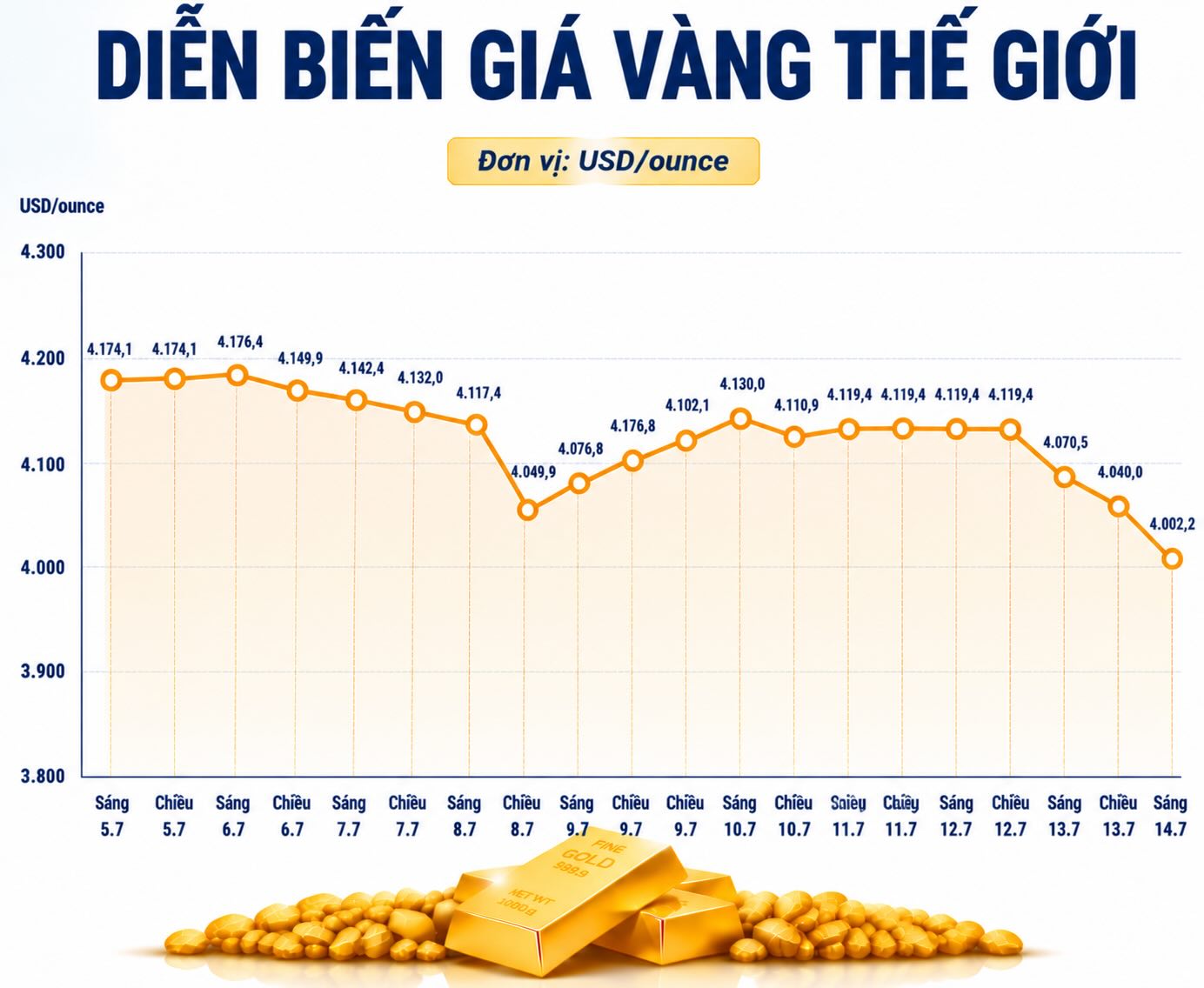
The precious metals market entered the first trading session of the week with strong selling pressure. Spot gold prices at one point fell to nearly 4,055 USD/ounce, losing about 1.55%. Spot silver prices retreated to the 58.36 USD/ounce range, down 2.35%.
After the North American market opened, the downward momentum continued to expand. Gold prices at one point tested the psychological support zone of 4,000 USD/ounce and traded around 4,003 USD/ounce, equivalent to a decrease of more than 2.6%.
The main reason comes from the new tense developments between the US and Iran in the Hormuz Strait area. WTI oil prices increased to about 72.9 USD/barrel, while Brent oil traded nearly 79.6 USD/barrel. Previously, these two types of oil had surpassed 75 USD and 80 USD/barrel respectively.
Usually, geopolitical instability will support gold prices thanks to the need to find safe assets. However, in this fluctuation, the impact from oil prices and inflation prevailed.
The sharp increase in oil may cause transportation, manufacturing and consumption costs to rise. This raises concerns that inflation in the US is unlikely to cool down, forcing the Fed to maintain monetary policy tightening for longer, and even continue to raise interest rates.
Bond yields and USD put pressure
The yield on 10-year US government bonds has risen to 4.58%, while the yield on 2-year bonds has exceeded 4.2%. The market is assessing about 68% of the possibility of the Fed raising interest rates in September.
As bond yields increase, the opportunity cost of holding gold and silver also increases because these two metals do not bring periodic profits. A portion of investors therefore shift capital to bonds or cash.
A stronger USD also makes gold and silver expensive for buyers using other currencies. This is a factor driving profit-taking activity, especially after a period of rapidly increasing precious metal prices.
The US June jobs report once created expectations that the Fed would be less tough when the economy only created 57,000 jobs, while the figures for April and May were adjusted down by a total of 74,000 jobs. However, the minutes of the latest Fed meeting and the oil price increase brought inflation risk back to the focus.
Weakening physical silver demand
Silver is under greater pressure than gold because it is both an investment asset and widely used in industry. As economic growth prospects become less certain, the market is concerned that demand for silver in electronics, energy and industry may slow down.
Physical silver purchasing power also shows signs of weakening. Silver bar and silver coin sales of a large mint only reached 294,000 ounces in June, down 19% compared to the previous month and down 37% compared to the same period in 2025. Meanwhile, silver prices once fell about 22% in the month, from 75 USD to 58.5 USD/ounce.
In contrast to silver, the long-term gold buying force of central banks is still quite positive. Total net buying volume in May reached about 41 tons. China also continued to supplement reserves in June, showing that strategic demand for gold has not decreased.
Technically, gold prices are facing resistance at the 4,091-4,107 USD/ounce range. If losing the 4,000 USD mark, the price may fall back to 3,959 USD, even 3,942 USD/ounce. For silver, the 58 USD range is the nearest support; if it is broken, the 57 USD and 55.6 USD/ounce marks will be noticed.
The next developments will largely depend on US CPI data, messages from Fed leaders and the transportation situation through the Strait of Hormuz. Lower than forecast inflation may help precious metals recover. Conversely, a new rally in oil prices will continue to put pressure on gold and silver through yields and the USD.
Information in the article is only intended to update market developments, not investment recommendations; investors need to self-assess risks and make appropriate decisions.


