
Bringing heritage into modern stage language
The 4th performance of "Older Brothers Overcoming Thousands of Obstacles" is a Cultural Chapter with the theme "Head on the sky, foot on the earth", where traditional values are approached by artists in contemporary stage language.
Then singing, Tinh lute, Cheo, lullaby singing, Cai Luong, Don ca tai tu, Southern folk songs along with legends and folk stories are placed in modern performances, creating a cross between long-standing values and the tastes of young audiences.
A noteworthy point in the way artists exploit traditional culture is that they do not see these materials as decorations for the performance. Folk music, musical instruments, cultural images and origin stories are used to create a unique structure and spirit for each performance.
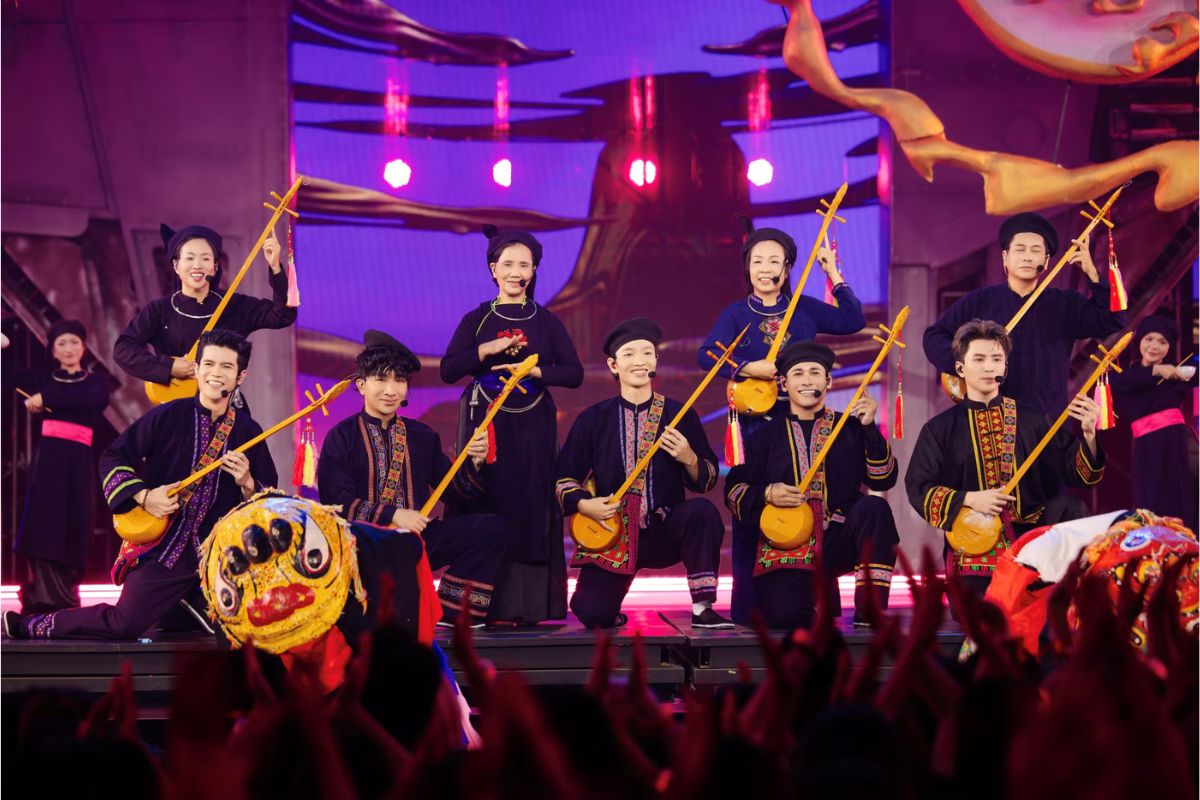
With "Tich Tich Tinh Tang", the Hop Luc - Ruc Ro alliance is inspired by the fairy tale "Thach Sanh" to bring the characteristics of Tay culture to the stage.
Then singing, Tinh zither are combined with lion cat dance, bowl dance and images evoking the festival atmosphere of the Northeast region, creating a space rich in identity but still suitable for modern stages.
In "Tiếng ru cội nguồn" (Lullaby of the Roots), the Nguyen To - My Man alliance combines Cheo material, Northern Lullaby singing and Northwest flute sound with hiphop, trap to tell a story about the origin based on the legend of Lac Long Quan - Au Co.
Coming to the performance "On my own land" of the Quy Tu - Benh Bong alliance, cai luong, Southern folk songs and don ca tai tu were harmonized with modern arrangement and staging.
Meritorious Artist and Flute player Tran Van Son recognizes that the combination of Cai Luong and new, youthful, and vibrant music genres has created a "bridge" between national and modern materials. According to him, this approach also helps traditional cultural materials become more easily absorbed by young people.
When culture becomes a bridge between generations
A special feature of Public Performance 4 is the appearance of artists and artisans of the previous generation alongside young faces. Culture is therefore not only conveyed through a performance but also becomes a story of continuity and inheritance.
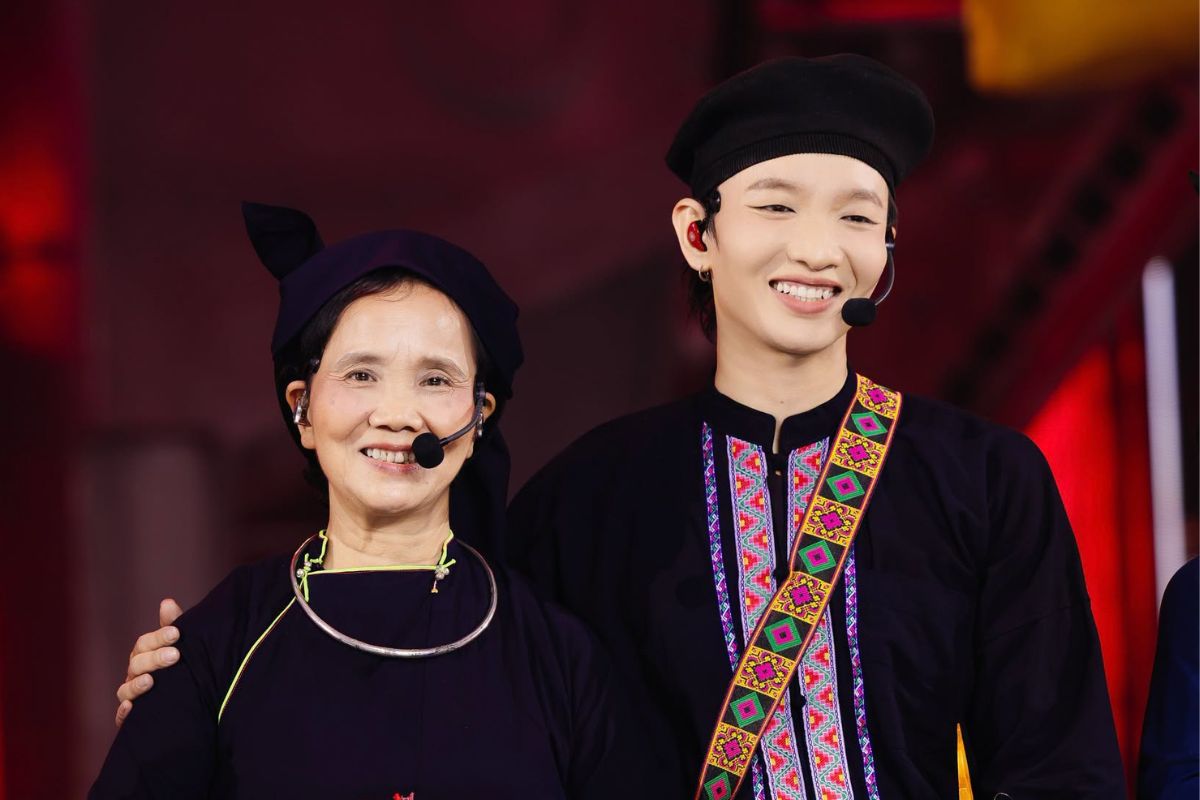
In the Tay culture-inspired performance, Hoang Dung's mother - Assoc. Prof. Dr. Hoang Thi Chien, a member of the Then Suoi Ngan singing group - stood on the big stage with her son for the first time.
Formerly a lecturer at the Faculty of Chemistry, Thai Nguyen University of Education, she came to Then singing after retiring. Her presence created a special moment when a cultural form was practiced and passed down by the previous generation, and then continued to appear through the expression of the younger generation.
Ha An Huy was also instructed by his mother, Meritorious Artist Minh Phuong, on Cheo singing techniques and choosing suitable Cheo melodies for the performance "Tiếng ru cội nguồn". Such stories show that cultural continuity sometimes starts from the family itself, from one generation giving the next generation love and understanding of traditional art.
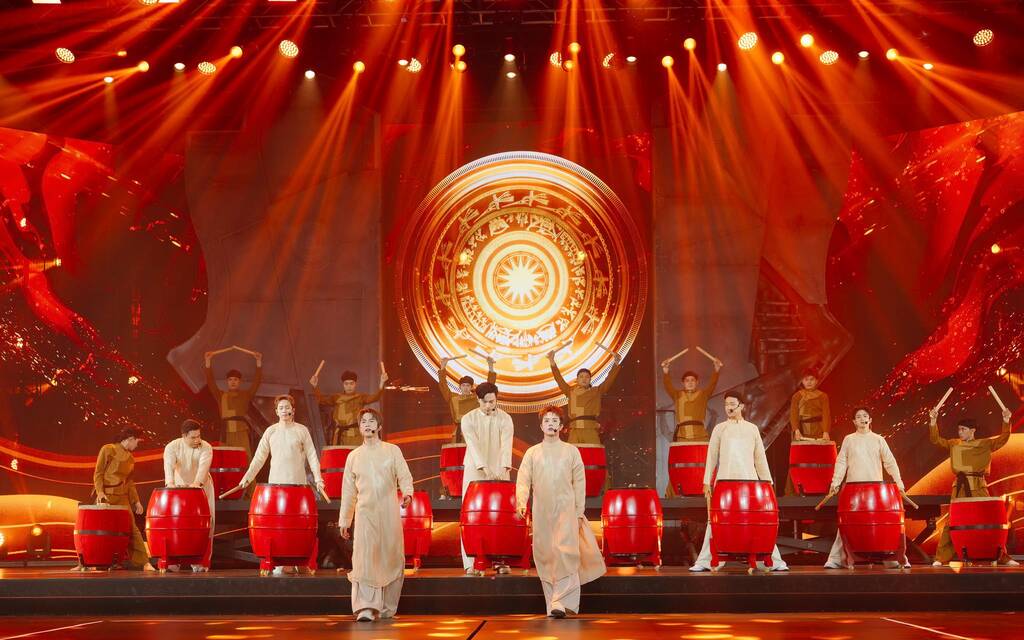
In "On Our Soil", that connection is clearly shown through the meeting between young artists and those who have been associated with folk music for many years.
Guitarist Quoc Dai said that he has played Don ca tai tu for 12 years. His family does not have a tradition of this art form, but from a young age he was exposed to Cai Luong, so gradually developed love, then learned and studied seriously at the Ho Chi Minh City Conservatory of Music.
Quoc Dai's story shows that cultural continuity does not necessarily have to take place in a family with artistic traditions. A young person can completely absorb folk values from the surrounding environment, and then actively learn to become someone who continues to preserve and spread them.
Quoc Dai also believes that the enthusiastic response of young audiences to Don ca tai tu and Cai luong is a positive sign. He and young artists want to continue to maintain and spread these art forms to the public.


