
Within the framework of the conference, a topic presented by Dr. Le Xuan Dinh, Deputy Minister of Science and Technology, clarified the new strategic points on the viewpoint of science and technology development in the Document of the 14th Party Congress.
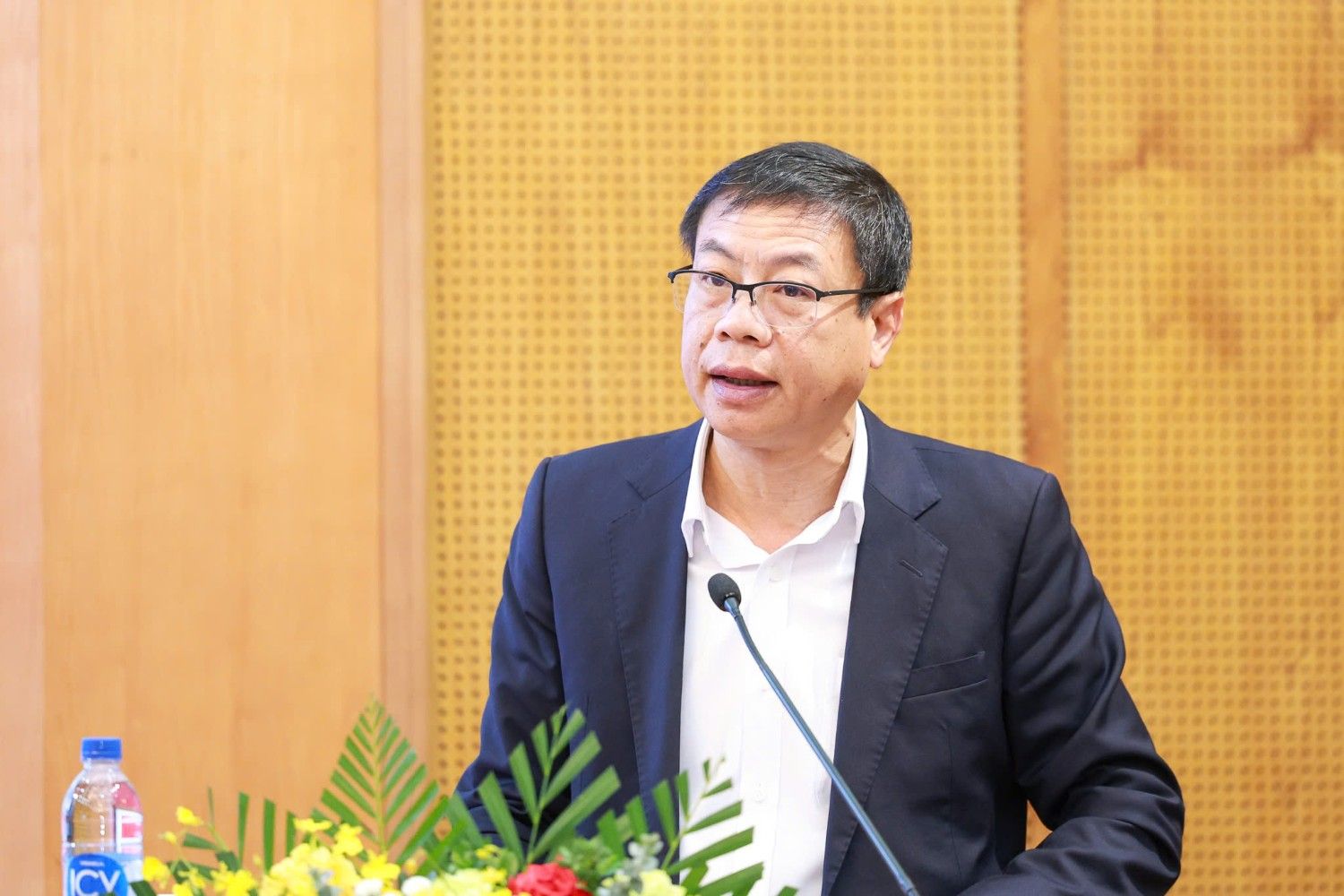
Deputy Minister Le Xuan Dinh emphasized that the Document of the 14th Party Congress shows a breakthrough in thinking when placing science, technology, innovation and digital transformation in the center of the growth model.
No longer a supporting factor, science and technology are identified as a direct constituent factor of the economy, associated with improving productivity, quality, efficiency and national competitiveness.
The highlight of the new approach is the shift from growth based on input expansion to growth based on knowledge, technology and innovation.
In the context of traditional drivers gradually declining, knowledge, data and technology become direct resources promoting development. As emphasized in the presentation, this is not only a direction for a field, but a process of "reshaping the growth model in a new phase".
Deputy Minister Le Xuan Dinh presented 6 core contents in the views of the 14th Party Congress on science and technology development.
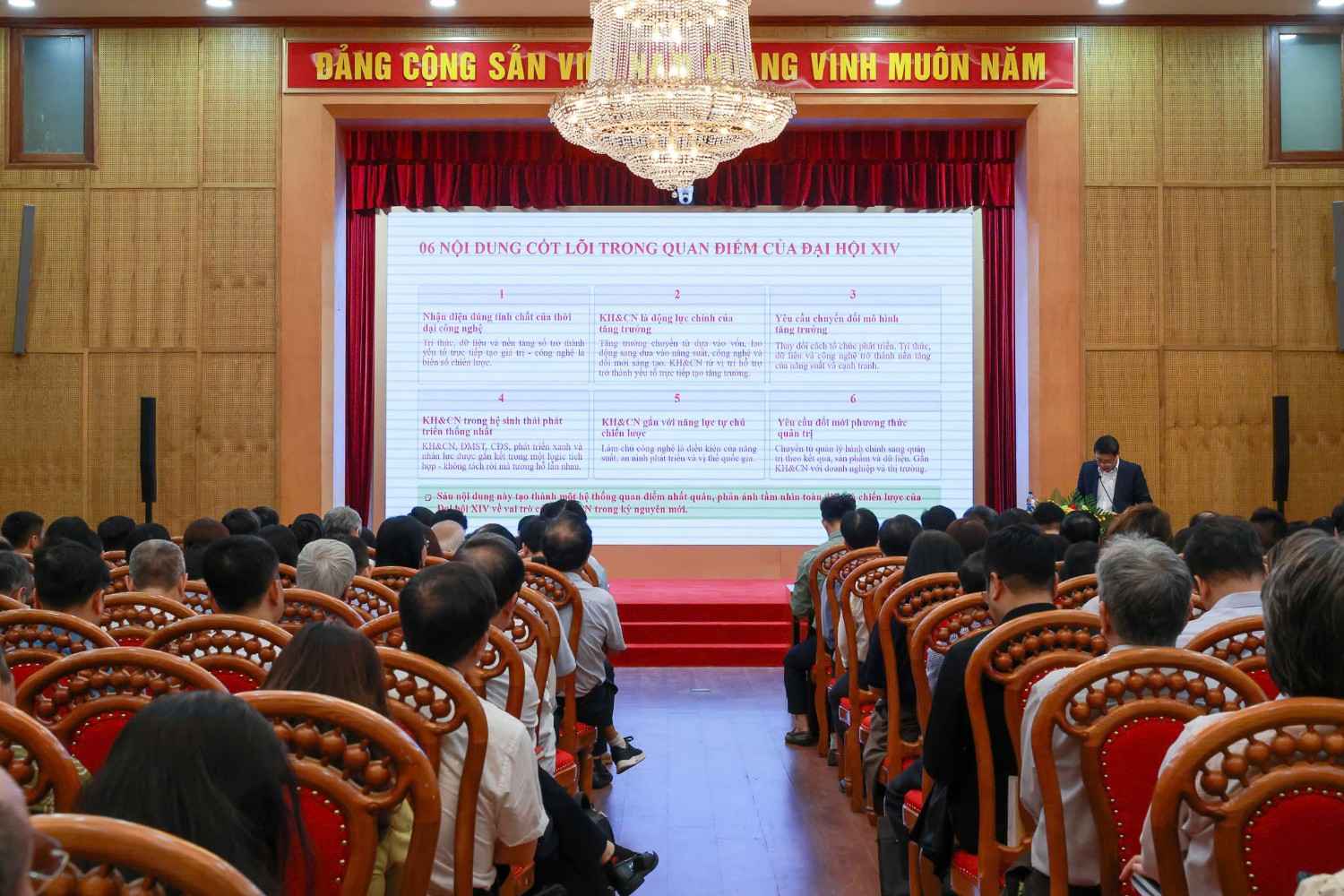
First of all, clearly identify the nature of the technology era, when the Fourth Industrial Revolution takes place rapidly, making knowledge and data a direct value-creating factor.
Second, identifying science and technology as the main driving force of growth, replacing the role of capital and traditional labor.
Third, the requirement to transform the growth model in depth, taking technology as the foundation for productivity and competitiveness.
Fourth, place science and technology in a unified development ecosystem, which is "Enterprises as the center - Market leads - State builds".
Fifth, link science and technology with national strategic autonomy, improve the ability to master core technology.
Sixth, innovate governance methods based on data, results and products.
Notably, the Deputy Minister emphasized: "Resources are finite, but creativity is infinite", therefore, it is necessary to shift from a growth model based on finite momentum to unlimited creative momentum.
According to the spirit of the 14th Congress, innovation is no longer limited to the scope of the scientific and technological team at research institutes and universities, but is identified as a capacity at the national level, spreading to all levels, all sectors and the whole society.
However, besides the clear orientation, the actual implementation still has a significant gap.
The Deputy Minister pointed out that Vietnam has achieved some positive results such as the digital economy accounting for about 14.02% of GDP in 2025, strong e-commerce growth, and the global innovation index being improved. However, these achievements mainly reflect scale expansion, and have not created structural changes.
Prominent limitations include weak capacity to master core technology, loose links between institutes - schools - businesses, and the business sector not playing a role as an innovation center. The gap from research to the market is still large, making science and technology not really become a direct production force.
The main reasons identified are the organization of the system and implementation methods. The program system is still spread out, lacking output linkages; management methods are heavily administrative; the science and technology market has not developed commensurately; the financial mechanism has not created motivation for innovation. These bottlenecks make the system not operate according to a complete value chain from research - technology - products - market.
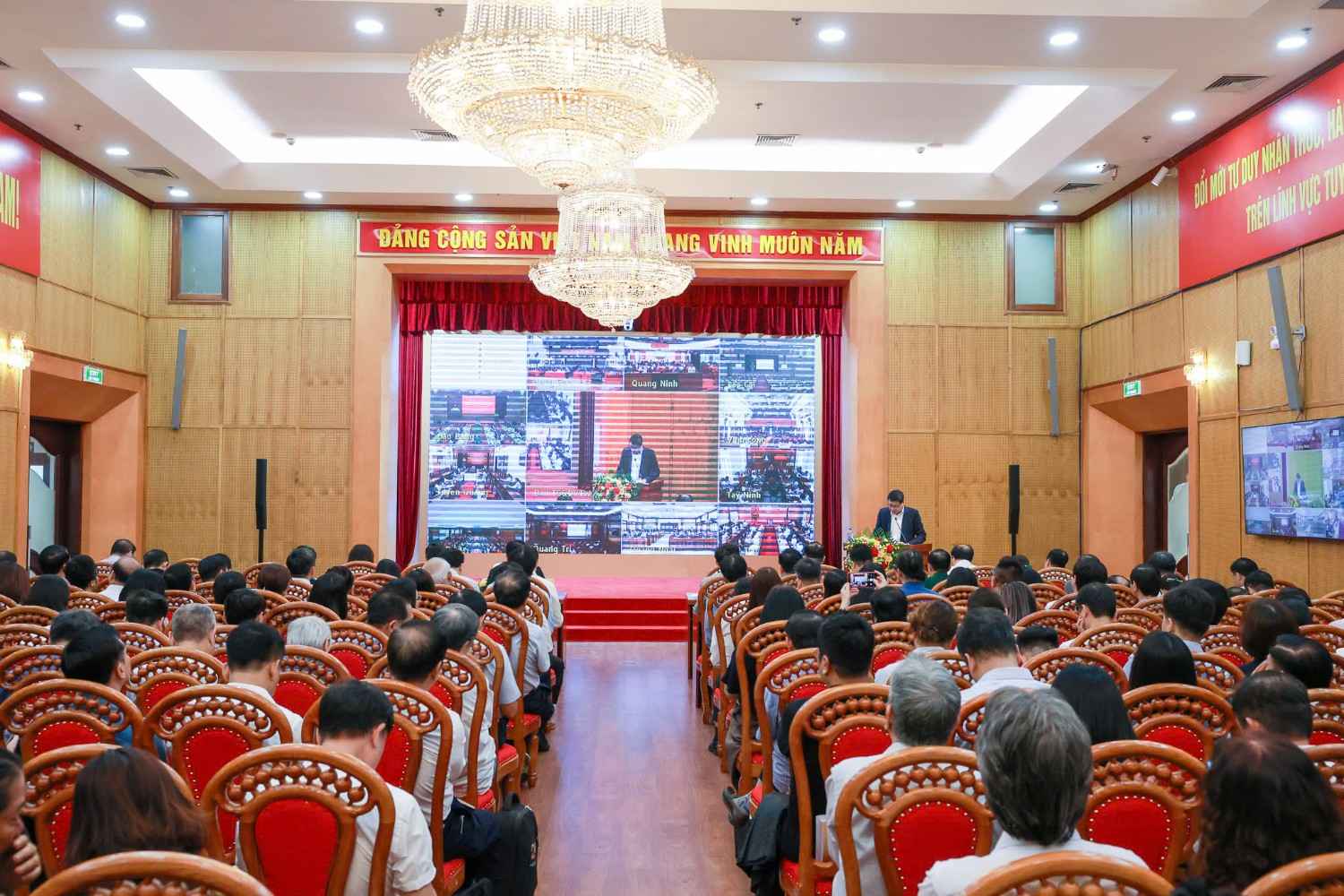
Faced with that situation, the Deputy Minister proposed many implementation orientations to realize the viewpoint of the 14th Party Congress Document. The focus is on shifting from input management to operation according to goals, products and practical impacts. At the same time, innovate the approach according to the "development - technology - product - market" chain, taking business needs as the starting point.
Along with that is restructuring science and technology programs in a streamlined direction, focusing on strategic technologies such as artificial intelligence, semiconductors, and data.
Management methods need to shift to a modern model, based on data and results; financial mechanisms shift to effective funding and controlled risk acceptance.
Another key content is to develop the science and technology market and enhance the role of businesses. Businesses are not only places to apply but must become creative and innovative subjects, leading the needs of technology. In parallel, strong investment is needed in data infrastructure, computing capacity and high-quality human resources.
In particular, the organization of implementation must ensure the principle of "clear people, clear tasks, clear time, clear responsibilities, clear products, clear authority", linking responsibility with specific results.
It can be seen that the viewpoint on science and technology in the Document of the 14th Party Congress is not only a continuation, but a new step in the development of theoretical thinking. In which, science, technology, innovation and digital transformation are identified as the main driving force of the growth model, the foundation for the country to develop rapidly, sustainably and improve self-reliance capacity in the new era.


