
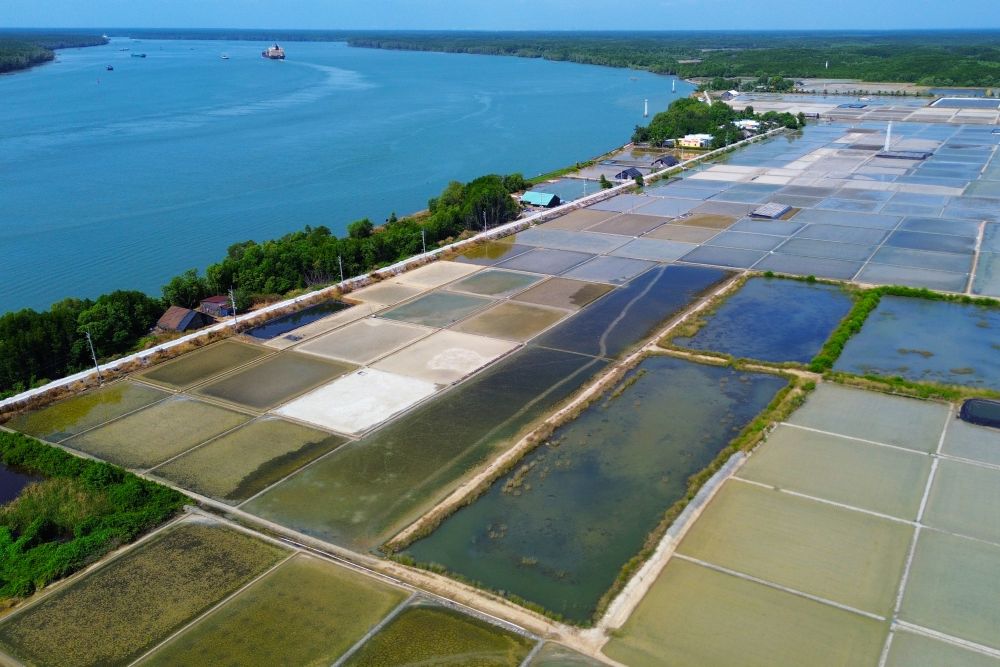
About 70 km from the center of Ho Chi Minh City, Thieng Lieng is like an isolated "oasis" located in the middle of the four corners of Can Gio mangrove forest. To touch this "island in the islands", visitors must spend nearly an hour drifting through Sac forest. There is no smoke or horn here, only the strong winds of the sea and the pure white salt fields.
The pilots at the head of the storm are trying to rewrite their life story in a bold direction: Travel right on the saline fields, with the support of businesses and a strategic vision from the city.
The hardship of "working for half a year, eating for a whole year" in the fields
Thieng Lieng is an island hamlet located deep inside Thanh An commune, possessing a natural area of up to 12,999 hectares with an ecosystem of mangrove forests typical of the Southern coastal area. Few people know that the community here has its own cultural identity. They are mostly migrants from the Mekong Delta provinces (such as Ben Tre and Tien Giang before) who came here to start a business in the early 1970s.
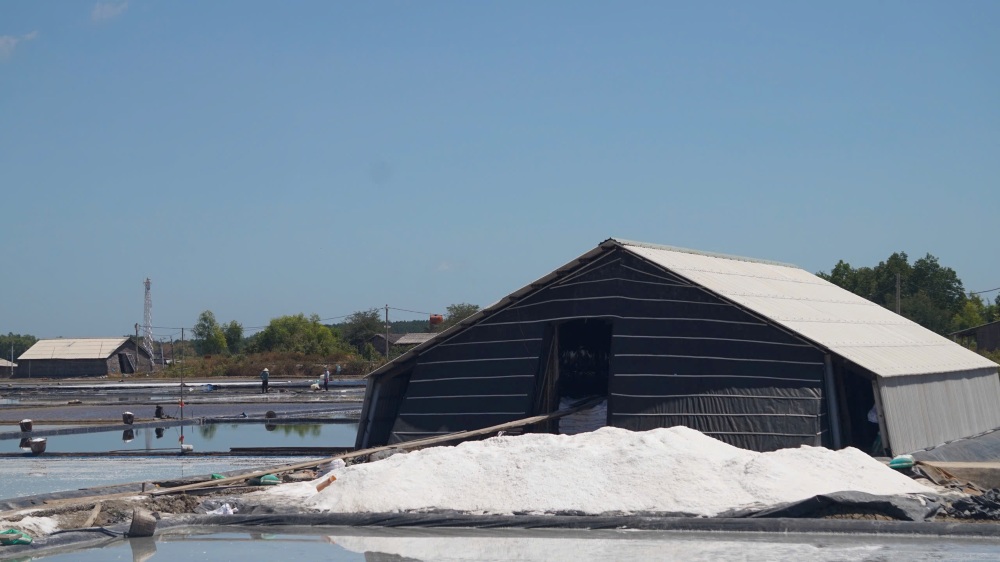
The population of about 243 households is not completely concentrated in one location but is distributed in many small residential clusters, resting on river terrain and based on the foundation of the farming area. In particular, salt production is considered the economic "backbone" of the island hamlet with 152 dairy farming households, accounting for more than 60% of the total number of households, cultivating on an area of 396 hectares.
However, salt production has never been an easy job. The harsher the sun, the whiter the salt grains, but the more the sweat of the spring rolls down.
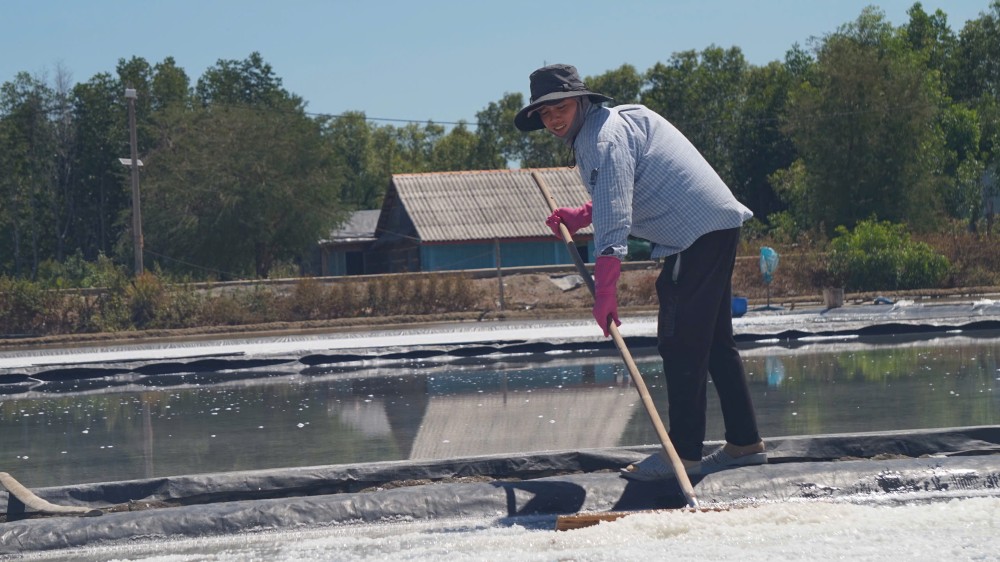
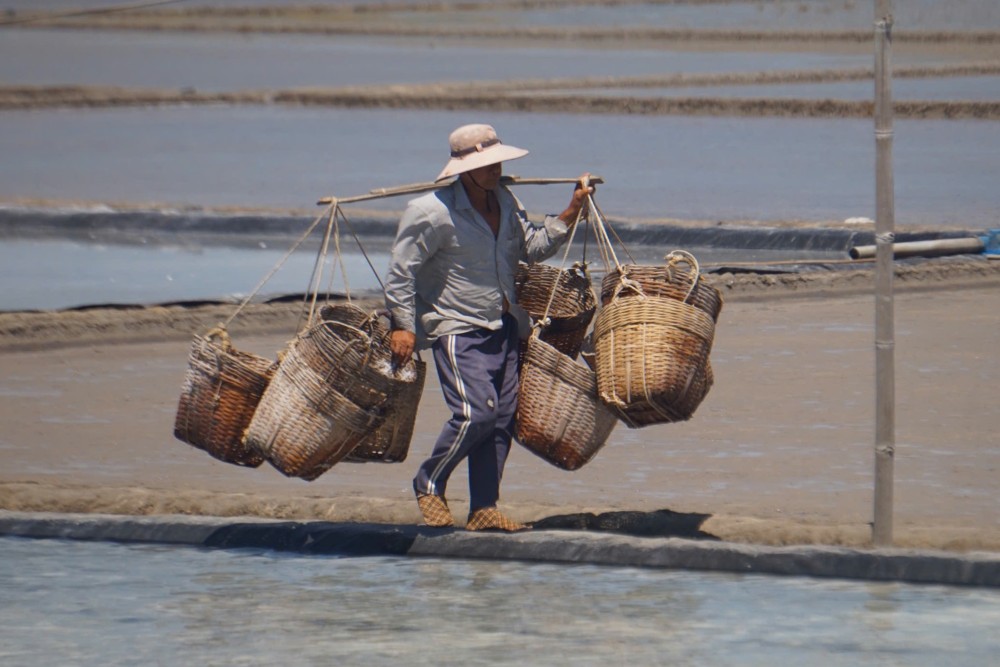
Sitting on the edge of a salt field in the harvest season, Mr. Nguyen Ngoc Tho, an old farmer in the fields over 50 years old, has been attached to the profession all his life, staring into the past. He told us about the vicious cycle of the profession: "Here, the salt season usually starts from the monsoon season, around the 10th lunar month, there are years of delay, so it will not be until December to plant, then last until the 4th of the following year. It is estimated that in a year, Thieng Lieng saltwater rapids can only make salt during the 6 months of the dry season. We worked hard for 6 months to save for the whole year".
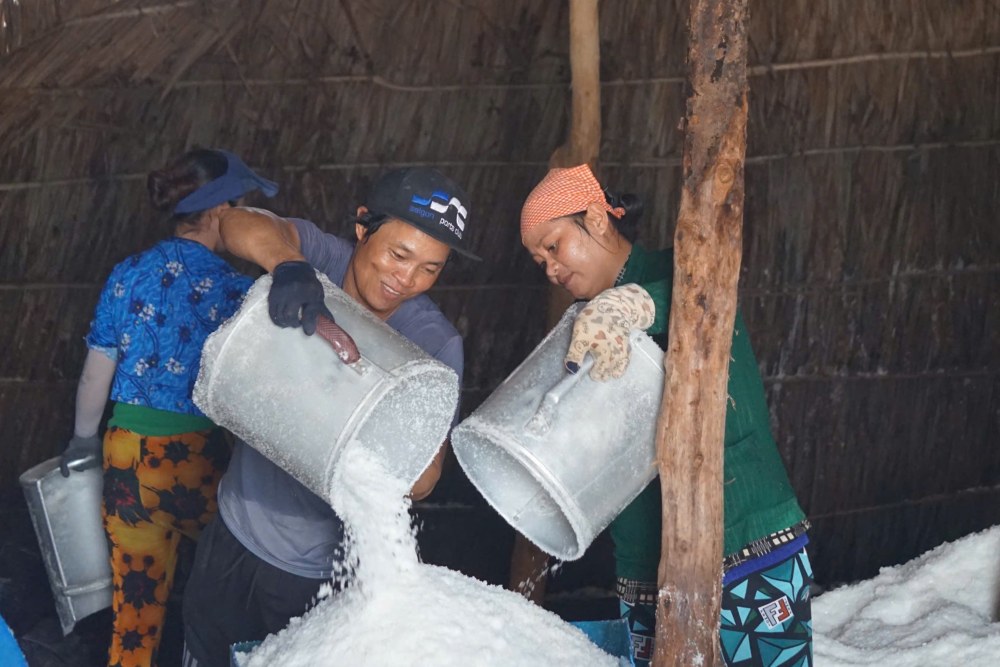
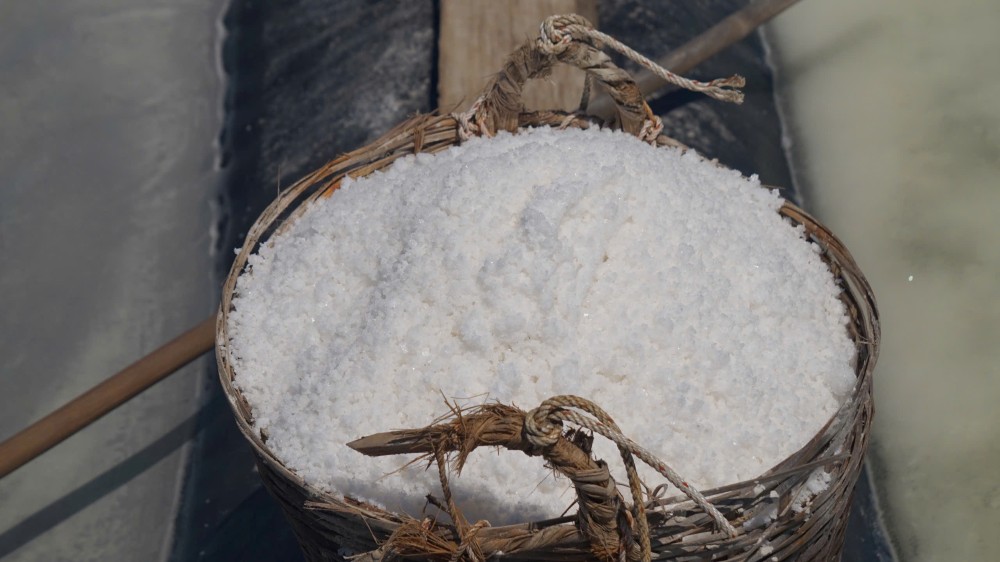
The saying "working for half a year, eating for a whole year" seems easy, but the reality is full of bitterness. In the remaining 6 months of the rainy season, salt fields are flooded, people are unemployed. To make a living, they have to spread everywhere: some go fishing, raise coastal seafood, some take on forest protection contracts, and small traders.
Many young men have even had to leave the island to go to the mainland to work for hire, work as workers, and leave the island village at risk of aging labor. There are also people who have to sadly "in no way" because there is nothing to do in the middle of the isolation of the oasis.
In fact, the slogan " good harvest, bad price; good price, bad harvest" is haunting forever. Mr. Tho sighed: "In recent years, salt prices have decreased sharply, sometimes only about 800 VND/kg. In the first three months of the crop, the rice fields have almost all had no profit. In years with heavy rain or a strong storm, salt fields submerged in water are considered empty-handed, the effort of pouring the river into the sea".
In reality, although production has been improved from making traditional earth salt to spreading tarpaulins to increase productivity and the quality of salt is whiter and cleaner, unstable income has caused the confidence in the profession of young people to decline.
The transformation of people from the policy of developing community tourism
While the livelihood problem is still difficult, the "new wind" from the community tourism development policy has promptly arrived at the island commune wharf. In December 2022, Thieng Lieng became the first community tourism destination in Ho Chi Minh City. By the end of 2023, this island hamlet continued to be in the Top 10 interesting attractions of the city, a worthy recognition for its efforts to "green" the saline land.
From muddy farmers who only know how to sell their faces to the land and their backs to the sky all year round, switching to services, learning how to laugh and greet, how to serve tourists is a "revolution" in thinking. The person who "fueled" this movement persistently was Ms. Nguyen Thi Bach Tuyet, Director of Thieng Lieng Community Tourism Cooperative.
Ms. Bach Tuyet recalled the difficult days when she had to knock on every stadium door, but now her pride is clearly visible in her eyes: "Since there have been tourists, the atmosphere of the island village has been much happier. People are no longer hesitant or self-conscious but proactively take advantage of their homes to open homestays and restaurants. More importantly, selling deeply processed souvenirs such as shrimp salt and herbal footrest salt helps the value of salt grains to be much higher than selling raw to traders".
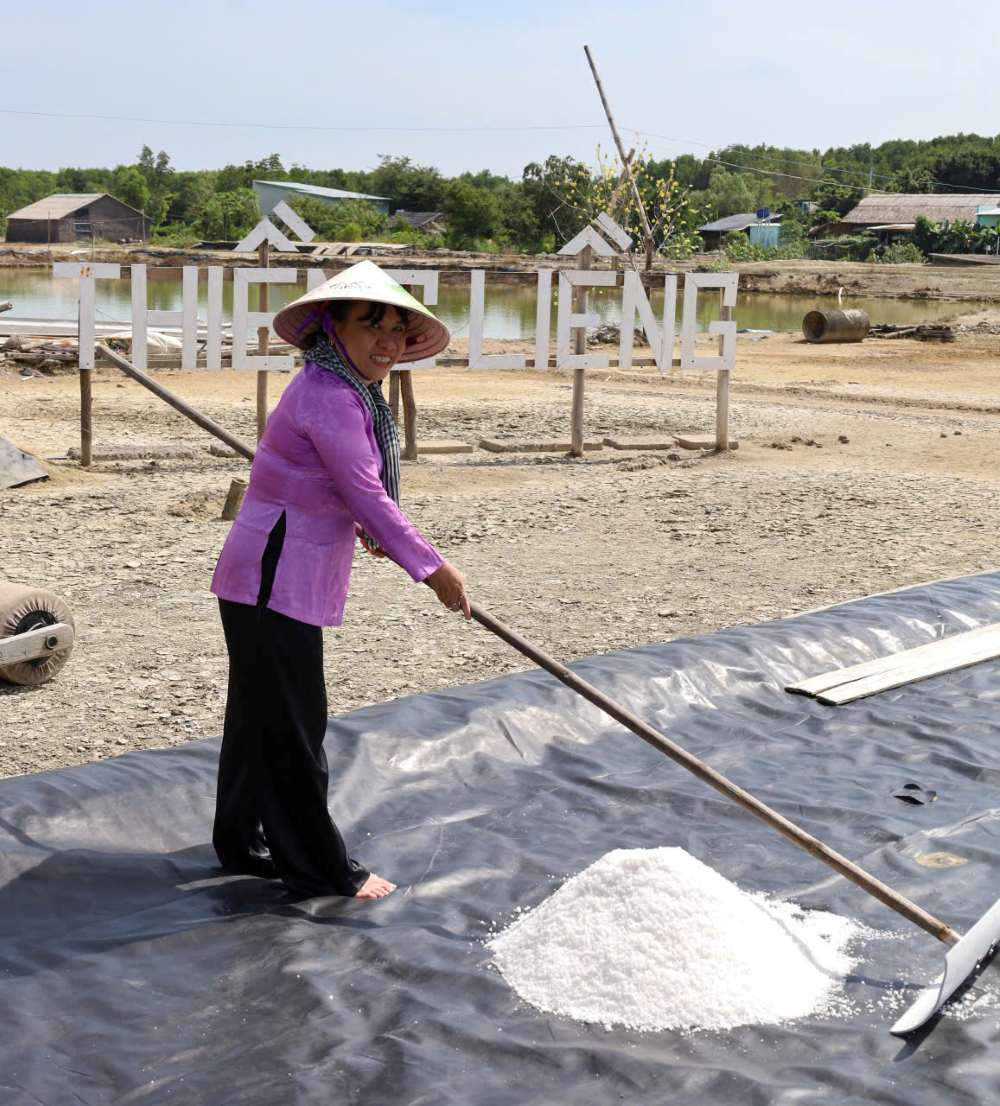
Currently, Thieng Lieng owns 4 products that meet 3-star OCOP standards including: shrimp salt, pepper salt, chili salt and seafood dipping salt. Not stopping there, the Cooperative is continuing to research and develop new product lines such as herbal salt, anchovies salt, young salt, etc., both diversifying gifts for tourists and helping fishermen stabilize their sustainable livelihoods instead of only selling raw salt to traders.
Coming to Thieng Lieng today, visitors seem to be lost in a space imbued with the richness of the Mekong Delta but organized systematically with the "3 no" philosophy: No dust, no bus stations, no bad luck. In particular, to maintain solidarity, the division of customers between households is implemented by the Cooperative according to the principle of rotation and fairness (except in cases where customers have specific requests). This transparency helps all households have the opportunity to benefit, minimizing the situation of solicitation or unfair competition.
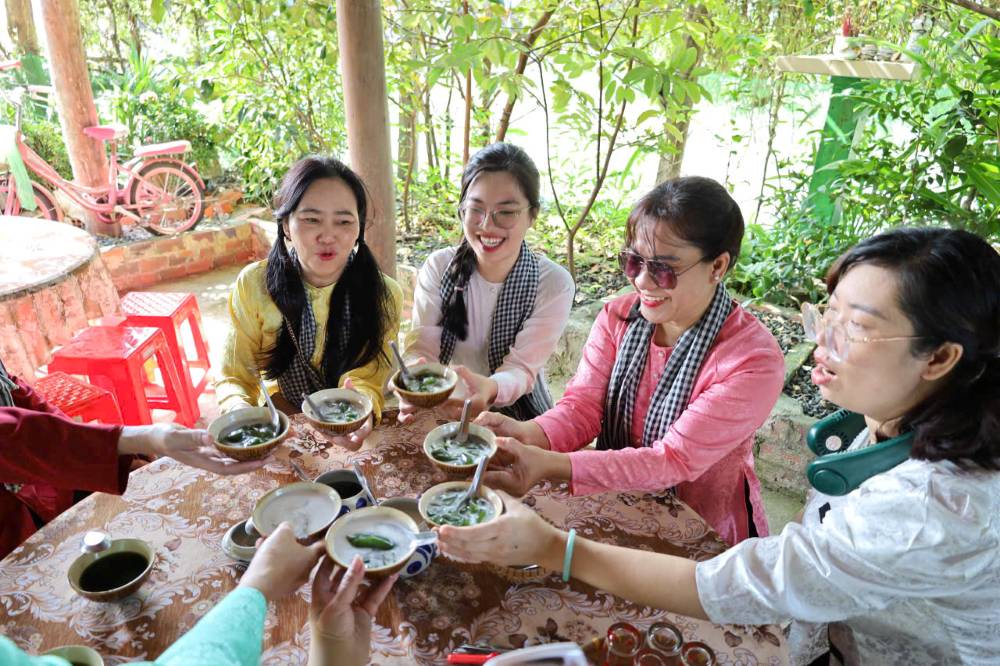
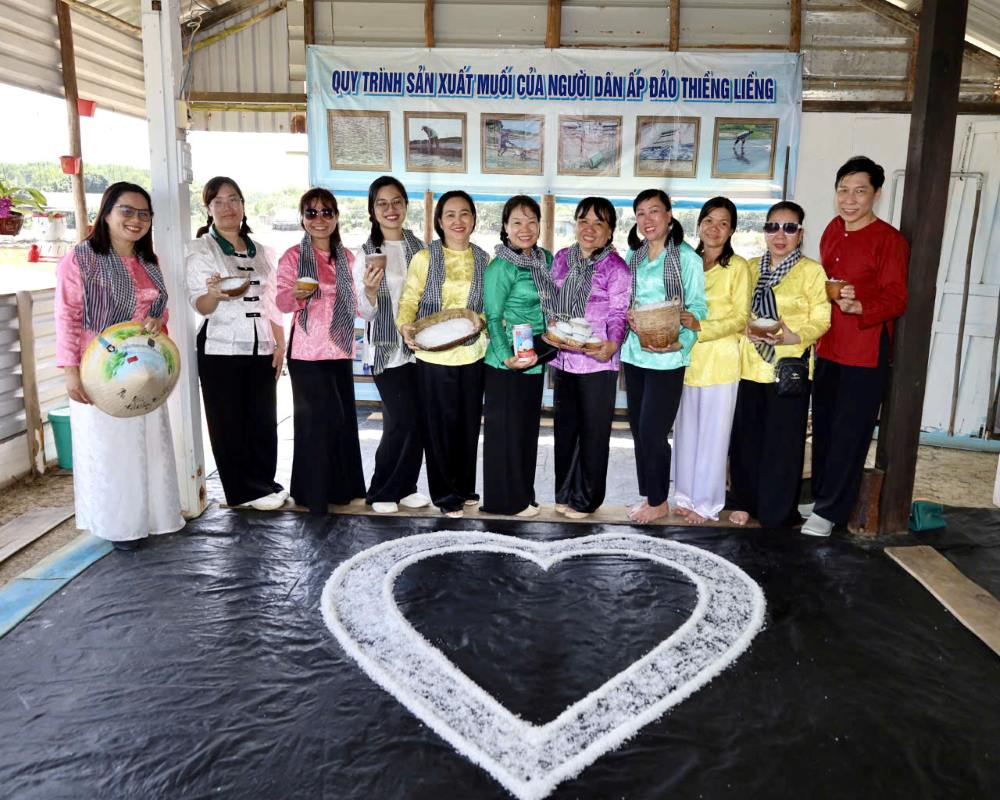
Each household is a link in the closed service supply chain, creating the rustic "brands" that I feel sorry for.
Do customers want to cool down after a long trip? There was a glass of cool Sau Truong ginseng or the rich taste of Tu Tuan water coconut ice cream coffee.
Guests hungry? The Hai Loan folk cakes with the aroma of rice flour or sea-fried rice trays in Muoi Bung's family kitchen are ready to serve.
In the afternoon, visitors can relax with the cheerful harp of actor Tu Huynh, relax with the Nam Tuyet herbal salt soaking service, or find childhood memories with the folk game Ut Thao,...
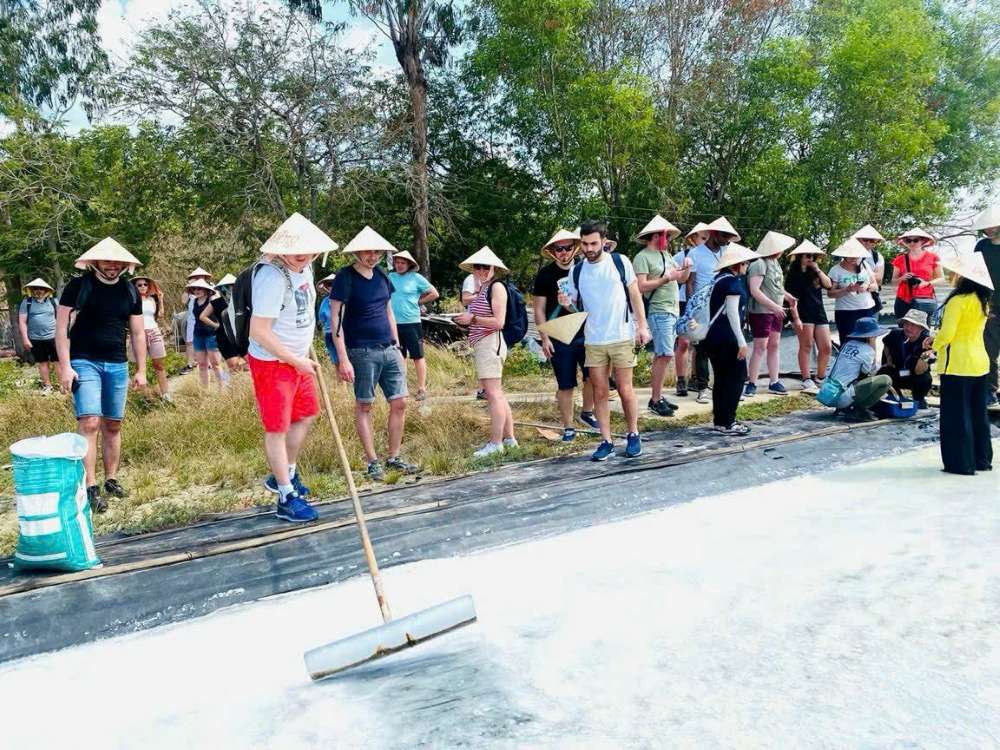
Ms. Ngoc Suong, a pioneer tour guide, shared while guiding visitors to experience the salt fields: "Instead of just standing and watching, visitors can directly scrap salt, carry salt, and taste the salty and salty taste of the sea. From a village guide, I now have an additional job as a tour guide. Life is much happier and more bustling thanks to that, and my income has also improved significantly".
Recording the reality of the island village, it is not difficult to see the image of groups of visitors excitedly handcuffed in pants and roaming the fields, holding scissors, carrying salt under the shining sunlight. Although sweat is annoying, everyone smiles brightly when they can touch the "perilla".
Those authentic experiences, along with the warm welcome of the people through folk songs, folk songs or refreshing glasses of water, have turned Thieng Lieng into a true healing destination, where tourists not only come to see, but also to live with the breathing of the people of the salty land.
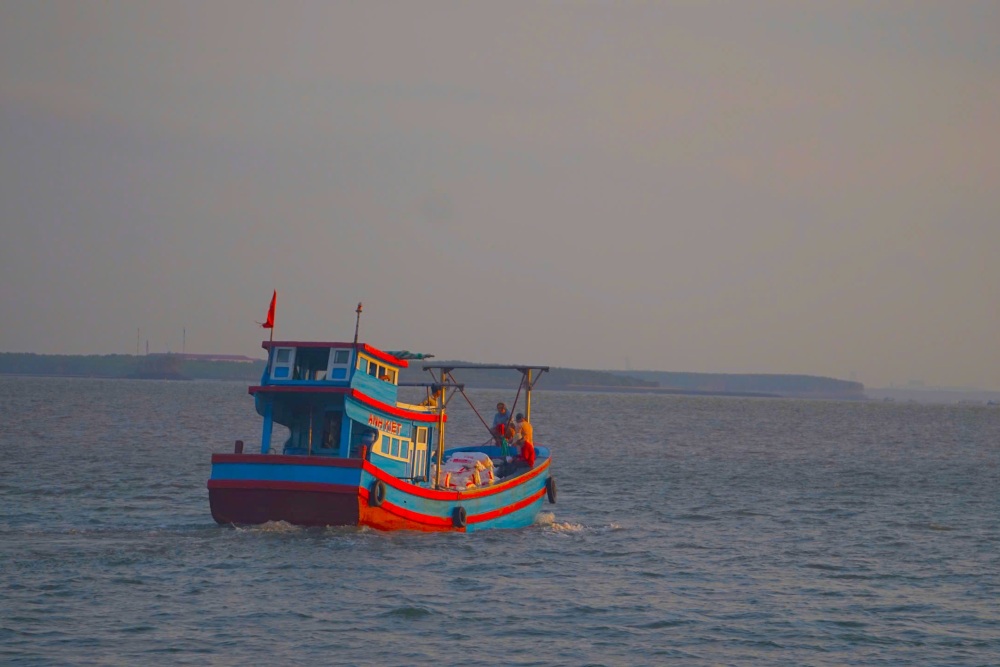
As a travel agency that is directly exploiting the tourism route to the island commune, Mr. Kha Thien Loc, representative of Hoa Sen Group Vietnam Travel Company, commented that even though "born late", Thieng Lieng still has its own appeal thanks to its rusticity and hospitality. However, he frankly pointed out that the biggest barrier lies in transportation: the cost of canoes is currently too high for individual customers, while cheap wooden boats take a lot of time, affecting the journey experience.
However, the future of the island village is very open. According to the strategic orientation, Thieng Lieng is an important link in the "from river to sea" tourism route of Ho Chi Minh City. In particular, when Long Thanh International Airport comes into operation, this place promises to connect the eco-tourism chain from Dong Nai to Can Gio, attracting international visitors.
Looking more broadly, the transformation of Thieng Lieng is an important test for the strategy of developing Can Gio into a high-class eco-tourism urban area. When the infrastructure bottleneck is removed, the cultural values of white salt grains will not only stop at livelihoods to escape poverty, but will become a unique tourism resource, contributing to firmly positioning the green tourism brand of Ho Chi Minh City.


