
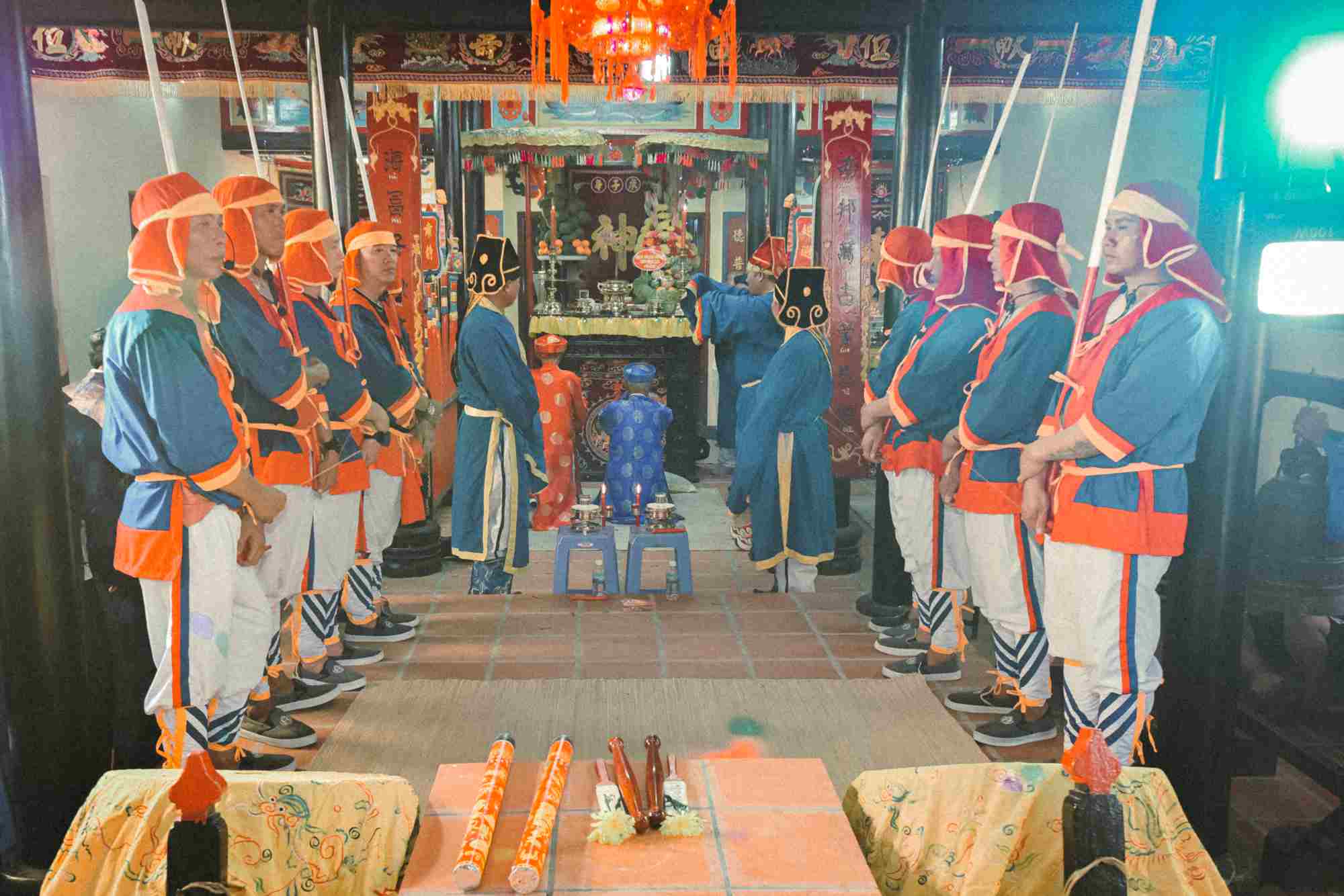
Beauty of the coastal culture
The Cau Ngu festival originated from the custom of worshiping Ong Nam Hai - a respectful way of calling whales by fishermen in the South Central Coast, a species considered a blessing god protecting fishermen. Through many generations, this belief has become an indispensable part of the spiritual life of fishing villagers. According to local people, this is not just a story of escaping disaster from a sea trip, but for fishing villagers, it is a sacred thing passed down by their ancestors for generations.
The ancients still told their children and grandchildren that in the vast ocean of waves and winds, there is always Mr. Nam Hai watching, loving the people who work in the river profession and taking action to help.
In those days, when the sea was raging with anger, the waves and winds were dense, the small boat swam, seemingly having no way to live. In danger, the fishermen only knew to pray and send their sincerity to Duc Ong. And then, as the ancients still said, Ong appeared at the wave's head, approached the side of the boat, lifted up the tilting boat, guided it to turn around to find a way ashore. Strangely, following his footsteps, the waves gradually calmed down, and the wind also stopped whispering. Thanks to that, the boat escaped danger, returning to the shore in the joy and sorrow of those who had just crossed the gate of death.
Such stories are passed down through generations, strengthening the fishermen's belief in the protection of the Ong fish. Every time a whale reaches the shore, people hold a solemn funeral and bring it to worship at Ong's mausoleum as a sacred deity.
The Cau Ngu festival therefore carries the meaning of praying for "peace in the sea, full of shrimp and fish", and at the same time expresses the morality of "drinking water, remembering the source", expressing gratitude to ancestors and those who have contributed to the sea profession. Not only stopping at spiritual elements, the festival also reflects the harmonious relationship between humans and the sea, and the awareness of protecting the ecosystem that has been formed very early.
The highlight of the festival is the Nghinh Ong ritual - processing Ong Nam Hai from the sea to the communal house in the sound of drums and gongs, the boat procession is splendidly decorated. Then is the solemn main worship ceremony, expressing sincerity and aspiration for peace for each offshore trip.
In the modern context, when science and technology increasingly support the fishing industry, the belief in Ong fish still does not fade but becomes a part of the intangible cultural heritage. That is also a source of spiritual strength to help fishermen firmly stick to the sea, contributing to affirming the sovereignty of the sea and islands of the Fatherland.
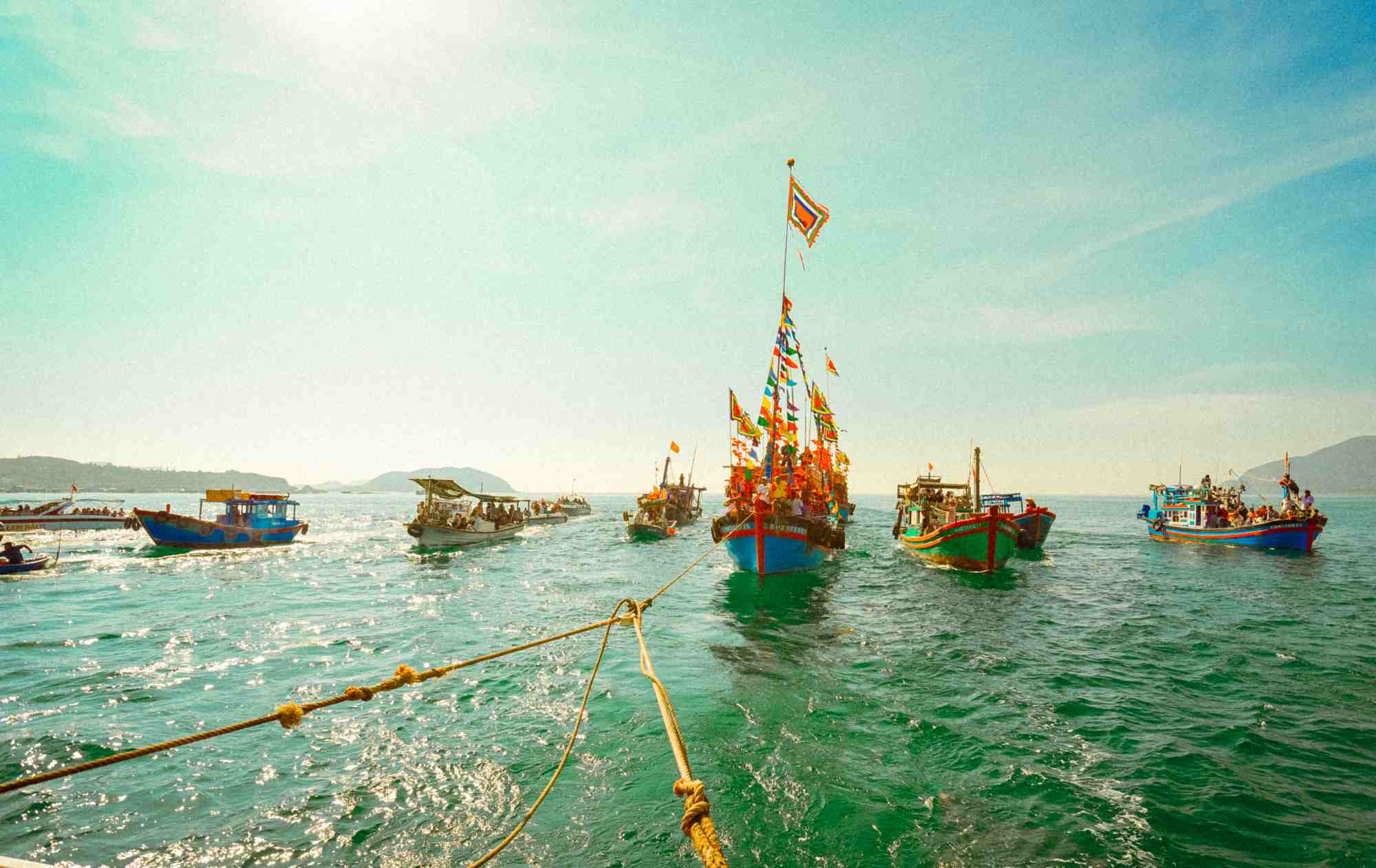
Glue" connects village and neighborhood affection
Not only is it a religious activity, the Cau Ngu Festival is also an opportunity for the coastal village community to become more attached. At Truong Dong communal house (Nam Nha Trang ward), the atmosphere of preparing for the festival has been bustling for many days.
Elderly people gather to discuss and assign each ritual; young people practice Ho Ba Trao; women prepare offerings and cook.Each person does one job but shares the common goal of preserving traditional culture.
Mr. Nguyen Lap - Deputy Head of the Management Board of Truong Dong communal house - said: "From the beginning of February of the lunar calendar, people have proactively come to discuss and contribute efforts to the festival.Some people clean the communal house, some set up tents, decorate Nghinh Ong boats, some contribute items and ceremonial attire...".
That community spirit also helps to heal everyday conflicts. Mr. Nguyen Van Manh, an elderly person in the neighborhood, shared: There are families that once had conflicts, but when they sit together at the communal feast, drink a cup of tea together, mention old stories and then let it go, village and neighborhood affection is restored as before.
The festival is also a space for cultural transmission between generations. Adults tell younger generations about customs and sea travel experiences; teach how to see the tide, guess the wind direction; guide traditional rituals. Through this, the younger generation understands and appreciates the values of their homeland more.
Ho Ba Trao practice sessions are clear proof of solidarity. Trao phus must coordinate smoothly according to the commander's orders, each rowing movement is decisive and even. Mr. Truong Ngoc Long shared that participating in the Ho troupe helps young people understand more about the spirit of solidarity at sea - where if just one person misses the beat, the boat may be precarious.
This year's Cau Ngu Festival has closed, but the aftertaste still lingers in each coastal resident. In the atmosphere of the whole country looking towards the April 30th and May 1st anniversary, the festival is not only a prayer for a favorable fishing season but also a symbol of persistent labor, solidarity and love for the homeland.
Amidst the modern pace of life, the sound of festival drums and Ba Trao folk songs still echoes as a reminder of their roots. Preserving and promoting festival values is also preserving the "sea soul", so that today's and future generations of fishermen can continue to firmly reach out to sea, stick to the sea, contributing to building and protecting the Fatherland.


