
Building a cultural brand strategy
History has clearly shown Hue's role and position throughout its history of more than 300 years as the capital of Dang Trong (1636 - 1775), the capital of the Tay Son Dynasty (1788 - 1802) and the capital of the Nguyen Dynasty (1802 - 1945). Then after the August Revolution, Hue returned to the role of the Ancient Capital and went through many obstacles before receiving great attention from the Central Government as well as efforts from local authorities, to rise on the map of the country in general and internationally in particular with the role of a model heritage city.
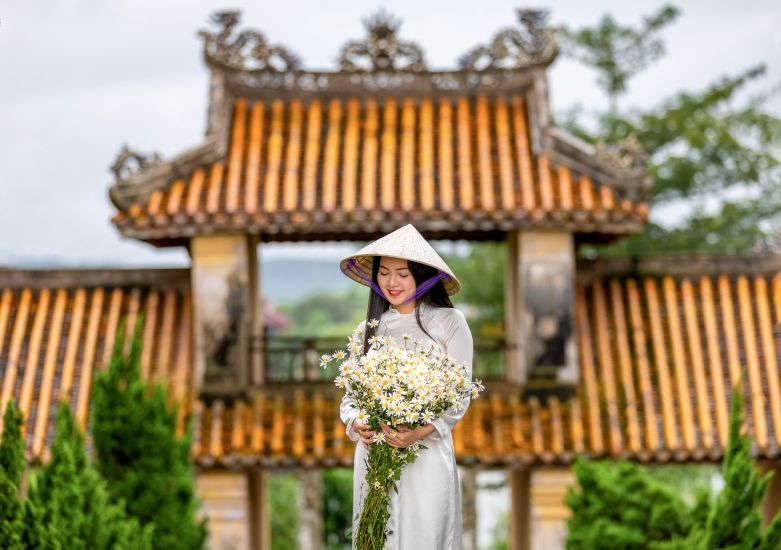
Today, Hue is considered the capital of Vietnamese heritage when it possesses the most massive and diverse heritage system.Among them, one can be proud of 8 UNESCO-listed heritages along with 3 special national-level relics, hundreds of national and provincial-level relics, more than 520 folk festivals, dozens of craft villages and unique values such as ao dai, conical hats, Hue cuisine.
According to statistics from the cultural sector, in the past 3 decades, Hue has mobilized trillions of dong for heritage conservation, especially the Hue Ancient Capital Relic Complex with over 2,000 billion dong in the period 1993 - 2023.
Many symbolic works such as Kinh Thanh, Hoang Thanh, the tombs of King Gia Long, Minh Mang, Tu Duc, Dong Khanh, Khai Dinh, Nam Giao dan, Xa Tac dan, Ho Quyen - Voi Re have been restored. Along with that is the preservation of relics associated with President Ho Chi Minh.
Along with preserving heritage architectural works, Hue also left an impression on the country's cultural industry when it created many modern cultural institutions with a system of private museums, galleries, memorials and creative spaces. In particular, the appearance of high-quality private museums such as General Nguyen Chi Thanh Museum, Huong River Ancient Pottery Museum, Porcelain Museum, Cecile Le Pham Fine Arts Museum... has opened up an effective socialization direction, helping to expand the ability to preserve and display artifacts.
According to Mr. Phan Thanh Hai - Director of the Department of Culture and Sports of Hue City, from 2020, Hue has officially launched a cultural brand strategy with many typical projects such as "Hue - Capital of Vietnamese Ao Dai"; "Hue - Capital of Cuisine"; "Hue - Land of Yellow Apricots"; "Hue - Green, Clean, Bright"... In 2022 alone, Hue officially shaped Hue Festival into a four-season Festival, creating a series of events year-round, keeping Hue always "hot" in the cultural tourism map.
Heritage memories are a source of development
Hue's historical turning point, according to Mr. Hai, is that it is a city directly under the Central Government from 2025. Unlike industrial cities, Hue chooses to develop based on culture and heritage. This strategy requires a combination of conservation and modernization: Applying technology in relic management, deploying digital government, smart cities, green planning, expanding urban space but still retaining identity.
Looking further into the context of globalization, Hue does not cling to the "bamboo hedge" of heritage but proactively integrates and connects UNESCO's creative urban networks, international cooperation in conservation, art exchange, and training of high-quality cultural and tourism human resources. In addition, Hue aims to become a UNESCO Creative City in the field of cuisine and expand to other cultural industries such as cinema, design, fashion, and music.
Looking back at the past journey, it can be seen that Hue converges enough conditions to become a "nucleus" in the national cultural development strategy: A massive treasure trove of heritage; long-standing cultural traditions; in-depth human resources; and a social community that always values cultural values. On that foundation, Hue can position itself as a "model city" in linking heritage preservation with sustainable development, while contributing to enriching Vietnam's identity and image on the international stage.
Hue has proven that culture is not only memory or heritage, but also a development resource. The combination of heritage preservation and contemporary creativity, between preserving identity and international integration, is the key for Hue to rise in the new era. Hue of the future will be a city that is both ancient and modern; both a "living museum" of Vietnamese culture and a dynamic creative center of the region. With a precious heritage, talented people and strategic vision, Hue can completely affirm its position as a "special cultural center of the nation and region" - a model of sustainable development based on cultural foundations," Mr. Hai affirmed.


