
Changing the original elements, ignoring warnings
According to Lao Dong, during the renovation of the Second Tower, in the Cham Khuong My Tower cluster (Tam Xuan commune, Da Nang), the characteristic wall holes inside the palace were flattened - an act that was assessed by the researchers as a subjective intervention, deforming the relic.
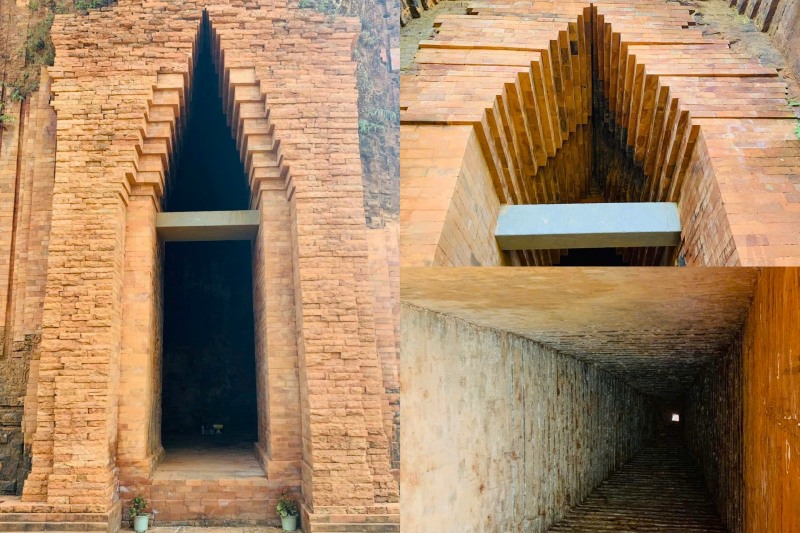
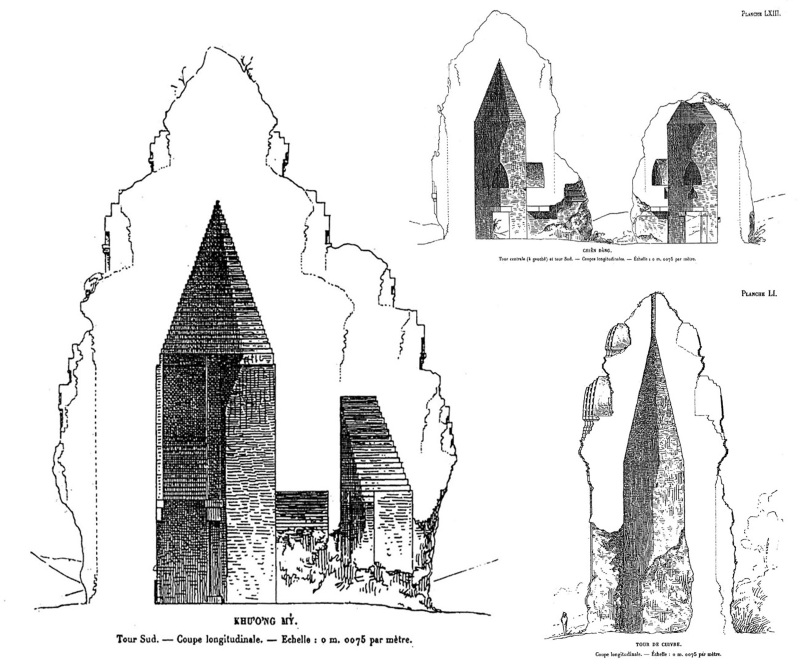
Cultural researcher Cham - Tran Ky Phuong stated: these treacherous walls are the shaping of a cave - an artistic - belief model that has been recorded in documents by French scientist Henri Parmentier since the early 20th century. He sent a letter of comments on September 14, 2022 to specialized agencies, requesting urgent inspection and return of the current status of embankment - blasting to the internal wall, but did not receive any response.
Mr. Phuong warned that flattening the walls is "not stable, even destroying relics", showing signs of violating the Law on Cultural Heritage by deforming them. This opinion is based on a comparison of multiple towers (Khuong My, Bang An, Chien Dan, Banh It...) and international research on Indian temples and towers.
More seriously, records and photos comparing the scene show that about 50m2 in the lobby east of the North Tower and the Central Tower has been dug down to 20 - 80cm to make a construction site - even though the project does not have any archaeological excavation items and no excavation permit according to Article 38 of the Law on Cultural Heritage.
A series of broken pieces, patterns, and Cham bricks were discovered in the rubble pile; some sedge structures were wrapped in a net and moved away from the scene, without the investor's opinion.
Construction of one road, acceptance of another
After the restoration, the new brick walls are no longer patterned; the old part is still good and kept intact, in the spirit of preserving the original patterns. However, in the acceptance notice of the Quang Nam Department of Construction (old), a detailed repair and restoration item with carvings appeared: reliefs, patterns.
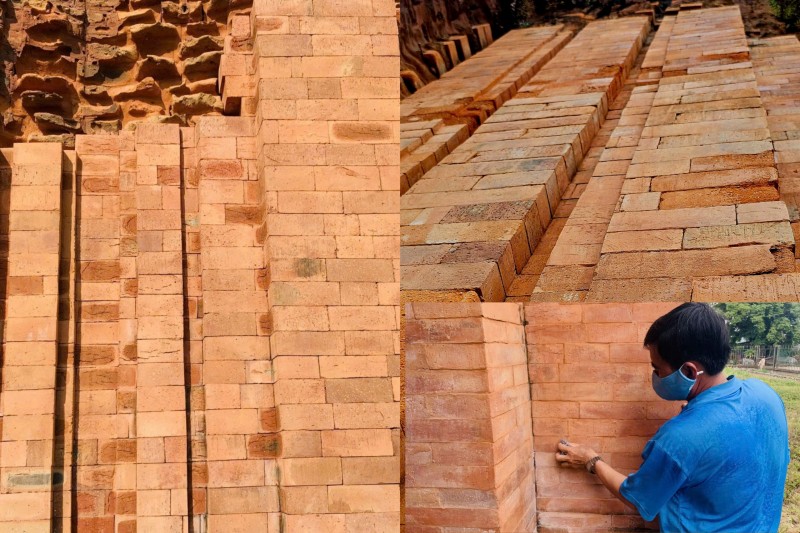
Previously, the agreement document of the Department of Heritage and the database for restoration clearly stated: only restore the construction block, not restore the pattern, and must protect the existing pattern intact. The old Quang Nam Construction Investment Management Board - the project investor explained - this was a machine typing error and had been fixed, but this detail exposed the quality supervision gap between documents and the construction site.

The project acceptance minutes have the signature of the investor - contractor - design consultant - supervision, evaluation of the project "ensuring technical and aesthetic quality" and handover for use.
But just 5 months later, the phenomenon of salinity - mold flared up, until the warranty had just expired, the bricks were muddy and "skinned" when touched. The question is: How much did the acceptance - inspection system argue before signing?
Playing football and blowing the whistle
After the phenomenon of salted and damaged brick surfaces occurred, the construction unit, the Institute of Science and Technology for Construction, took analysis brick samples and in November 2023, this unit sent a report to the investor.
According to the analysis results, the cause of salinity appeared because the materials used to repair the bricks were excluded because the soil for repaired bricks had a very low content of soluble salt, and did not contain the active ingredient of salt and brick mud.
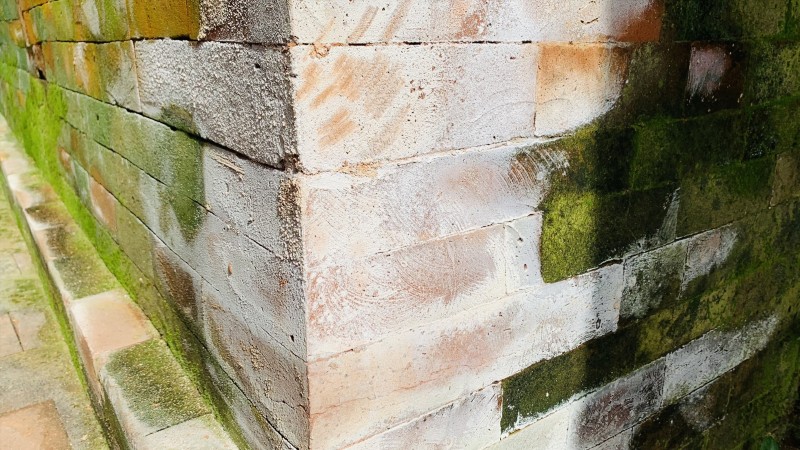
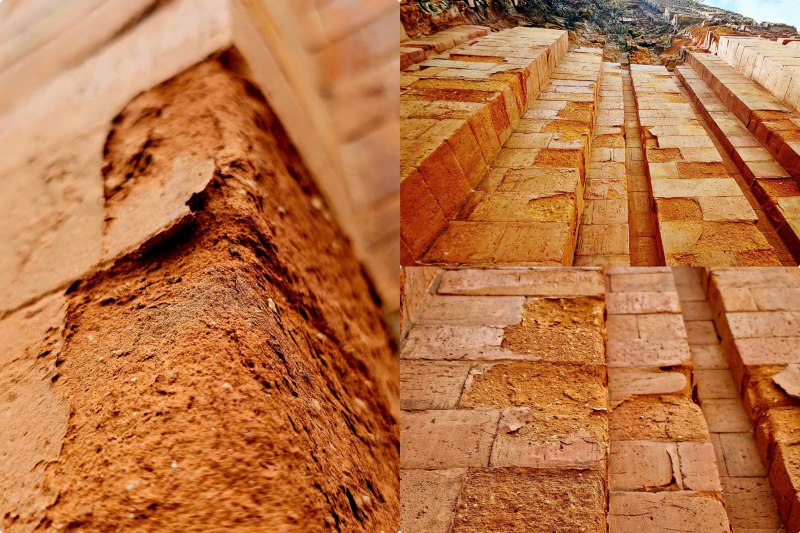
From the information recorded about the condition of Khuong My tower before the restoration of the phenomenon of mud, white salt and moss and their reappearance in newly built blocks, it can be deduced that this is a phenomenon that is popular and exists in all blocks of Cham tower along the coastal area and in the eroded sea atmosphere.
Meanwhile, the 12.6 billion VND restoration project only focuses on reinforcing and preventing the tower temple collapse" - according to the Institute of Science and Technology of Construction.
Talking to Lao Dong Newspaper, a Cham cultural research officer in Da Nang said that the way the Institute of Science and Technology of Construction has followed the reverse process. That is, after the restoration, we will conduct materials research (finding the cause of the phenomenon of salt and causing brick mud).
This person said that, as a construction unit for restoration, if a saltwater phenomenon is detected in the project, it is necessary to propose salt-reduction before restoration, but cannot complete the restoration before stating the cause for correction.
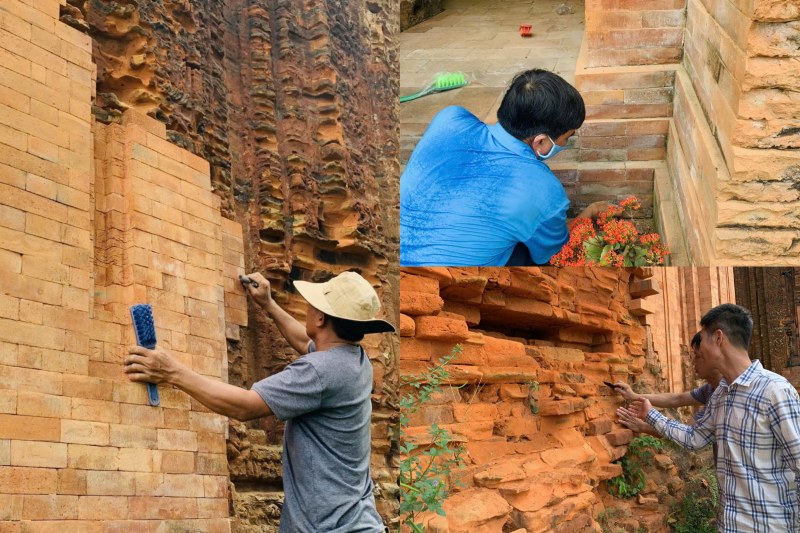
In addition, the construction unit is also the agency analyzing the cause of the broken bricks, is it objective to play football while blowing a whistle?
According to the project investor, the restoration of Cham Khuong My Tower has now expired. In the immediate future, the unit has invited the construction unit to temporarily fix the brick mud situation. The cause must wait for scientists to evaluate and analyze.


