
Hong Ha bridge across the Red River belongs to a public investment sub-project in Component Project 3 of the Ring Road 4 project in Hanoi Capital Region.
The project has a length of about 4.377km, crossing the Ta Hong and Huu Hong dikes, with the starting point of the route in Me Linh commune, and the ending point in O Dien commune.
The construction value of Hong Ha bridge is about 4, 273 billion VND.
According to the Hanoi Traffic Construction Investment Project Management Board, to date, Me Linh and O Dien communes have handed over land to project enterprises (O Dien commune 2.908 ha, Me Linh commune 4.3 ha).
Currently, the 2 communes are continuing to coordinate to relocate underground and above-ground works within the land clearance scope.
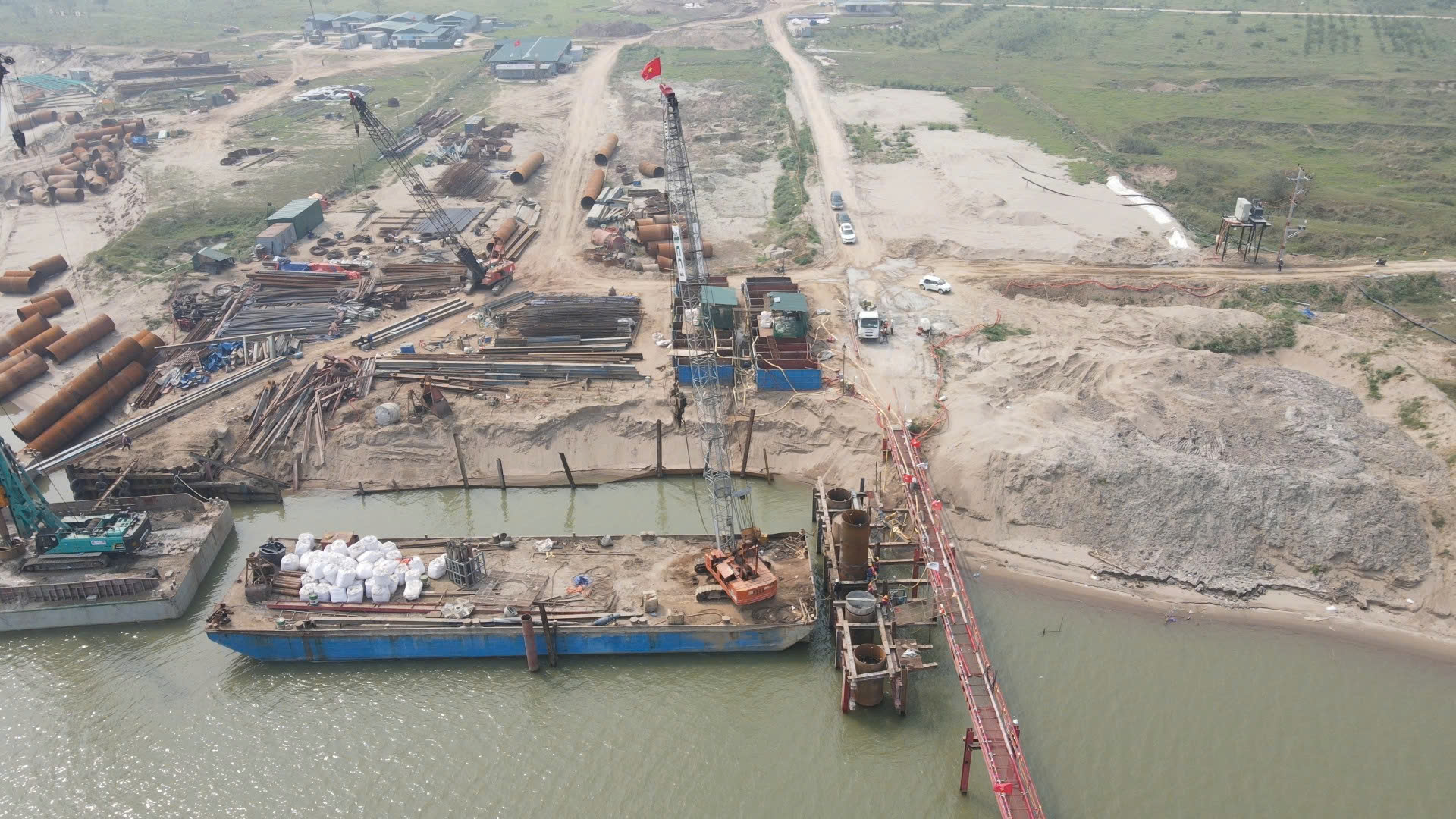
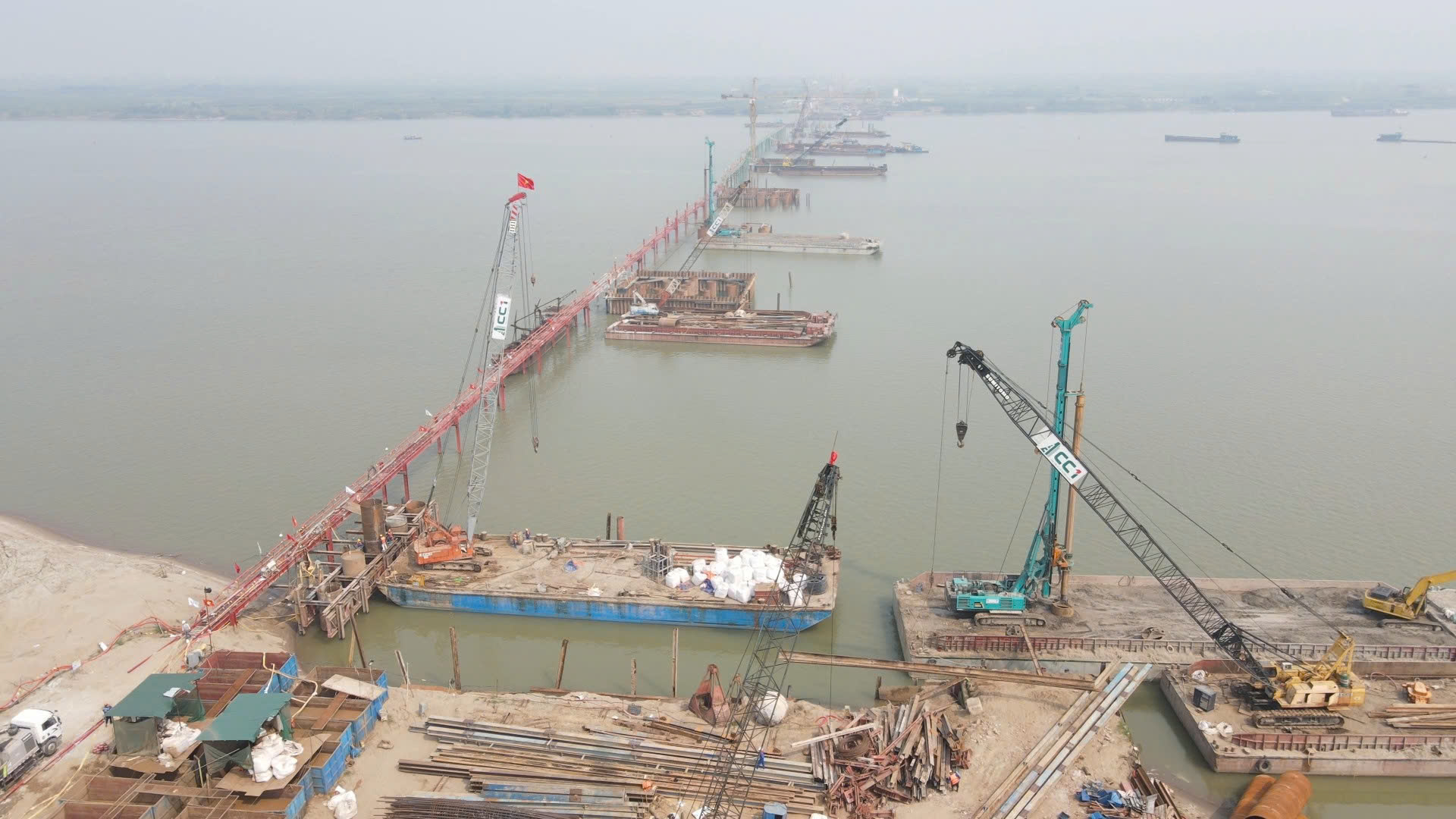
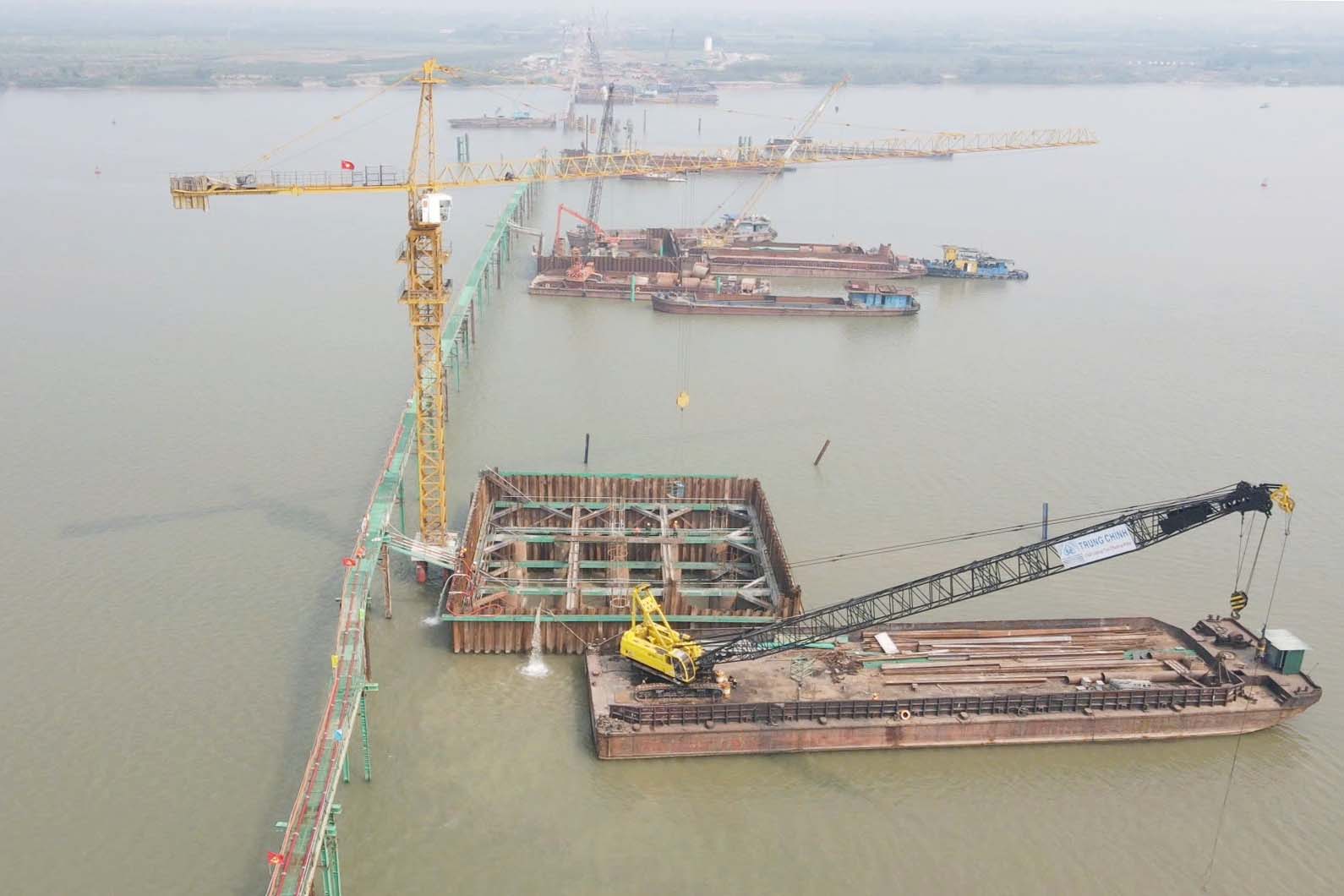
According to Lao Dong Newspaper reporters' records at the Hong Ha bridge construction site, the contractor is actively implementing the item of drilling bored piles and making steel beams.
Many construction teams and many modern machines are under construction in all areas of the project.
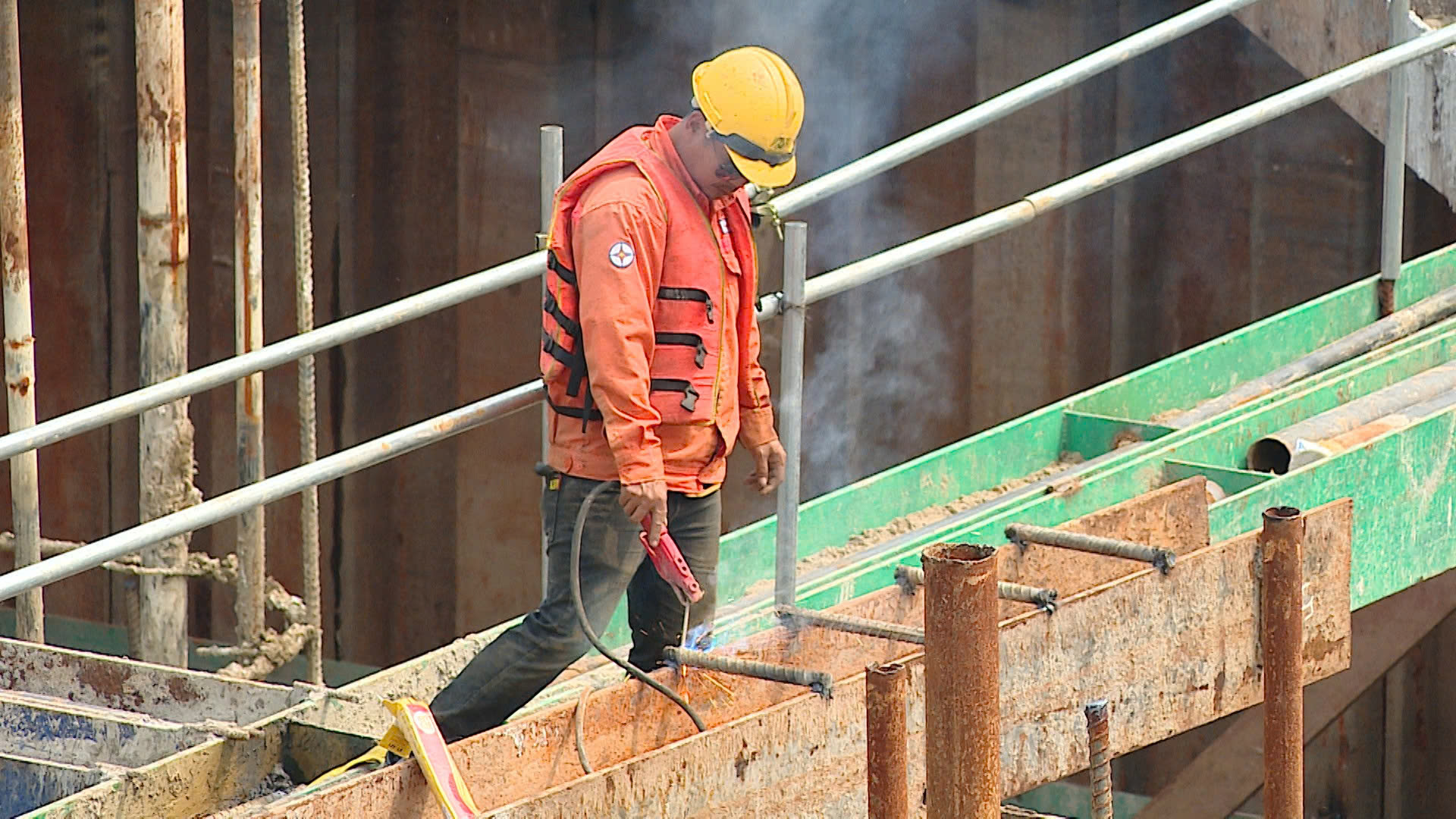
The Hanoi Traffic Construction Investment Project Management Board said that it has deployed the construction of both construction packages on the entire handed-over site with 16 construction teams (package XL-NS. 01 mobilized 13 construction teams; package XL-NS. 02 mobilized 3 construction teams).
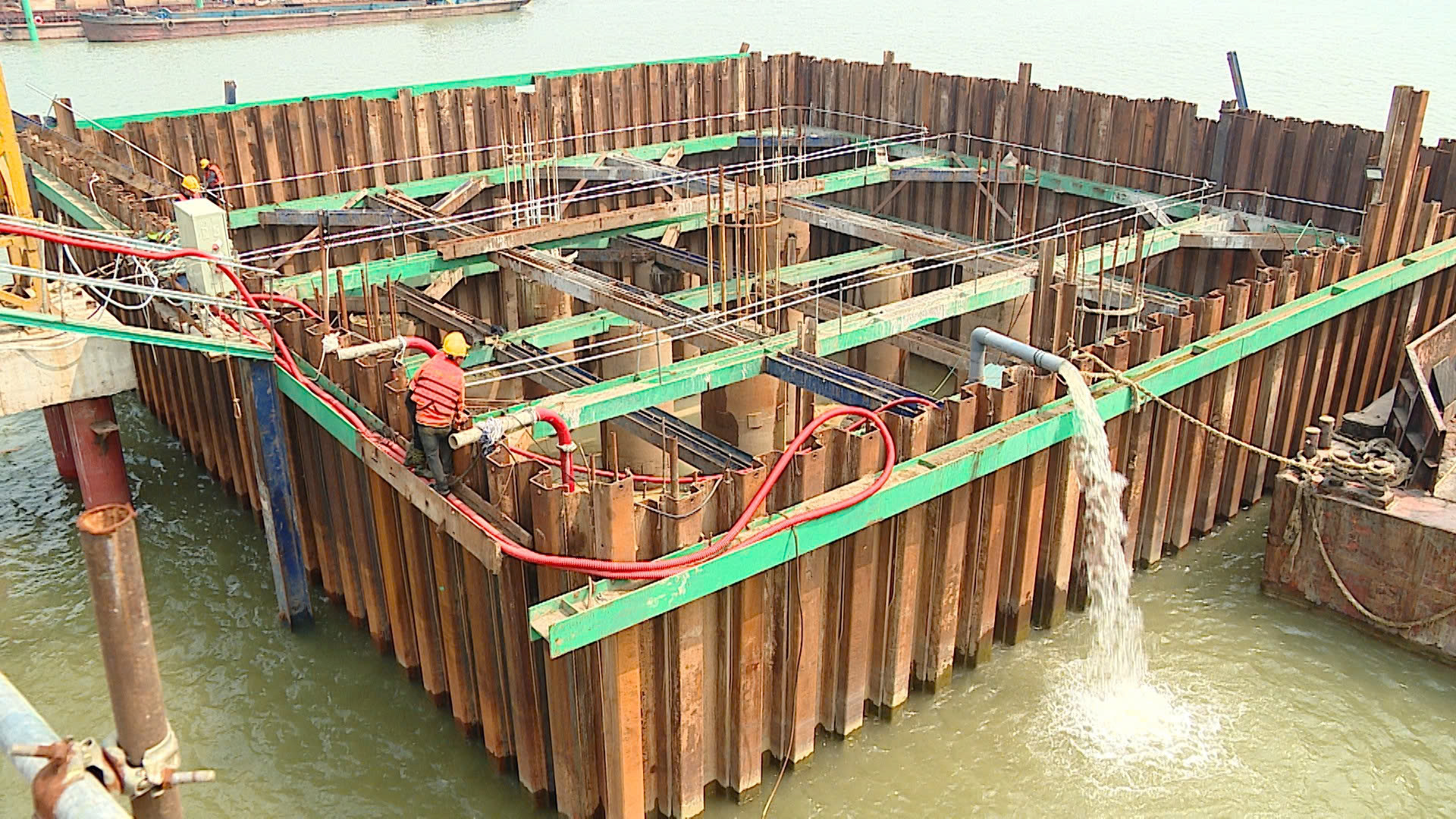
Up to now, about 600/941 bored piles have been completed. The items of foundation pits for bridge piers; concrete pouring of pier bases; steel plank pile frames for bridge piers; casting Super T beams... are being implemented by contractors.
To ensure the project progress, the Hanoi Traffic Construction Investment Project Management Board proposed that the People's Committees of Me Linh and O Dien communes accelerate the relocation of underground and above-ground works after demolition within the project scope.
According to the plan, the Hong Ha bridge across the Red River will be completed in the second quarter of 2027.
Bridges such as Hong Ha and Me So belonging to Ring Road 4, when completed, will strengthen inter-regional connectivity, shorten travel time between Hanoi and Hung Yen, Bac Ninh, Phu Tho provinces, and reduce the load on existing bridges such as Thanh Tri, Vinh Tuy, Thang Long. The new bridge system is also closely linked to ring roads and expressways, contributing to the formation of a synchronous traffic network.
For socio-economics, bridges open up opportunities to promote trade, develop industrial parks, new urban areas, reduce logistics costs, and increase competitiveness for businesses. People in riverside provinces benefit from modern infrastructure and more convenient transportation.
In particular, the construction of bridges over the Red River is also meaningful in implementing the capital's expansion planning, creating conditions for population reduction, developing satellite cities, and shaping Hanoi into a modern, multi-polar, and sustainable urban area.


