
Behind those thank-you signs is the story of mass mobilization, propaganda and the process of creating consensus among people in the implementation of urban development projects. From a bottleneck that has existed for more than two decades, the Ring Road 2.5 project section through Thanh Xuan ward has become evidence that many difficulties in site clearance can be removed when the government and people aim for a common goal.
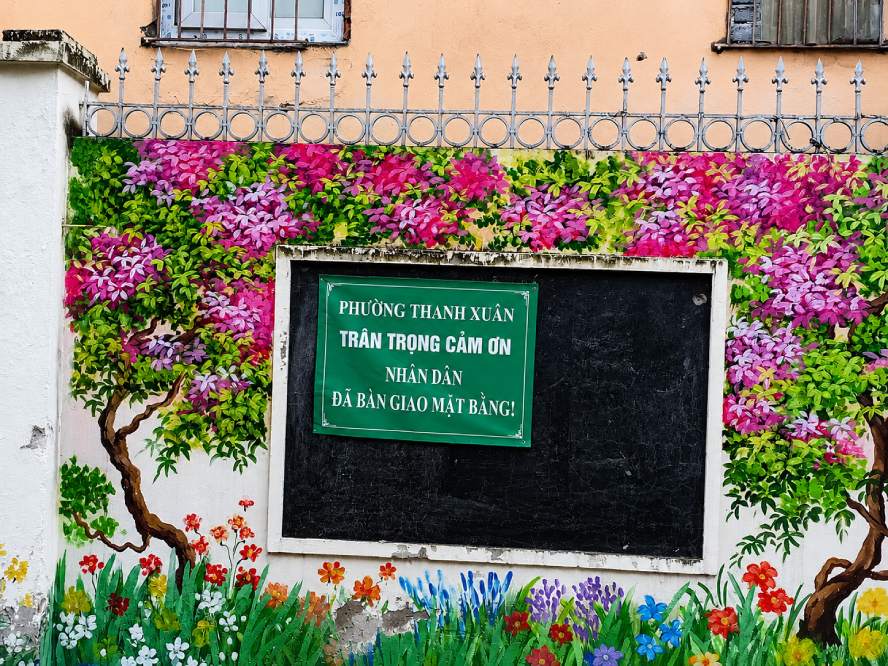
Thank you sign
The Ring Road 2.5 project passes through the ancient Nhan Chinh village area with a length of about 950 m, involving about 700 households with a complex land use history, spanning many generations. This was once a difficult problem to survive for more than 20 years.
However, in just over 4 months of implementation, the entire site has been handed over without coercion or complaints.
According to Mr. Nguyen Hong Quan - Vice Chairman of Thanh Xuan Ward People's Committee, the key factor helping the locality achieve positive results in a short time is the drastic and synchronous involvement of the entire political system from the ward to the residential group. Throughout the implementation process, the locality always maintains dialogue, listens to and promptly answers people's recommendations.
Right from the project implementation, the Ward Party Committee has determined that mass mobilization work must be carried out one step in advance. Propaganda does not stop at meetings to disseminate policies but is concretized by publicizing planning documents, compensation, support, and resettlement plans; organizing many dialogue conferences for people to directly express their opinions, be explained and answer questions.
When entering the implementation phase, 6 propaganda and mobilization working groups were established with the motto "going to each alley, knocking on each door, meeting each person". Many meetings and dialogues were organized in the evening or on holidays to suit the living conditions of the people.
For complex dossiers, ward leaders directly meet and dialogue to remove each obstacle. Nearly 20 dialogues have been chaired by the Secretary of the Party Committee and the Chairman of the Ward People's Committee to resolve the remaining petitions.
What is special is that the mobilization work does not stop after people sign the land handover minutes. Mobile teams continue to support people to move assets and stabilize new residences. Families in difficult circumstances are still cared for and supported during holidays, Tet and after the resettlement process.
From a project that lasted for more than two decades, Ring Road 2.5 section passing through Thanh Xuan ward today is not only a traffic project but also becomes a symbol of consensus between the government and the people.
The story in Thanh Xuan is not just the success of a transportation project. From that reality, it can be seen that social consensus is not the result of simple administrative decisions, but is built by transparency, dialogue and responsibility to accompany people throughout the project implementation process.
Hanoi uses social consensus as a foundation for urban development
What is happening in Thanh Xuan ward is also the approach that Hanoi is persistently implementing in the process of planning, renovation and urban development.
Mr. Truong Viet Dung - Vice Chairman of Hanoi People's Committee - said that currently, communes and wards in the city are implementing site clearance for about 1,428 projects, including 1,281 projects using budget capital and 147 projects using non-budget capital. Among them, there are 27 large, important, and key projects, contributing to removing bottlenecks and creating motivation for socio-economic development of the Capital.
To complete the goal of GRDP growth at double digits in 2026, Hanoi identifies accelerating site clearance and unblocking land resources as a key task. Along with the requirements for progress, city leaders have repeatedly emphasized the view that propaganda, mass mobilization and social consensus must be put first.
Reality shows that for major projects of the Capital such as Ring Road 4 - Hanoi Capital Region, urban railway lines, urban embellishment projects or public space reconstruction, propaganda and mobilization work are always identified as a task that must go one step ahead. The city requires localities to publicly and transparently disclose planning information, compensation, support, and resettlement plans; strengthen direct dialogue with people; promptly resolve legitimate petitions and promote the role of the Fatherland Front and socio-political organizations in the process of mobilizing people.
From practical implementation, Hanoi identifies one of the key solutions to accelerate site clearance progress as creating unified awareness and social consensus. The city requests to publicize and transparently implement compensation, support, and resettlement plans; clearly explain legal regulations; proactively grasp public opinion and handle problems arising from the grassroots level early. At the same time, strengthen coordination with press agencies to provide timely, objective, and true information on the nature of the project implementation process.
This orientation continues to be concretized by Guidance No. 30 of the Propaganda and Mass Mobilization Department of the Hanoi Party Committee on propaganda and mobilization in the implementation of planning; compensation, support and resettlement.
From the reality in Thanh Xuan ward to the policies being implemented by Hanoi, it shows that for urban planning and renovation projects, social consensus is not only a condition to accelerate progress but also a decisive factor in the success and sustainability of the development process.
When people are fully informed, listened to and their legitimate rights are guaranteed, projects that were once considered the most difficult can also become success stories. That is also the foundation for Hanoi to continue to effectively implement urban development programs in the new phase.


