
Tuyen Quang was once the place where many fierce battles took place in the struggle to protect the northern border. According to statistics, more than 4,000 officers and soldiers bravely fell, leaving a part of their blood and bones in the distant border of the Fatherland. To date, many martyrs have not been found or their identities have not been identified.
Responding to the "500 Days and Nights" Campaign (from March 15, 2026 to July 27, 2026) to promote the search, repatriation and identification of martyrs' remains, Tuyen Quang province is implementing many synchronous solutions.
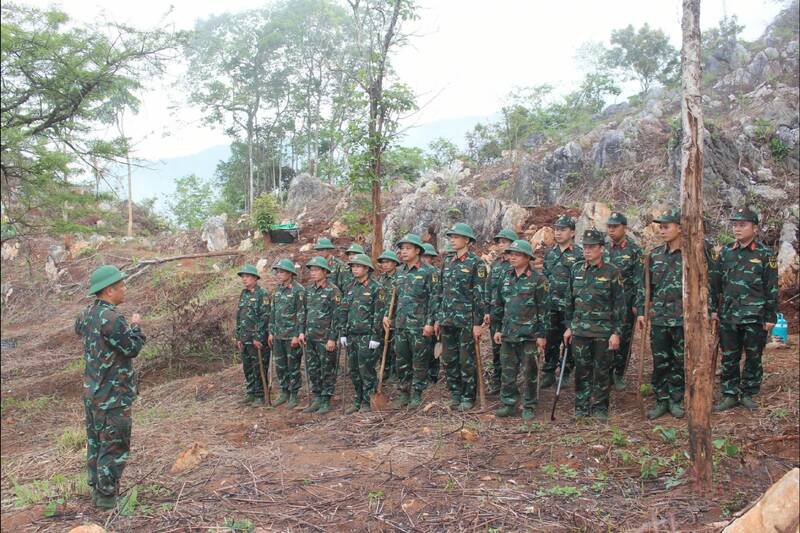
By mid-July 2026, the province aims to complete DNA sampling for 84/84 graves that have not been identified.
Functional forces have surveyed many key areas, including high points 685, 772, 1030, 1688 and many areas along the border line. To date, 7 areas have been identified with 147 information sources serving the search work.
From January 2026 to now, forces have organized searches on an area of nearly 448ha, excavating and embanking more than 4,500m3 of soil and rock, thereby collecting 14 sets of martyrs' remains and 3 mass graves.
According to Colonel Nguyen Minh Khoi - Deputy Political Commissar of Tuyen Quang Provincial Military Command, the locality is focusing on deploying the "500 Days and Nights" Campaign to search, repatriate and identify the remains of martyrs, towards the 80th anniversary of War Invalids and Martyrs' Day.
This is not only the task of the military or functional agencies but also the common responsibility of the entire political system and the whole society," Colonel Nguyen Minh Khoi emphasized.
To perform the task, the Military Command of Tuyen Quang province has advised on consolidating the 515 Steering Committee, establishing specialized working groups, and requested Military Region 2 to strengthen forces and technical means. The number of personnel directly performing tasks has been increased from 18 to 67 officers and soldiers.
The biggest difficulty currently is that the source of information about martyrs and martyrs' graves is increasingly scarce and the accuracy is not high," Colonel Nguyen Minh Khoi said.
Many units that participated in combat have been dissolved, dossiers and documents are no longer complete. Meanwhile, war witnesses are increasingly sparse, making verification, zoning and identification of key areas for search difficult.
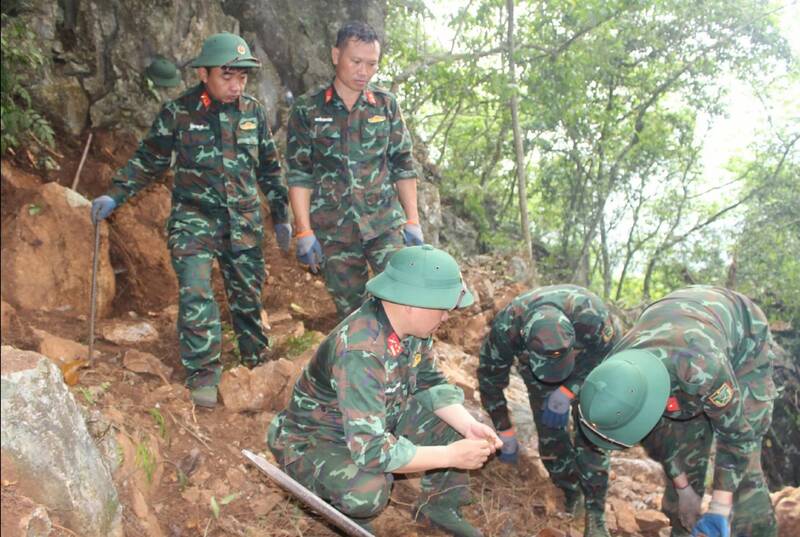
There are areas where martyrs' remains are identified as possibly lying 3 to 4 meters deep under the soil and rock layer. The terrain is mainly dangerous rocky mountains, with steep slopes, making it very difficult to bring machinery to support. Most of the work still has to rely on human strength," Colonel Nguyen Minh Khoi shared.
In addition to facing complex terrain, the task force also had to review in the condition of bombs, mines, and explosives left over from the war.
The weather in mountainous areas often has heavy rain, fog, and the high risk of landslides also significantly affects the progress of task implementation. Despite many difficulties, officers and soldiers still stick to the area, persistently following each source of information to soon bring the martyrs back to their families and homeland.


