
Attending the seminar were leaders of the Vietnam Journalists Association; representatives of state management agencies on the press; leaders of central and local press agencies; representatives of Journalists Associations of provinces and cities, and a large number of reporters and editors of press agencies in the Northern region.
Speaking at the opening of the seminar, Mr. Nguyen Duc Loi - Standing Vice Chairman of the Vietnam Journalists Association said that today's seminar opened a series of in-depth seminars organized by the Vietnam Journalists Association nationwide with the aim of updating new legal regulations and identifying risks arising in practical operations.
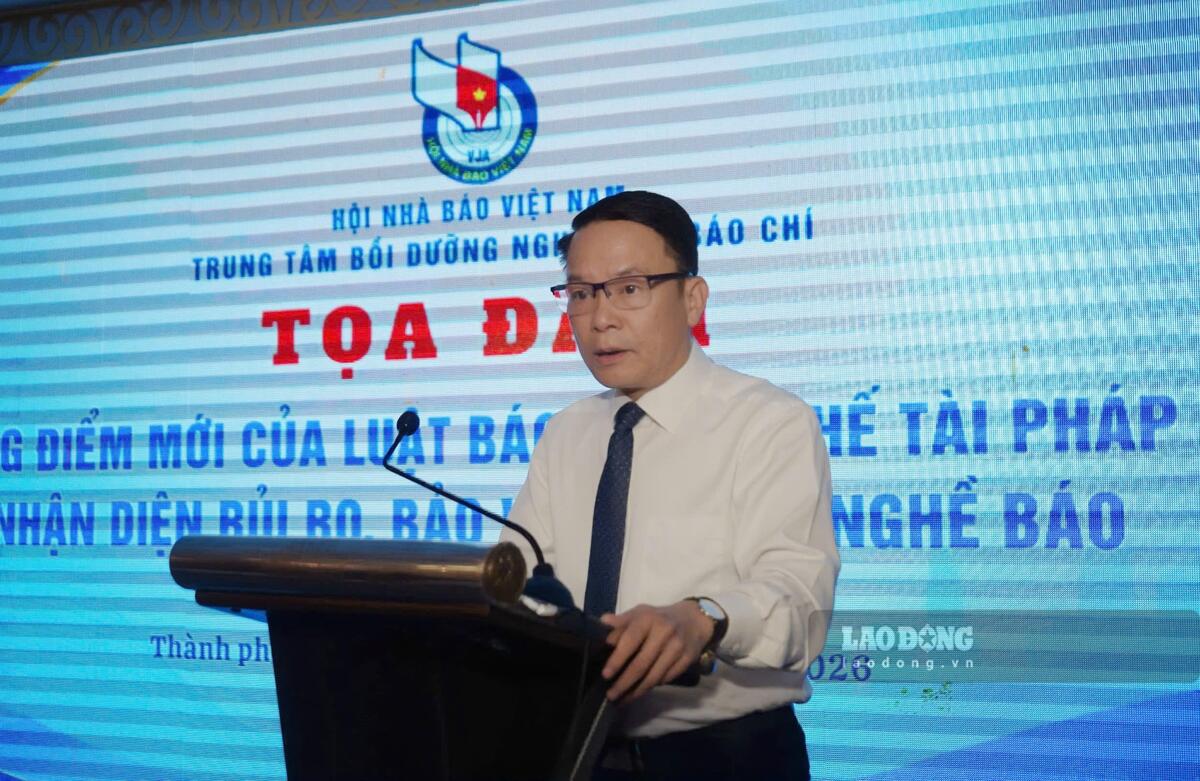
According to Mr. Nguyen Duc Loi, a professional press is not only assessed by the speed of reporting or the spread of journalistic products, but must first be built on the foundation of truth, responsibility and the spirit of respecting the law.
The Press Law and related legal regulations create a legal corridor for press activities, ensure the right to work, the right to access information, and clearly define the responsibility of journalists to society.
Along with the law, professional ethics is considered an important "barrier" to help journalists proactively identify and prevent risks. In situations where the law cannot fully cover, responsibility, conscience and professional standards are the basis for journalists to consider before publishing information that may affect the rights and interests of individuals, organizations and the community.
At the seminar, delegates, experts and representatives of press agencies focused on exchanging key contents of the Press Law and legal regulations related to press activities.
The analyzed contents include new points, amended and supplemented contents of the Press Law; regulations on information management and provision; legal responsibilities of heads of press agencies; protection of copyright and related rights; as well as legal mechanisms to protect journalists when working in accordance with regulations.

Sharing about the new points of the Press Law, Mr. Nguyen Van Hieu - Deputy Director of the Press Department, Ministry of Culture, Sports and Tourism emphasized that the Press Law in 2025 is an important milestone for the development of Vietnamese revolutionary journalism, creating a legal foundation for journalism development in the context of digital transformation.
The Press Law 2025 is built on three major orientations: expanding the development space of the press in the digital age; strengthening support mechanisms and developing the press economy; and at the same time improving legal responsibility and the effectiveness of state management.
The law expands the operating space for press agencies, which is the publication of newspapers in cyberspace. When press agencies operate in cyberspace, in addition to publishing and broadcasting press content, they are also integrated with online service activities, including: public service activities, e-commerce, financial services, banking, insurance, education, health, providing content on request and other services according to the provisions of law. Regarding activities in cyberspace, press agencies do not have to apply for a license but are only responsible for notifying state management agencies on the press.
Press agencies are also allowed to cooperate with partners to establish, operate and produce content for content channels in cyberspace on social networking platforms and other digital media platforms (press agencies are responsible for content posted on linked channels)...
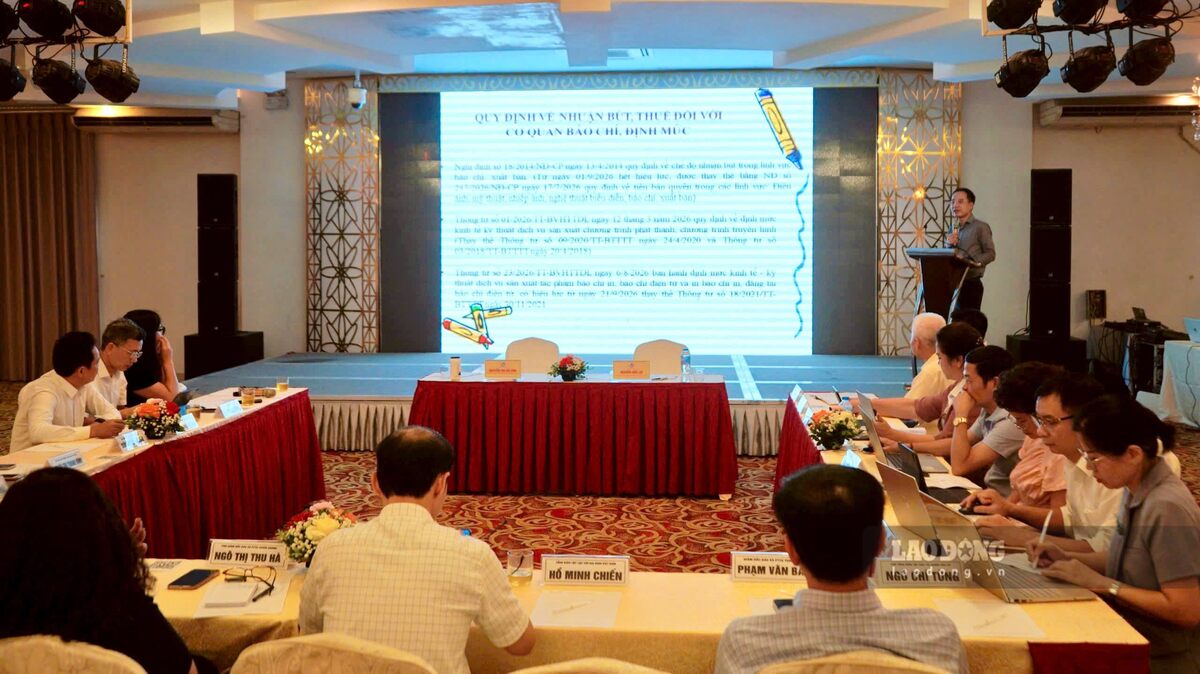
The Deputy Director of the Press Department also informed about the addition of regulations on new revenue sources for press agencies in the Press Law 2025. Accordingly, in addition to revenue from copyright for reading, listening, viewing and allowing the exploitation and use of press works, press agencies can collect from financial activities and capital contributions to enterprises (if any), revenue from providing public service services assigned tasks, ordering, bidding; revenue from performing tasks, programs, projects, and schemes assigned and approved by competent authorities and revenue from people who need to publish scientific research articles.


