
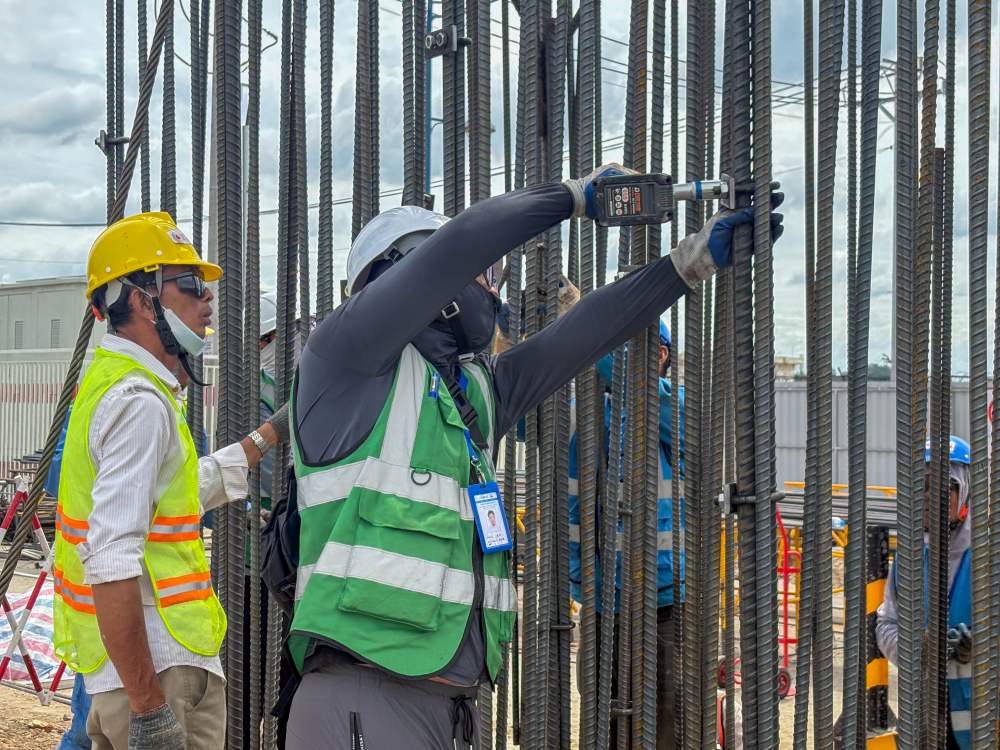
On July 2nd, the Ho Chi Minh City Urban Railway Management Board (MAUR) deployed the lowering of steel cages to construct the fence at Pham Van Bach underground station. The event marked the official transition of Metro Line No. 2 (Ben Thanh - Tham Luong) to the direct construction phase at the construction site.
Representatives of MAUR said that the construction event at ST10 underground station (Pham Van Bach station) took place on the occasion of the 50th anniversary of the City named after President Ho Chi Minh. This is proof of the determination to accelerate the progress of the investor, the EPC General Contractor Consortium and the collective of engineers and workers at the construction site.
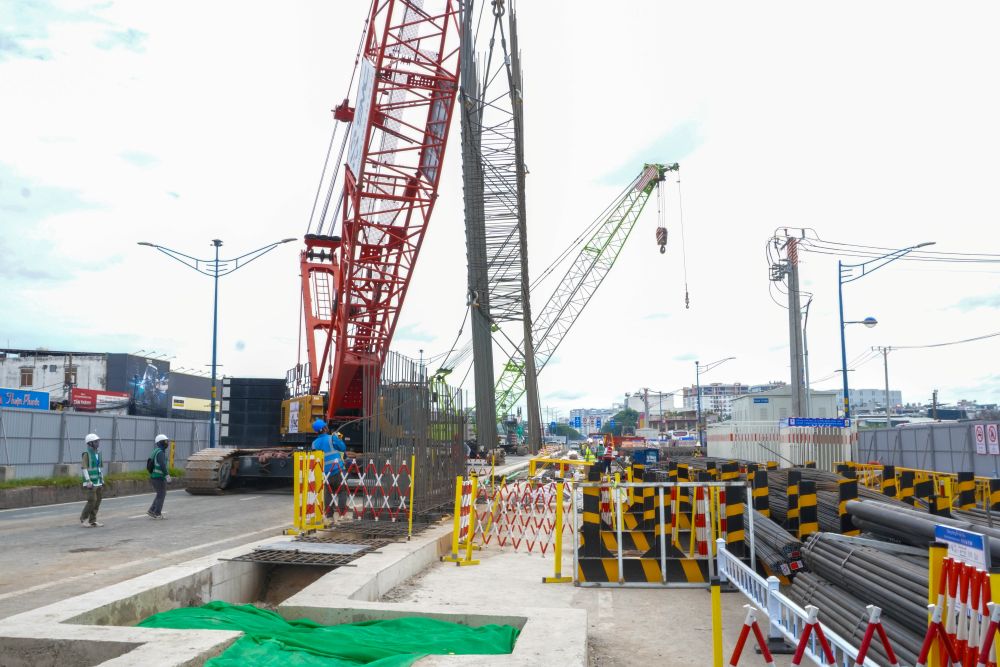
Along with Le Thi Rieng station (ST5), Pham Van Bach station is one of the most important nodes of the entire route. This place will be the starting point for 2 "super" TBM underground drilling machines serving tunnel excavation in the coming period.
For TBM machines to operate, the station construction must go one step ahead. In which, the fence is the first core technical item, helping to create a solid enclosure structure, ensuring safety for workers and creating ground for the next steps. The total length of the fence at Pham Van Bach station is about 534m, expected to be constructed continuously for 6 months.
The construction of underground items requires very strict requirements on technology and labor safety. Therefore, the work of controlling material quality and organizing scientific ground is particularly focused on by units to protect the safety of workers and minimize the impact on traffic in the area.
Currently, in addition to Pham Van Bach station, engineers and workers are also sticking to the construction site at Le Thi Rieng station. According to the plan, in July and August 2026, after completing traffic diversion, the project will carry out barricades and simultaneously construct at all remaining stations on the route.
MAUR is committed that during the construction process, it will closely coordinate with local authorities and functional forces to monitor labor safety, ensure progress, and minimize inconveniences for people's lives and travel.


