
On April 15, information from the People's Committee of Cao Bang province, on April 17, the province will organize a workshop "Mountain cities adapting to extreme climate change" with the participation of about 600 domestic and foreign delegates.
This is considered an important forum to reshape urban development strategies in the context of increasingly unusual natural disasters.
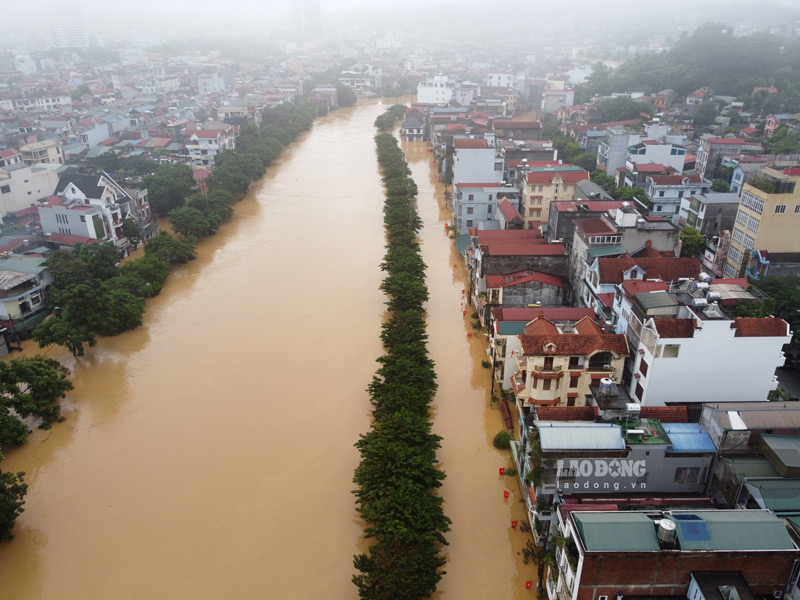
In fact, in recent years, especially the floods in 2025, extreme weather phenomena in Cao Bang have broken the familiar rule.
Many central areas such as Thuc Phan, Tan Giang, Nung Tri Cao are deeply flooded, clearly revealing the limitations of the traditional planning and infrastructure system. This poses an urgent requirement to shift from "flood control" thinking to proactive risk management.
At the workshop, experts will focus on building a risk data platform through updated rain curves (IDF), digital terrain models (DEM), combining GIS technology and 2D/3D flood simulation.
Through this, vulnerable areas will be accurately identified, serving early warning and operation.
Notably, planning thinking will strongly shift to the direction of "living with the country", applying models such as "sponge city", combining green and gray infrastructure according to the principle of "keeping - seeping - storing - delaying - controlled discharge".
Solutions such as regulating lakes, water storage spaces, and flood dispersal areas on the outskirts are expected to reduce pressure on residential areas.
In parallel with planning, Cao Bang also promotes improving community capacity through training programs and workshops on disaster prevention skills, especially in areas that are frequently affected.
Communication work is implemented diversely, focusing on vulnerable groups and using many ethnic languages to increase accessibility.
Previously, the province had built a "72-hour Kit", helping people proactively prepare essential items to respond in the early stages when isolated due to natural disasters. This is considered a practical solution, shifting from post-disaster support to proactive prevention.
The results of the workshop will be summarized into an investment portfolio for the 2026-2030 period, and at the same time serve as a basis for proposing the development of a national program on mountainous urban areas adapting to climate change, towards sustainable development in increasingly extreme climate conditions.


