
On January 22, the Office of Thanh Hoa Provincial People's Committee said that the Provincial People's Committee had just issued the operating procedures for the Len River irrigation system. Accordingly, the Chairman of Thanh Hoa Provincial People's Committee assigned the Department of Agriculture and Environment to coordinate with Bac Song Ma Irrigation One Member Limited Liability Company to publicly announce the operating procedures, and at the same time, request relevant agencies to report and propose adjustments if there is necessary content in the implementation process.
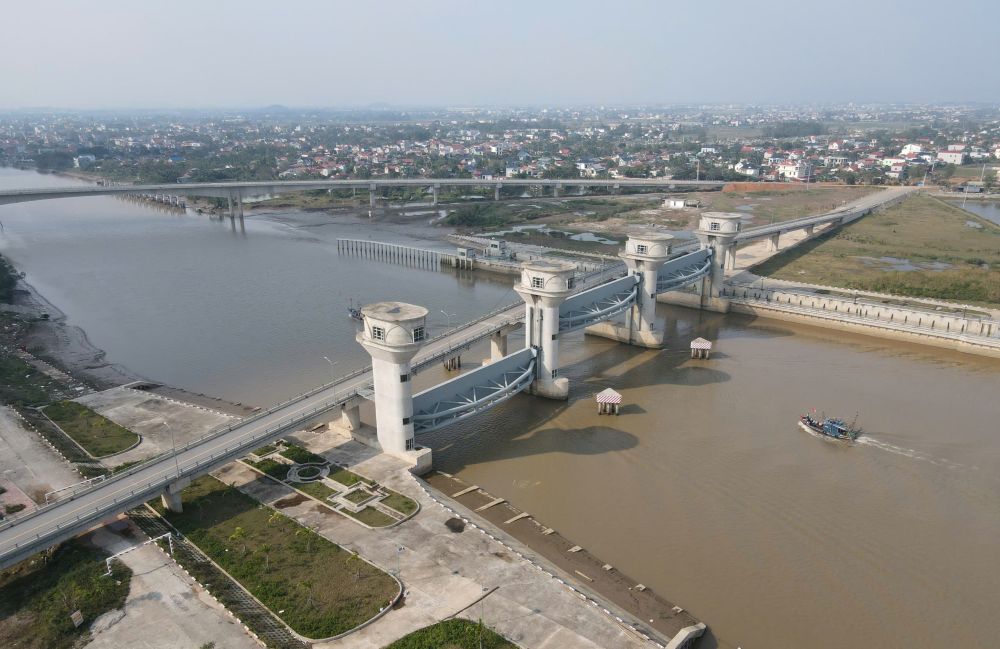
Because the Len River irrigation system is a new project, not fully tested in practice, especially the operation of flood drainage, flood prevention and flood control, the Provincial People's Committee requests Bac Song Ma Irrigation One Member Limited Liability Company to regularly inspect and evaluate to promptly adjust and submit to competent authorities to adjust operating procedures and ensure safety.
Talking to Lao Dong Newspaper reporters, Mr. Nguyen Hoai Nam - Deputy Director of the Department of Agriculture and Environment of Thanh Hoa province said that after the province issued the operating procedure, the Department is sending officials to participate in training and receiving system operation.
We have sent officials to train. The decision to put the project items into use is under the management authority of the Ministry of Agriculture and Environment" - Mr. Nam informed.
According to representatives of the Kexim 1 Project Management Board (Ministry of Agriculture and Environment), the unit is coordinating with functional sectors of Thanh Hoa province to complete training on the operating process of the Len River irrigation system project.
It is expected that before this year's Lunar New Year, training will be completed, handover procedures will be completed and projects under the project will be put into use.
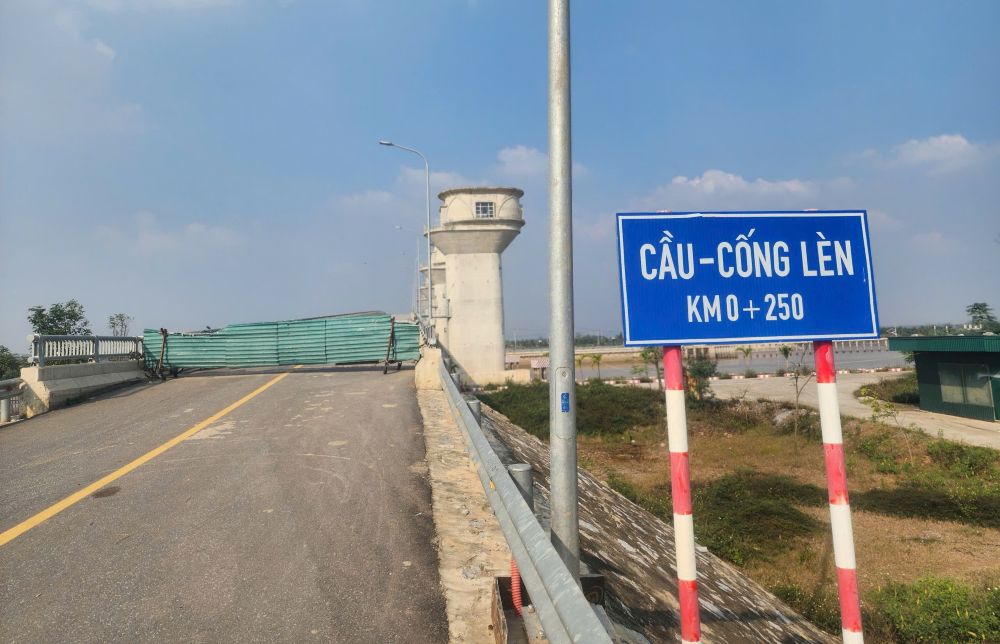
Previously, as Lao Dong Newspaper reported, Cong Len bridge (connecting Van Loc commune with Nga Son commune, Thanh Hoa province), belonging to the component project to upgrade the Len River irrigation system, has completed construction items. However, this bridge has not yet been put into operation.
According to local people, the fact that Cong Len bridge has not been put into use makes many people and students still have to cross the river by ferry every day, which is both costly and time-consuming to wait.
Explaining why the bridge has been completed but not put into use, a representative of the Department of Agriculture and Environment of Thanh Hoa province said that the project to upgrade the Len River irrigation system has 3 focal clusters including the Len River, Da canal and Can River focal cluster. Currently, the Len River focal cluster has been completed, while the Da canal and Can River focal cluster are still incomplete.
Meanwhile, the operation of the entire system requires complex technical requirements, which must go through the training and technology transfer stage. After the investor organizes training for the management and operation unit and ensures full safety conditions, the items will be accepted, handed over and put into use.
Cong Len bridge is an item belonging to the component project to upgrade the Len River irrigation system, invested by the Ministry of Agriculture and Rural Development (now the Ministry of Agriculture and Environment), with a total investment of about 800 billion VND, started in June 2021.
The component project to upgrade the Len River irrigation system includes many items, including three key items: a saltwater drain, a boat shelter and Cong Len bridge, connecting Van Loc and Nga Son communes.
This is an important irrigation project of Thanh Hoa province, with the task of preventing saltwater intrusion from the sea, controlling freshwater sources, creating irrigation water sources for more than 18,800 hectares of cultivated land, nearly 4,500 hectares of aquaculture, draining water for nearly 4,000 hectares of production land, supplying domestic water for about 613,000 people, and improving the ecological environment and combining water and road transport in the area.


