
The bridge was destroyed many times
Crossing the poetic Perfume River, Truong Tien Bridge has long become an inseparable part of Hue City's appearance. Not only is it an important traffic project, the bridge also carries in itself the special historical and cultural values of the ancient capital.
The bridge was started in 1897 under King Thanh Thai and completed in 1899. The project was constructed by the French Eiffel Company, with a length of 401m, width of 6.2m with 6 characteristic semi-circular steel beams.
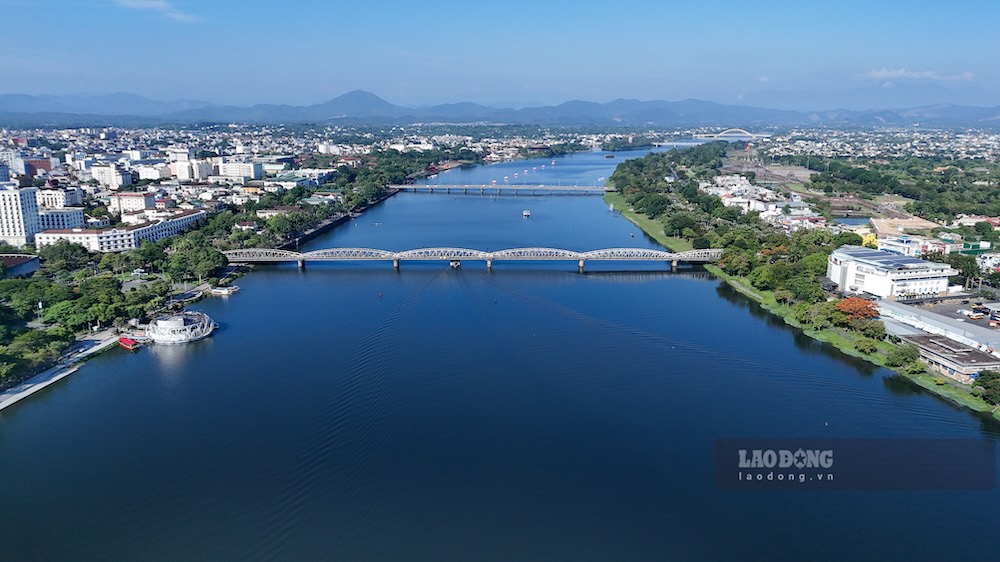
According to documents, Truong Tien bridge has been destroyed many times by natural disasters and wars. In 1904, the typhoon of the year of the Dragon caused severe damage to the structure. Two years later, the bridge was repaired and reinforced with reinforced concrete structure.
By 1937, the bridge was heavily restored with many significant changes. Two corridors for pedestrians and bicycles were expanded, adding sightseeing stops on the bridge. The design of the bridge deck was airy, convenient for traffic and congestion relief, and was considered quite modern at that time.
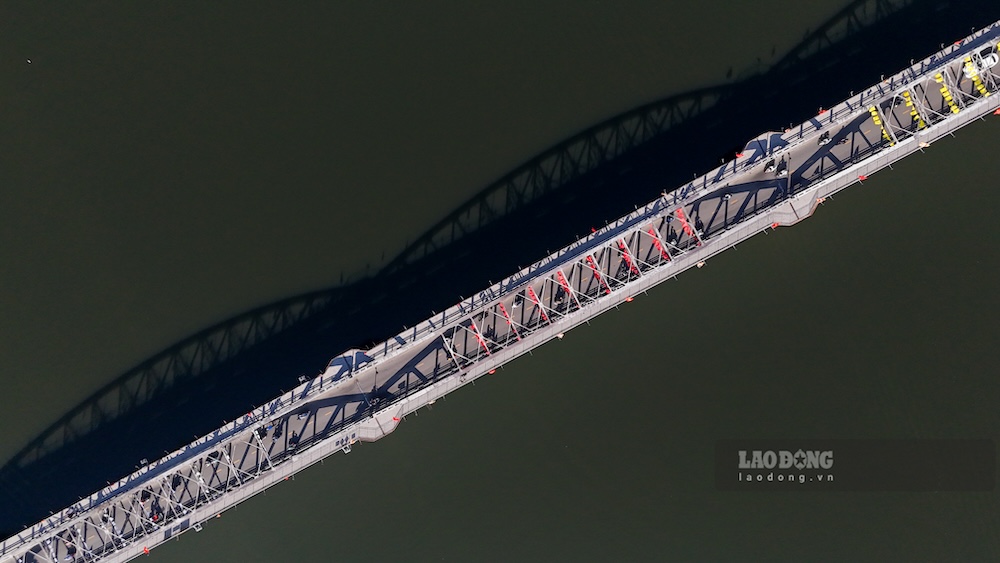
During the resistance war against the French colonialists, in 1946, the bridge was mined, causing two spans on the left bank to collapse. Two years later, the project was temporarily repaired to serve travel. In 1953, the bridge was rebuilt almost intact and completed after one year of construction.
However, the war continued to leave its mark on the bridge when in 1968, Truong Tien bridge was once again destroyed. It was not until the period 1991 - 1995 that the project was restored and repaired on a large scale under the investment of the local transport sector.

On May 19, 1995, the bridge was officially reopened, marking the revival of a long-standing symbol along the Huong Giang River.
Along with historical ups and downs, the bridge has also changed its name many times. From the name Thanh Thai when it was first built, to Clemenceau under French rule, Nguyen Hoang after the August Revolution and Trang Tien after the restoration in 1995. Regardless of the name, in the minds of Hue people, the bridge has always been Truong Tien bridge.
Continue major overhaul
Starting from June 1, 2026, Truong Tien bridge officially enters a large-scale repair and maintenance phase to ensure safe operation and extend the lifespan of the project.
According to the plan, the construction unit will handle the rusted steel structure positions, reduced cross-section and repaint the entire steel system of the bridge. The project has a total cost of about 9 billion VND, and the expected implementation time is 150 days.
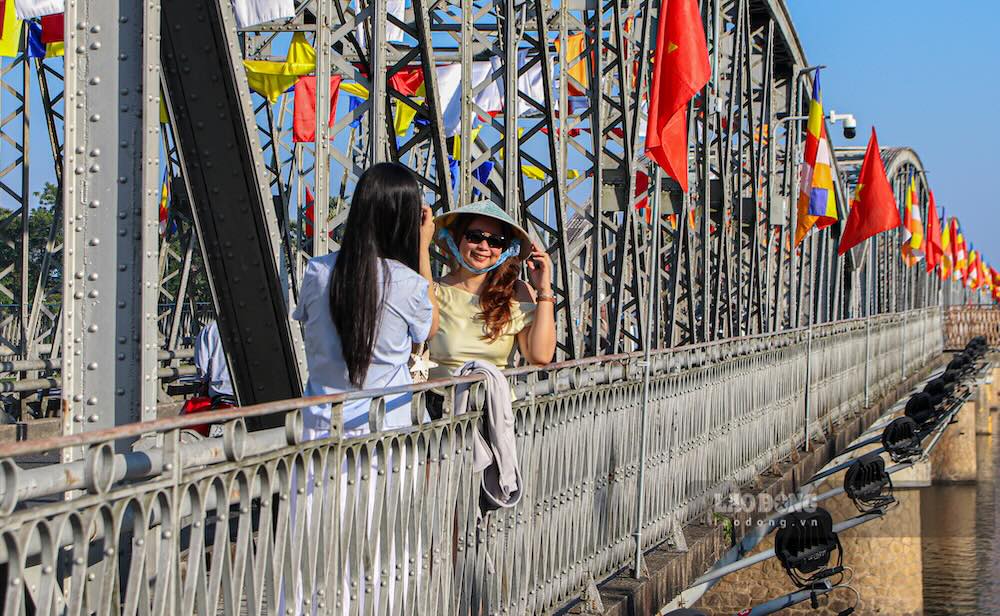
This repair is of interest to many people and tourists because Truong Tien bridge is not only a vital traffic route across the Perfume River but also one of the most prominent identification symbols of Hue.
Returning to Hue after 5 years living abroad, Mr. Le Tu Thanh Tai (20 years old, from Da Nang, with his grandfather in Hue) spent a lot of time walking around the city center to admire the bridge associated with his childhood.
Looking at the bridge, I see many memories rushing back. For me, this is not only a beautiful project but also associated with family visits to my hometown. This time returning, I spent time walking to many places in Hue, including Truong Tien bridge, a symbolic bridge of the city," Mr. Tai shared.
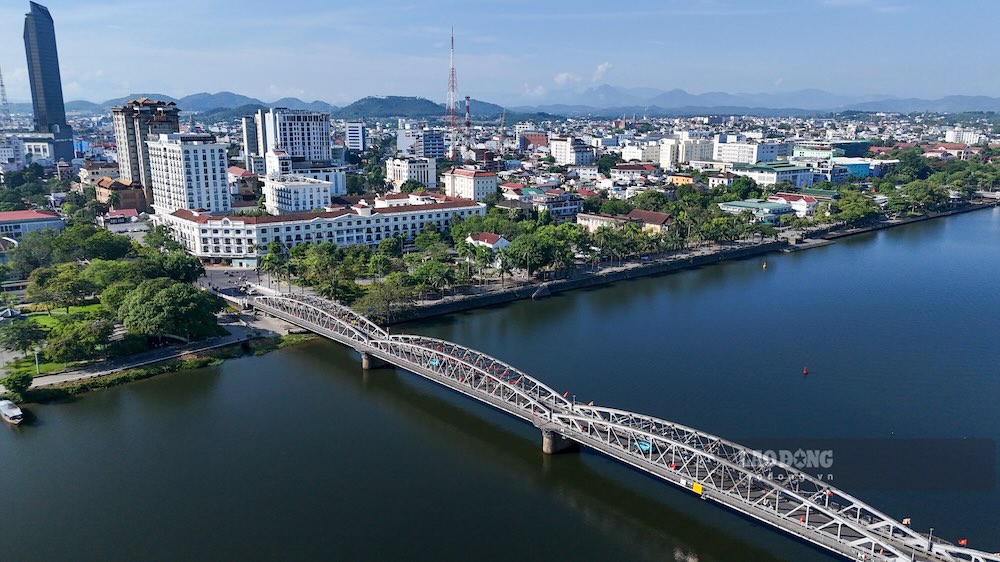
Knowing that the bridge is about to be repaired on a large scale, Mr. Tai said that the restoration is necessary, but the most important thing is to still maintain the inherent values of the project.
I hope the bridge will be reinforced to be more solid, more spacious but still retain its inherent characteristics and identity. This is not only my own memory but also part of the memory of many people and tourists every time they mention Hue," Mr. Tai expressed.
To serve construction, from June 1, Hue City will ban all vehicles from traveling through Truong Tien bridge from 9 pm the previous day to 5 am the next morning. One side of the bridge is used to gather construction materials and equipment, while the other side is still for pedestrians.
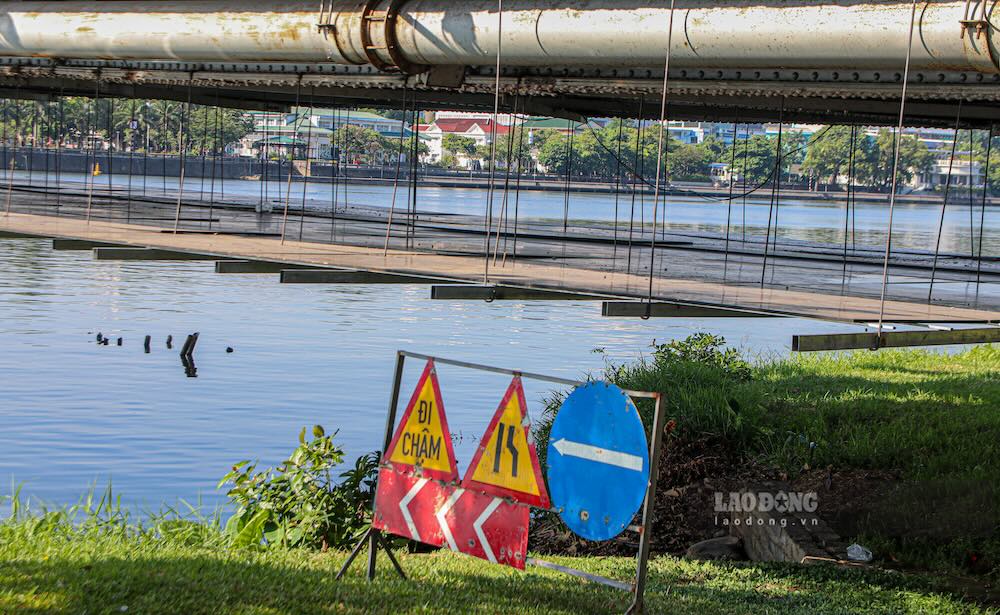
Many local people expect the project to be implemented on schedule, both ensuring the safety of the project and contributing to preserving the historical and cultural values of the symbol that is more than a century old.
Mr. Tran Ky (74 years old, a resident of Hue City) shared: "I hope that after this repair, the bridge will have a more spacious appearance but still retain its inherent ancient beauty. Modern techniques will help the project be more sustainable to continue accompanying Hue for many years to come.


