
The number of electric vehicles has begun to increase
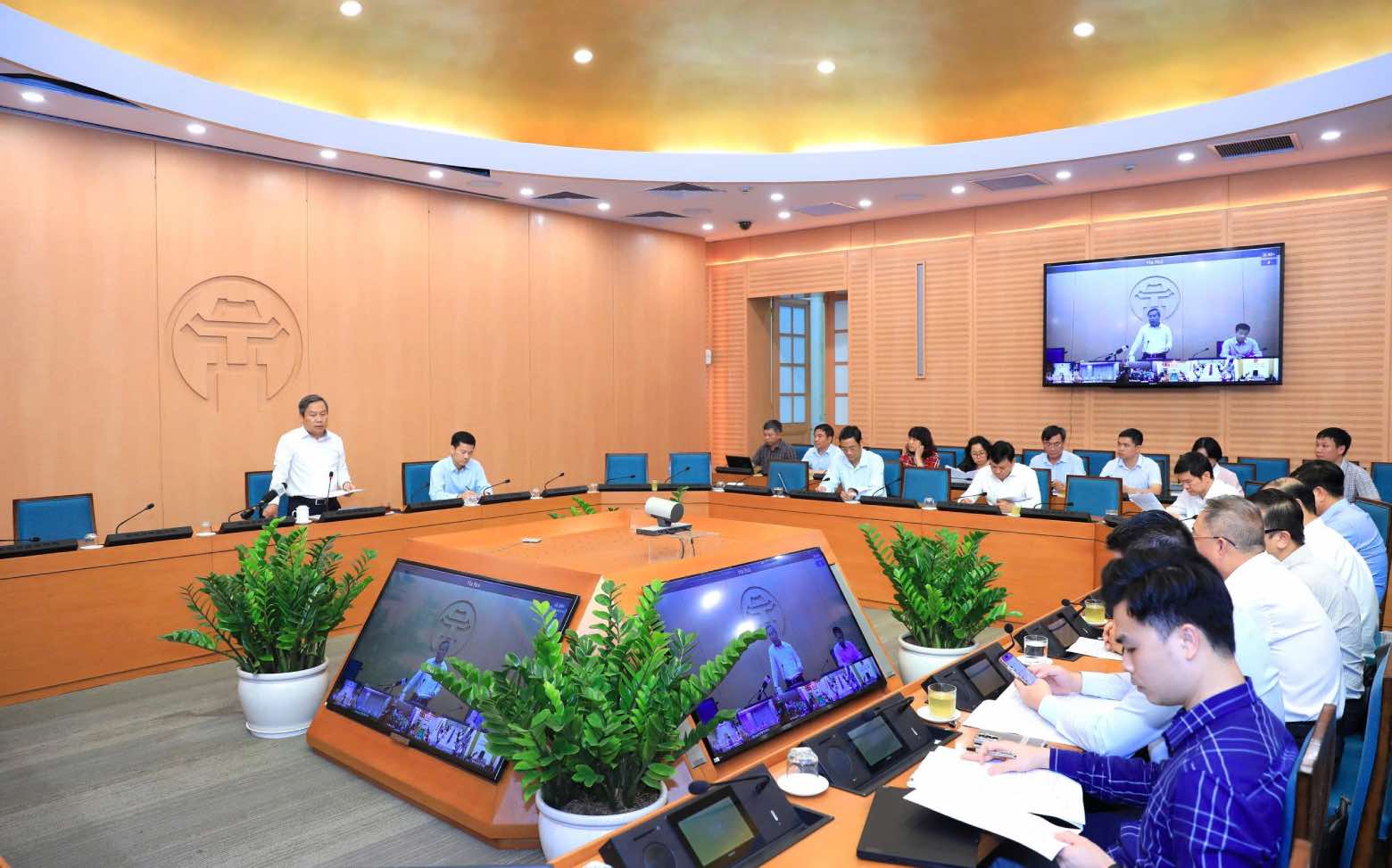
On August 20, Member of the Party Central Committee, Deputy Secretary of the City Party Committee, Chairman of Hanoi People's Committee Vu Dai Thang chaired a meeting to listen to a general report on environmental sanitation maintenance work; air pollution treatment work in the city.
At the meeting, Director of the Department of Agriculture and Environment Le Thanh Nam briefly reported on the situation of air pollution treatment and environmental sanitation maintenance, and solid waste treatment in Hanoi city.
From January 1 to August 11, the percentage of days with good and average air quality reached 73.28%, up from 71.18% in the 6-month reporting period and is approaching the target of 75% set for the whole year 2026. PM2.5 fine dust concentration meets QCVN 05:2023/BTNMT standard.
One of the key solutions implemented by Hanoi is to control emissions from traffic. The city has approved and implemented the Low-Emission Zone (LEZ) Project in Ring Road 1 from July 1, and at the same time issued policies to support the conversion of clean vehicles, infrastructure development and public transport, gradually limiting personal vehicles.
From July 1, the city will deploy 100% of bus routes in low-emission zones using green vehicles. The city will deploy electronic tickets, free tickets on 45 bus routes within Ring Road 1 until the end of June 2027; and at the same time study the development of small electric buses and green vehicles to serve the connection of the first and last stages.
Regarding the conversion of personal vehicles at Ring Road 1, the Director of the Hanoi Department of Agriculture and Environment said that motorbikes using gasoline fuel still account for a very high proportion in wards, commonly from 94% - 97% of the total number of vehicles. Electric motorbikes have appeared in all areas, but the number is still limited, about 1,000 - 3,500 vehicles/ward, equivalent to 3 - 6%. In central wards such as Hoan Kiem, Hai Ba Trung and Tay Ho, the number of electric vehicles has begun to increase, showing an initial conversion trend.
Along with treating air pollution, environmental sanitation maintenance and solid waste treatment continue to be identified by the city as key tasks.
Regarding key tasks in the coming time, the city continues to implement many groups of solutions, including Low-Emission Zones, controlling vehicle emissions and promoting green traffic. At the same time, complete inventory of emission sources, build emission maps and pollution spreading models. Strengthen inspection of industrial, construction, and material transport sources; stop burning straw and spontaneous waste burning...
At the meeting, representatives of leaders of departments, branches, communes/wards focused on reporting on the work of treating air pollution and maintaining environmental sanitation, and treating solid waste in the area.
Step by step removing environmental bottlenecks
Concluding the meeting, Chairman of the City People's Committee Vu Dai Thang emphasized that in the past time, the City Party Committee, People's Council, and City People's Committee have focused on drastically directing environmental improvement work. In a relatively short time, the initial results achieved are quite positive. Through monitoring, the number of days of air quality at red alert levels has decreased compared to 2025.
However, when entering times with unfavorable weather conditions, the risk of air pollution and issues related to waste and wastewater treatment may continue to develop complicatedly. In particular, during the harvest season, the situation of burning straw and agricultural by-products may increase, not only affecting air quality in Hanoi but also affecting neighboring localities.
The Chairman of the City People's Committee requested that in the coming time, the first task is not to let the environment worsen, and at the same time gradually remove environmental bottlenecks. Regarding air pollution, the Chairman of the City People's Committee requested to continue to strictly control emission sources, including traffic, construction works, demolition, burning of straw, agricultural by-products and burning of garbage.
Regarding the situation of burning straw and waste not in accordance with regulations, the Chairman of the City People's Committee requested localities to strengthen inspection and supervision; violations must be strictly handled.
Regarding construction activities, especially demolition works, the Chairman of the City People's Committee requested to strengthen control and take measures to limit dust emission during construction, transportation and demolition.
Regarding emission control of vehicles, the Chairman of the City People's Committee noted that functional agencies must implement the roadmap correctly, be cautious in implementation, because the policy has a direct impact on people, incurring costs and new compliance requirements.


