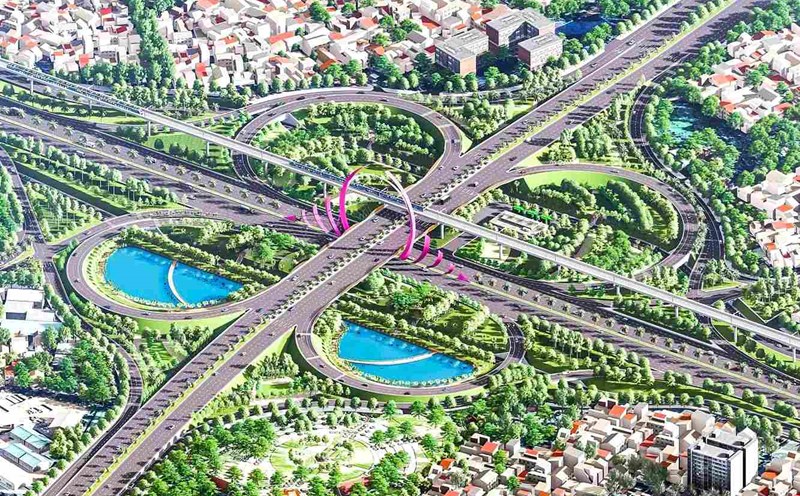
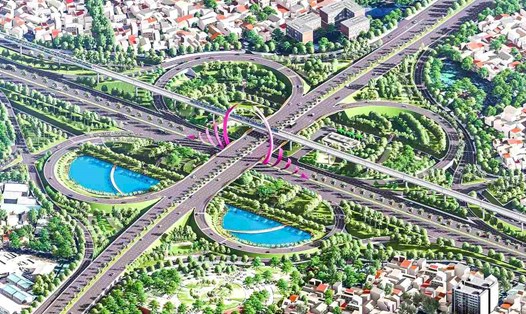
The Ho Chi Minh City Traffic Construction Investment Project Management Board (Traffic Management Board) has just sent a document to the Ho Chi Minh City Department of Construction, reporting on the scale of the cross-section of Nguyen Thi Dinh street under the project to renovate, upgrade, and expand this road (section from My Thuy intersection to Cat Lai ferry).
The consulting unit said that the Nguyen Thi Dinh road expansion plan, with a length of nearly 2 km, is calculated synchronously with the Cat Lai bridge access bridge (located separately into two parallel units).
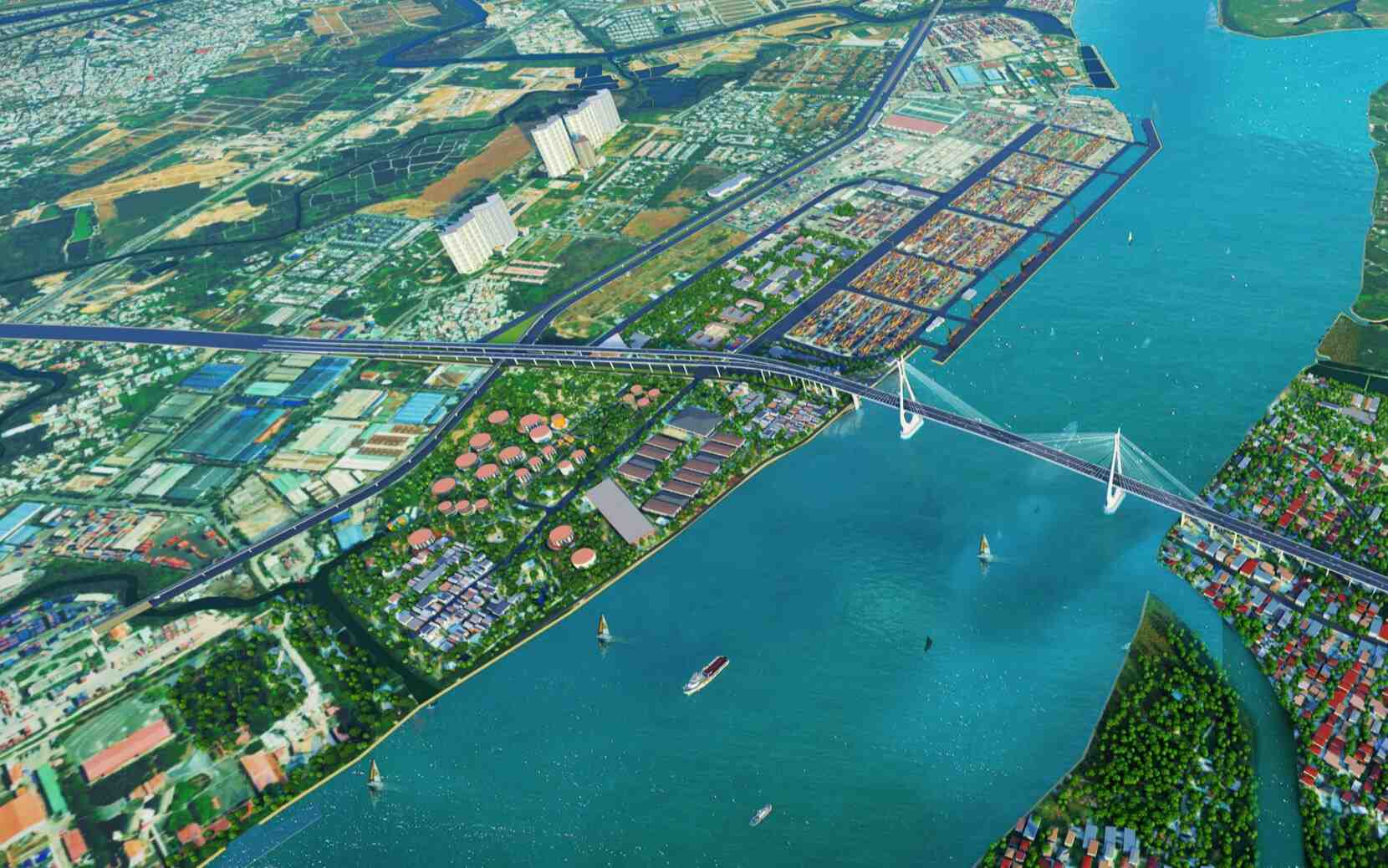
According to the proposal, the current Nguyen Thi Dinh street surface, about 24 m wide, will be expanded from 60 - 73 m, divided into 3 sections.
Section 1 from My Thuy intersection to the beginning of Cat Lai bridge access road, about 260 m long, with a cross-section of 60 m wide, including 12 lanes for motorized vehicles and 2 mixed lanes.
Section 2 in the bridge abutment area and under Cat Lai bridge, about 630 m long, has the largest cross-section, up to 73 m. This area arranges two medians for two Cat Lai bridge units, along with 6 motorized lanes and 2 mixed lanes under Nguyen Thi Dinh street.
Section 3 from the position of static space under the bridge reaching over 5 m to Cat Lai ferry terminal, about 800 m long, is proposed to be kept according to the planned road boundary with a cross-section of 60 m, arranged with 6 lanes for motorized vehicles and 2 mixed lanes.
The Ho Chi Minh City Traffic Management Board proposed that the Ho Chi Minh City Department of Construction agree on the above-mentioned cross-section plan. After being approved, the Traffic Management Board will continue to coordinate with departments, branches and localities to complete the report proposing to adjust the investment policy, expected to be submitted to competent authorities in the first quarter of 2026.
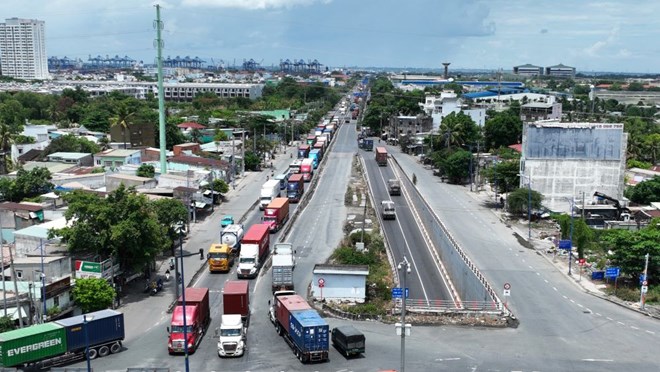
Nguyen Thi Dinh Street is located at the eastern gateway of Ho Chi Minh City, carrying more than 20,000 cars entering and leaving Cat Lai port every day, mostly container trucks.
This is also a route connecting Cat Lai ferry, with thousands of cars and motorbikes moving every day from the Nhon Trach area (Dong Nai).
Meanwhile, the existing road surface has only 4 - 6 lanes, often overloaded, causing serious congestion.
The Nguyen Thi Dinh road expansion project was once established by the Ho Chi Minh City Department of Transport (now Ho Chi Minh City Department of Construction) in 2016, with a total investment of more than 1,000 billion VND and approved by the Ho Chi Minh City People's Council in 2017. However, for many years, the project has not been implemented.
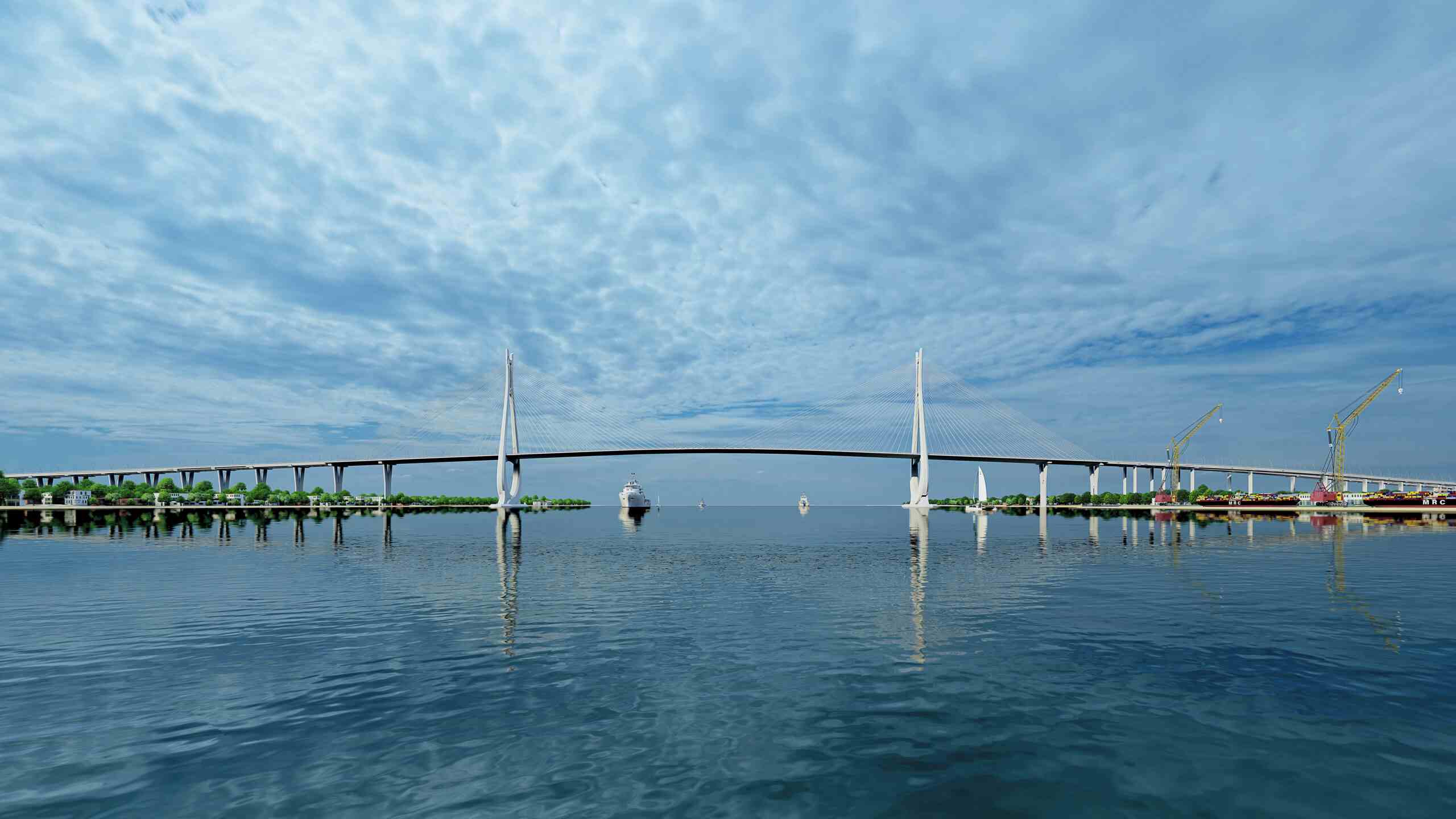
On January 15, 2026, the Cat Lai bridge project officially kicked off with a total investment of about 20,600 billion VND.
Cat Lai bridge has a total length of about 11.6 km, of which the main bridge section is about 3 km long, with a scale of 8 lanes.
The Cat Lai bridge project is divided into three component projects. In which, component project 1 (building bridges and roads leading to the Ben Luc - Long Thanh expressway) and component project 2 (land clearance on the Dong Nai side) are implemented by the Dong Nai Provincial People's Committee.
Component project 3 (site clearance and expansion of Nguyen Thi Dinh street) is undertaken by Ho Chi Minh City.
The project is expected to be completed in 2029, helping to replace Cat Lai ferry, which has been overloaded for many years.
In the Cat Lai area, Ho Chi Minh City is also implementing the My Thuy intersection project with a total capital of more than 3,400 billion VND, expected to be completed in 2026.
Ho Chi Minh City is also preparing to deploy the Cat Lai - Phu Huu inter-port road, connecting the Ho Chi Minh City - Long Thanh - Dau Giay expressway intersection and Ho Chi Minh City Ring Road 3 (HLD intersection), with a total estimated investment of about 8,782 billion VND.
The entire inter-port road is about 6 km long, with a cross-section of 60 m wide, starting from Nguyen Thi Dinh street and directly connecting to the HLD intersection. The project is expected to start construction in the fourth quarter of 2026 and be completed after 2028.