
In that context, attracting the private sector has become an inevitable requirement, not only to supplement financial resources but also to improve investment efficiency through market mechanisms.
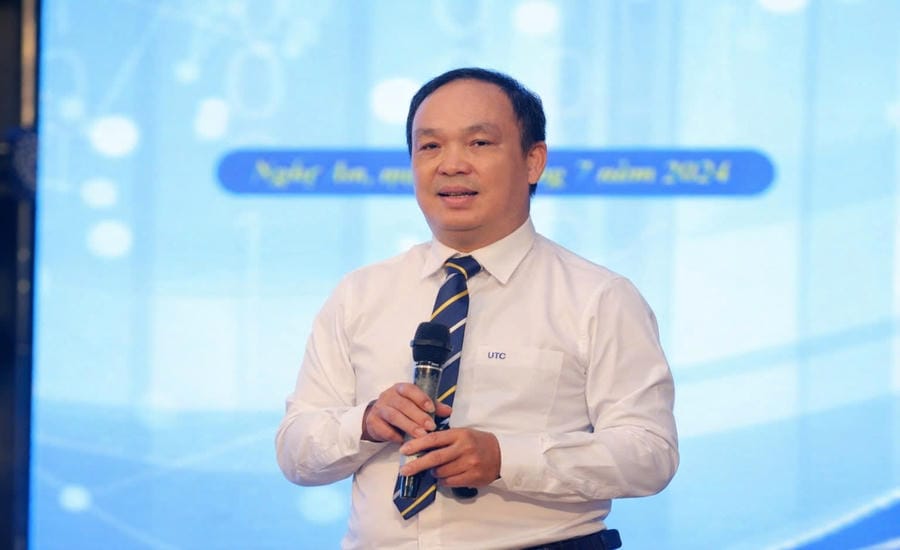
To clarify this issue, Lao Dong Newspaper reporters exchanged with Assoc. Prof. Dr. Nguyen Hong Thai - Vice Chairman of the Vietnam Railway Transport Economics Association, transport policy consultant (photo).
Sir, why is the North-South high-speed railway identified as a strategic infrastructure and needs to attract private sector participation?
- The North-South high-speed railway not only shortens geographical distance but more importantly narrows the "economic gap", thereby expanding market space, increasing the ability to accumulate and spread knowledge, promoting the formation of new economic corridors and growth poles. This affirms the strategic nature of the project in the process of deep economic restructuring.
In practice, experience from Japan and China shows that successful high-speed railway systems are associated with national space development strategies and value chain restructuring. At the same time, this is an energy-saving transportation method, with lower emissions than road and aviation, suitable for the low-carbon economic orientation.
However, with a very large capital scale and a recovery period lasting decades, total dependence on the State budget may reduce resources for other essential sectors. Therefore, attracting the private sector is not only to supplement capital but also an important shift from the "State direct investment" model to the "State of creation and coordination".
So according to you, what are the biggest economic and financial barriers to the private sector?
- Firstly, the capital intensity is large and the capital recovery time is very long (possibly 50 - 70 years). Meanwhile, the private sector often optimizes capital turnover and medium-term profits, so long-term projects like this will reduce investment attractiveness.
Second, cash flow is highly uncertain. Revenue mainly depends on passenger transport demand - a factor affected by economic growth, income, urbanization and competition between modes of transport.
Third, the revenue source is still unique, mainly from transportation. While freight rates are bound by policies, the ability to optimize revenue is limited, making it difficult for projects to meet the "sponsored" criteria according to international standards.
Therefore, the issue is not the lack of capital, but how to make the project attractive enough financially. Policies need to shift from individual incentives to comprehensive financial model restructuring.
Please tell us, how will institutional and market risks increase capital costs?
- For large-scale projects with a long life cycle like high-speed railways, even small policy fluctuations can distort cash flow expectations. At that time, investors are forced to increase the discount rate, leading to increased capital costs.
Along with that, market risks - especially fluctuations in transport demand - make revenue difficult to forecast. These two factors combine to cause capital costs to increase sharply. When capital costs exceed the internal yield, the project will lose its financial feasibility. Therefore, improving institutional quality is not only a management requirement but also a direct economic tool to help reduce capital costs.
Sir, according to what principles should the mechanism to attract private capital be designed?
- A large infrastructure project can only attract private investors when it meets 3 conditions, which are controlled and reasonably allocated risks: Profits can be forecast based on transparency; Cash flow is stable enough to mobilize medium and long-term capital.
Tools such as minimum revenue guarantees, capital cost support, or revenue sharing should not be considered short-term incentives, but risk allocation mechanisms and improved project financial structures.
According to you, why are supplementary revenue sources and the TOD model important?
- The biggest weakness is dependence on transport revenue. Meanwhile, international experience shows that financial efficiency mainly comes from exploiting added value outside of transportation, especially land and trade around the station.
The transport-oriented urban development model (TOD) helps "domesticize" these benefits into the project's cash flow, creating additional revenue, improving profits and reducing financial risks. Therefore, TOD is not only a planning tool but also a decisive factor in financial feasibility.
So what are the key conditions to attract the private sector, sir?
- The decisive factor is not at the level of incentives, but in building a sufficiently reliable institutional framework between the State and investors. This framework needs to ensure: Long-term stability policy; Transparency in design and implementation; Consistent commitment implementation capacity.
Through exchanges with Assoc. Prof. Dr. Nguyen Hong Thai, it can be seen that attracting private resources for the North-South high-speed railway is not only a financial problem but the core is institutional design. When the mechanism is transparent, stable and reasonably risk-sharing, private capital flows will operate according to market signals.
The success of the project is therefore not only measured by the scale of investment, but also in the ability to form a new development model, in which the State plays a constructive role, and the private sector becomes a driving force to promote long-term and sustainable growth.


