
Tomb in the remote pine forest
King Hiep Hoa's real name was Nguyen Phuc Hong Dat, born in 1847, the 29th son of King Thieu Tri. He ascended the throne on July 30, 1883, in the context that the Nguyen Dynasty was facing many major upheavals when the French colonialists gradually increased their influence in Vietnam.
However, on November 29, 1883, King Hiep Hoa was deposed. After that, he was forced to drink poison and died at the age of 36. The king's resting place is currently located at the foot of Ngu Phong mountain, on Tam Thai street, in An Cuu ward, Hue city.
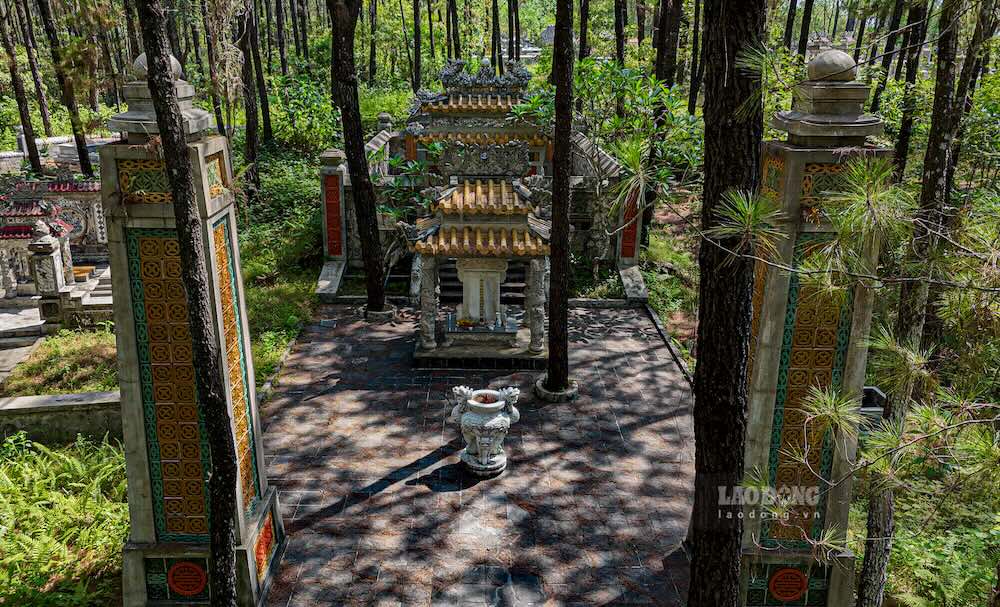
Unlike Gia Long, Minh Mang or Tu Duc mausoleums with their large scale and elaborate architecture, King Hiep Hoa's mausoleum has a rather simple appearance. The tomb area is located under green pine trees, creating a feeling of tranquility and a bit of loneliness.
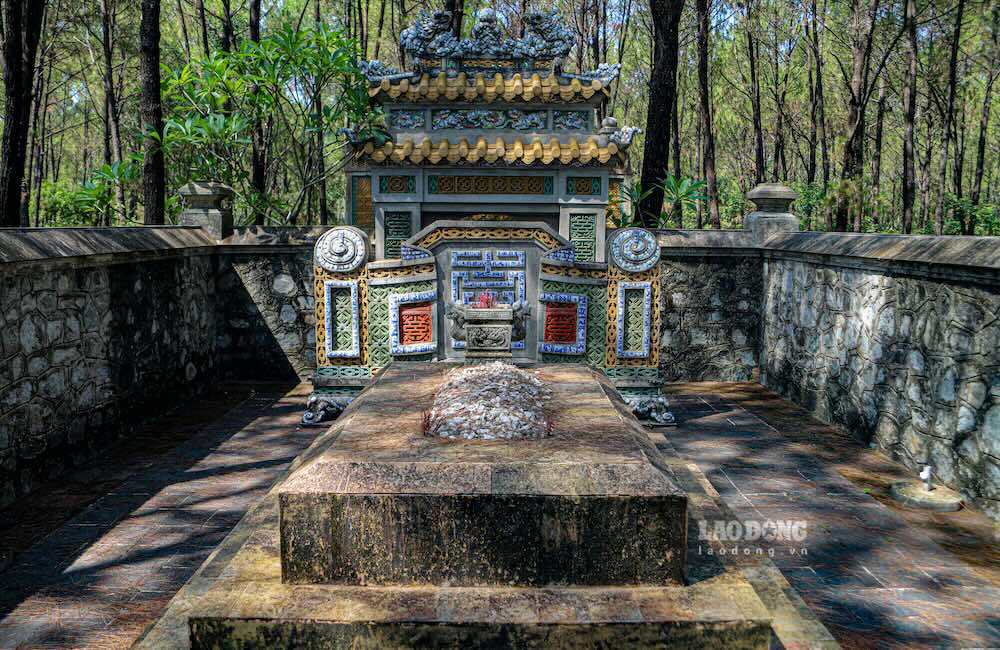
The mausoleum is built in a rectangular shape with four concrete floors. Surrounded by a system of stone walls about 2m high.
In front of the tomb area is a screen decorated elaborately with ceramic mosaic technique, with the word "Tho" prominent in the middle. On the back of the tomb area is a dragon-shaped relief made of ceramic pieces, representing the symbol of royal authority.
In the campus, a large white stone incense burner is placed to serve incense offering for commemoration. The entrance to the tomb area is designed in the form of a dome gate, with a pair of stone dragons guarding on both sides.
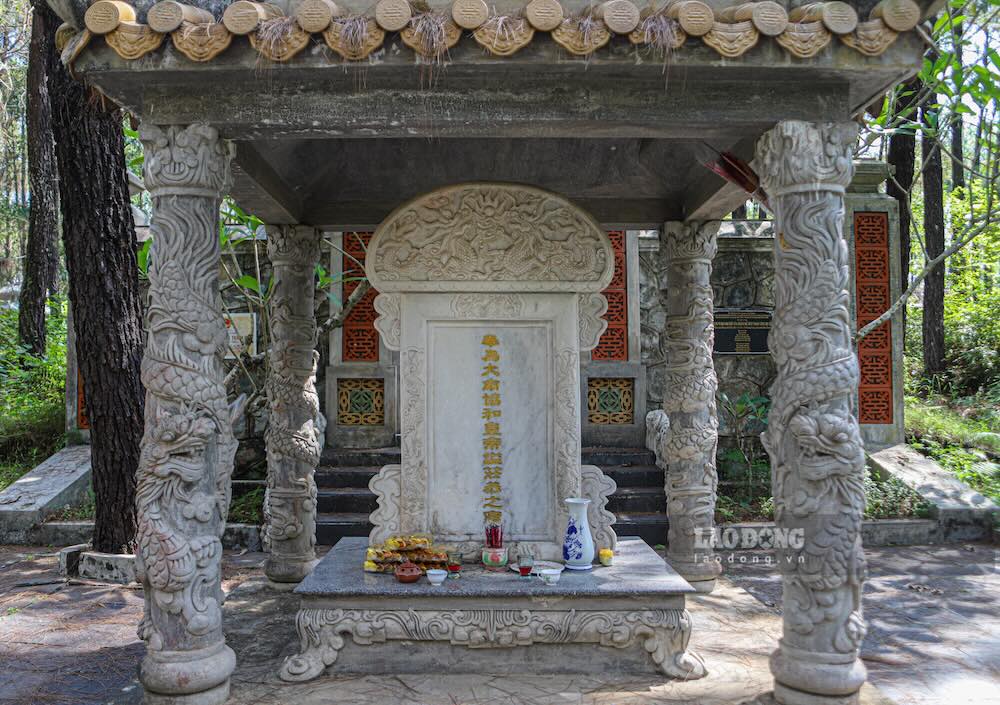
The easily noticeable difference is that King Hiep Hoa's tomb only has one protective citadel, while most tombs of other Nguyen kings usually have two layers of citadels. Before being restored, this place was just a small tomb located hidden in the pine forest, little known.
Road to the relic seriously degraded
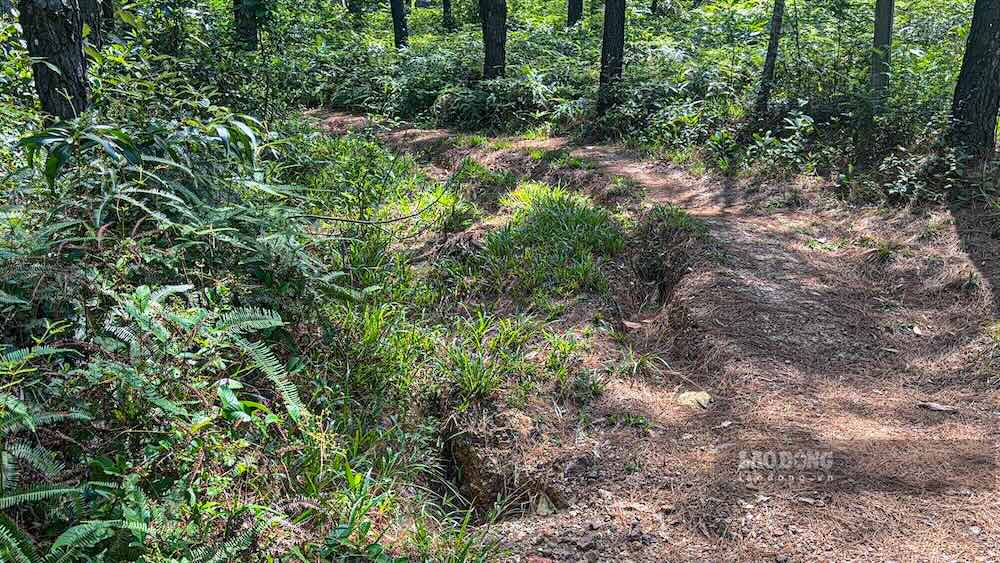
According to records, the road leading to the relic site is currently a dirt road. After heavy rains, many sections were eroded by water, forming deep ditches and long potholes. Many locations have gravel rising onto the road surface, making travel difficult.
In the rainy season, the road surface is slippery, posing a potential safety risk for people and tourists visiting and learning about history. Many people who come to King Hiep Hoa's tomb for the first time are surprised by the condition of the road and want to have a plan to upgrade the road.
Talking to Lao Dong Newspaper, Mr. Hoang Viet Trung - Director of the Hue Ancient Capital Relic Preservation Center said that King Hiep Hoa's tomb has been recognized as a provincial-level historical relic and through many stages has received contributions from philanthropists as well as clans for restoration.
However, the road to the mausoleum is still a dirt road and does not fall under the direct management of the Center.
According to Mr. Trung, the unit has reported to Hue City People's Committee to include the road upgrade project in the investment plan using the Hue Heritage Conservation Fund. The design dossier has also been built and is in the process of collecting opinions from relevant units.
Currently, the completion of procedures is being implemented with the participation of functional agencies, local authorities and land management units in the area.
If the procedures are smooth, the project can be implemented in the near future. The road is expected to be concreted to create favorable conditions for travel.


