
Saltwater intrusion can appear early and prolonged
Talking to Lao Dong Newspaper, Mr. Truong Hoang Giang - Director of Vinh Long Provincial Hydrometeorological Station - said that El Nino will continue to be maintained in the last months of 2026 and is likely to extend to 2027, with predicted intensity from strong to very strong.
According to Mr. Giang, this development may increase the risk of drought, water shortage and saltwater intrusion in the 2026-2027 dry season. From November 2026, the salinity boundary of 4‰ is likely to encroach 25-30km deep; by December, the salinity boundary of 1‰ may appear 25-30km from the sea.
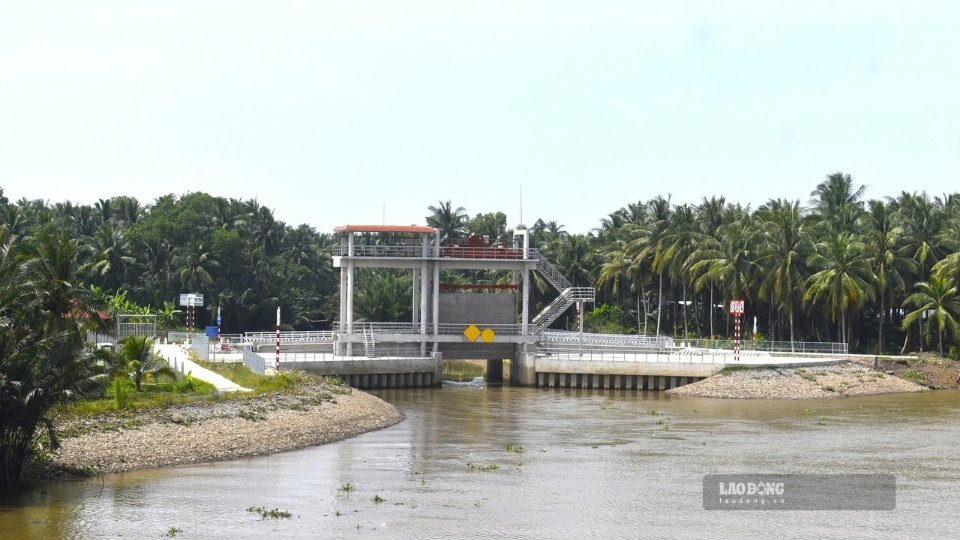
The deepest saline intrusion period is forecast to be in March-March 2027, with a disaster risk level of level 3. The saline intrusion situation is likely to last until the end of June or early July 2027, putting pressure on water sources serving production and living.
Mr. Giang said that on the main rivers, the salinity boundary of 4‰ can encroach deeply about 53km on the Cua Dai River, 72km on the Ham Luong River, 58km on the Co Chien River and 62km on the Hau River.
Notably, compared to the historic dry season of 2015-2016, the salinity limit of 1‰ on the Cua Dai River is forecast to be 7.3km deeper, the Co Chien River is 8km deeper and the Hau River is 3.9km deeper. Salt on the Ham Luong River is also likely to flow back into the Cua Dai River through Tan Phu Cape.
Proactively stockpiling water, responding early
According to Mr. Le Quang Rang - Deputy Director of Vinh Long Department of Agriculture and Environment - the areas that need special attention are fruit tree areas sensitive to saltwater along the Co Chien and Hau rivers; Dong Xuan rice production areas, aquaculture and water plants, rural water supply stations located along the main river branches.
If El Nino lasts until mid-2027, the dry season may last, freshwater in river basins declines, while evaporation increases, causing water levels in reservoirs and inland canals to decrease. This may affect agricultural production and aquaculture.
Mr. Le Quang Rang said that water sources for living, healthcare, schools and production are also at risk of shortage. Prolonged heat also increases the demand for electricity for cooling, pumping and irrigation and the risk of fire and explosion in the dry season.
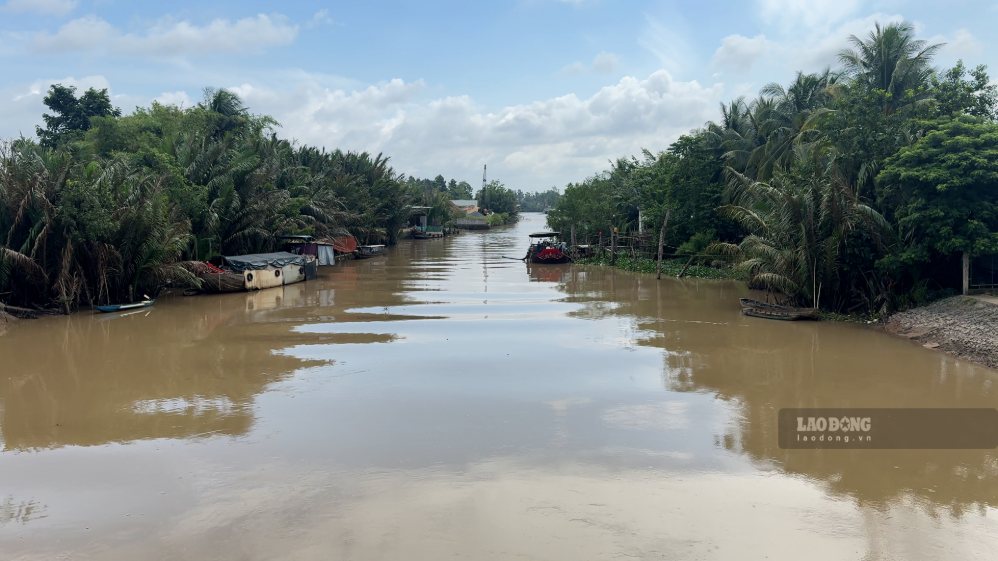
To limit damage, Mr. Rang said that localities need to inspect and measure salinity at key culverts from November 2026, proactively operate irrigation works and store fresh water.
Along with that, strengthening monitoring and updating hydrometeorological forecasts will help localities develop appropriate response plans for each region. People need to monitor saltwater intrusion warnings, proactively store fresh water, and reinforce dykes to protect production.
According to Mr. Le Quang Rang, preparing response plans right from the beginning of the dry season will contribute to reducing the risk of domestic water shortage, limiting production damage and being proactive in the face of the possibility of severe saline intrusion.


