
In the context that management agencies are seeking opinions on the proposal to raise the foreign ownership ceiling at Vietnamese airlines from 34% to 49%, the question is whether expanding the foreign "room" is really urgent in the current period.
This regulation is designed to ensure that aviation businesses are still controlled by domestic investors, and at the same time still have room to attract capital and management experience from international partners.
Domestic aviation flies high and reaches far
Along with the recovery and growth of the global aviation industry, Vietnam's air transport in 2025 continues to record impressive results.
Total market transport volume is estimated at 83.5 million passenger trips and 1.5 million tons of goods, an increase of 10.7% in passengers and 18.5% in goods respectively compared to 2024. Many main routes such as Hanoi - Ho Chi Minh City, Hanoi - Da Nang or Ho Chi Minh City - Phu Quoc maintain a high seat occupancy rate.
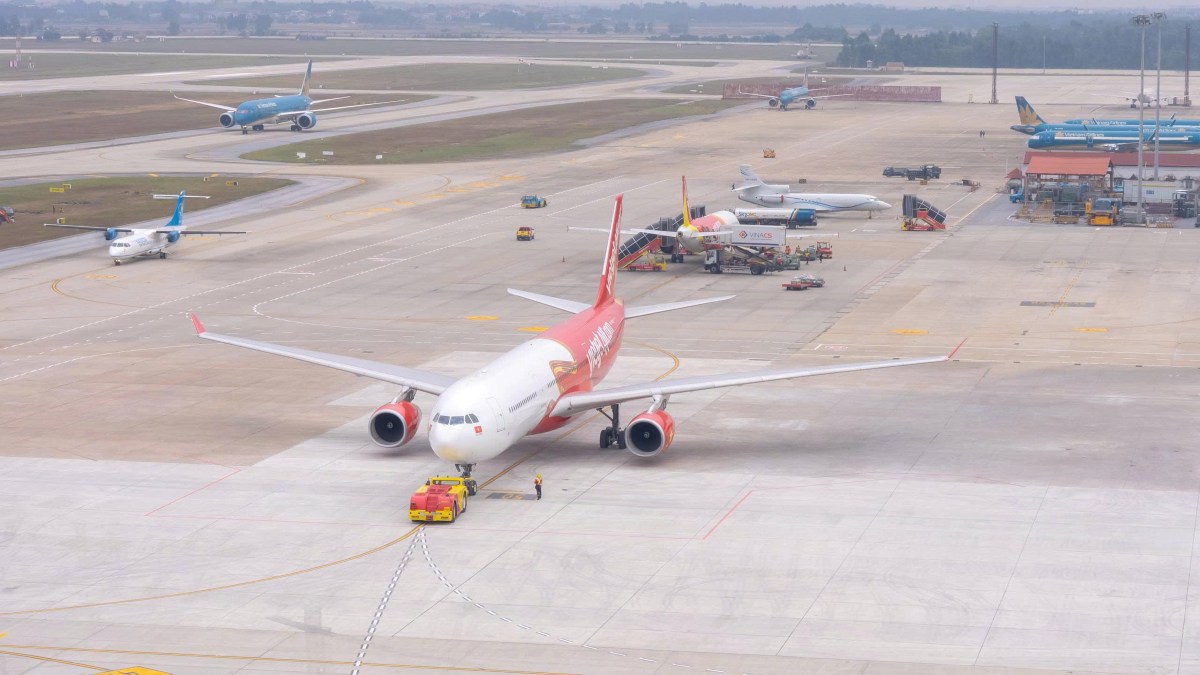
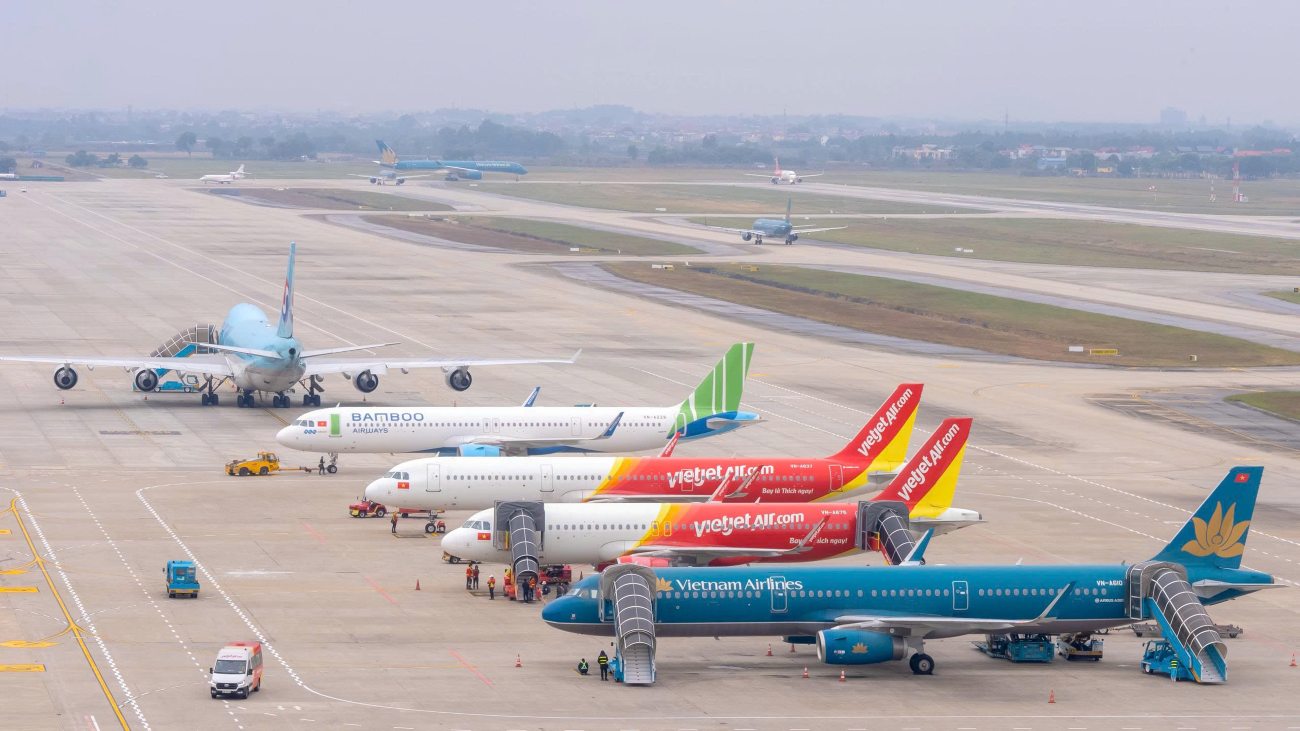
Along with the market recovery, domestic airlines are also implementing plans to expand their fleet on a large scale in the next decade.
Vietnam Airlines currently operates nearly 100 aircraft and has signed an agreement to purchase 50 Boeing 737-8 aircraft, expected to be handed over in the period 2030–2032 to serve the plan to expand the domestic and regional flight network.
In addition, the airline is also researching to add about 30 new wide-body aircraft in the period 2028-2030 to increase the operational capacity of long-haul international routes.
In the private sector, Vietjet currently operates more than 120 aircraft and has hundreds of long-term Airbus and Boeing aircraft orders, including 100 A321neo aircraft and agreements to purchase wide-body aircraft to expand the international flight network.
In addition, Sun Phu Quoc Airways has signed an agreement to purchase a maximum of 40 Boeing 787-9 aircraft, with a plan to develop a fleet of 100 aircraft by 2030.
These large investment plans show that domestic aviation businesses are still proactively expanding operational capacity to meet the long-term growth needs of the market.
In that context, some experts believe that it is necessary to ask the question: when domestic enterprises continue to invest heavily and expand their fleets, is raising the foreign ownership ceiling an urgent need of the market or not.
Strategic control problem
According to studies on political economy and public administration, aviation is classified as a strategic infrastructure industry, which plays a role beyond a normal transportation business.
The operation of airlines is directly linked to the right to exploit national airspace, ensuring territorial connection and mobility in emergency situations such as natural disasters, epidemics or national defense - security missions.
Therefore, even in highly developed aviation markets, many countries still maintain foreign ownership limits for airlines.
In the US, the voting ownership ratio of foreign investors is limited to 25%. Meanwhile, the European Union allows a higher ratio, but airlines must still be controlled by EU citizens or legal entities. Japan and South Korea also apply similar regulations to ensure national strategic control over airlines.
According to some experts, expanding the foreign ownership ratio in airlines is not simply supplementing capital, but also associated with the right to participate in corporate governance, flight network orientation and long-term development strategies.
Prof. Tran Tho Dat - Chairman of the Science and Training Council, National Economics University said: "In modern corporate governance, shareholders holding about 35% of shares may have a significant impact on strategic decisions through veto power. Therefore, increasing the foreign ownership ratio to 49% not only changes the capital structure but also potentially shifts control. Especially in the aviation industry, where foreign investors are often entities with global interests, the risk of conflicts of interest may arise. Decisions on flight networks, resource allocation or development orientations may be adjusted according to the interests of investors rather than national interests.
If the ownership ratio approaches 50%, foreign investors may have a significant influence on strategic decisions through the board structure or shareholder agreements.
Some opinions also suggest that the challenging nature of Vietnam's aviation industry today does not entirely lie in the capital problem.
The core issues of the industry currently mainly relate to the cyclical fluctuations of the global aviation market, high operating costs, disruption of aircraft and engine supply chains, as well as the requirement to improve risk management capacity.
According to experts, these challenges cannot be solved thoroughly just by increasing foreign ownership ratios.
In the context that the domestic aviation market continues to grow and the operating capacity of Vietnamese airlines is expanding, the current foreign capital ceiling of 34% is considered a relatively reasonable balance point: still allowing to attract international investors but not changing the strategic control of Vietnam.


