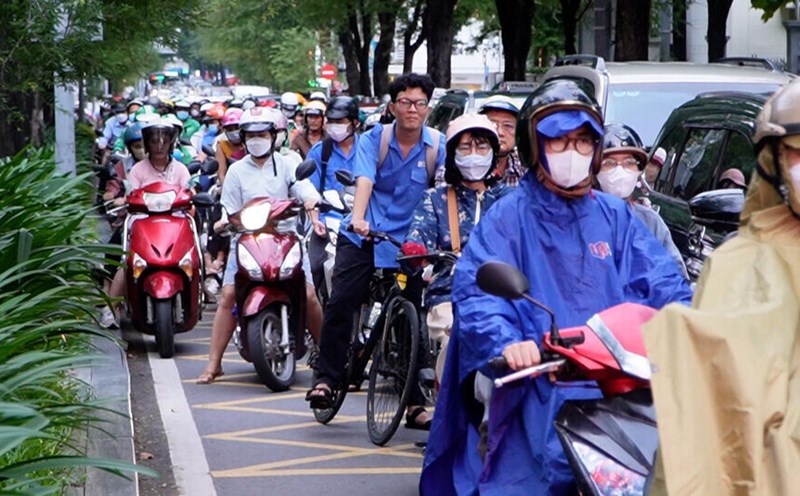
According to reporters' records in recent days, sidewalks on a series of central streets in Ho Chi Minh City such as Tran Quoc Thao, Ba Huyen Thanh Quan, Vo Van Tan, Nguyen Dinh Chieu... simultaneously appeared prominent blue paint strips. This blue paint strip has the task of creating clear boundaries, directly "framing" the area reserved for buses to stop on the sidewalk to pick up and drop off passengers.
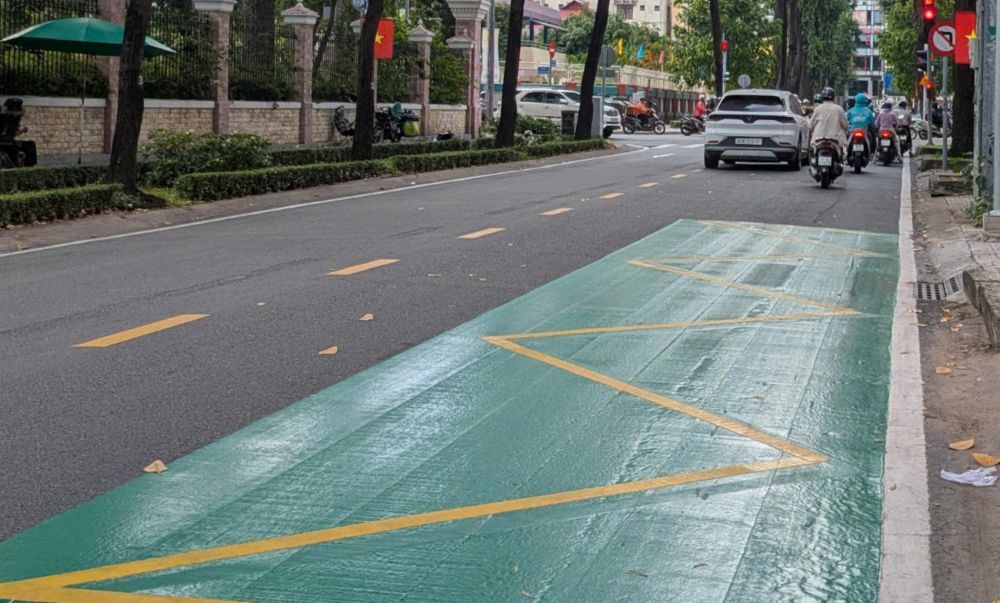
According to the Ho Chi Minh City Public Transport Management Center, for a long time many stops have only been marked with signposts on the sidewalk. When the road is crowded, signs are easily obscured. Therefore, painting blue directly on the road surface will help passengers waiting for buses easily recognize them from afar. More importantly, this prominent color strip acts as an intuitive reminder, requiring motorcyclists and private cars not to stop and park in violation of regulations, and to restore open space for buses to enter and exit the station.
Each green paint strip is designed to be about 12.6m long and 2.4m wide, just right for the parking size of a standard bus. To ensure traffic safety, the entire surface of the paint layer is textured to prevent slipping. According to the complete design, after painting the green base, functional agencies will continue to draw more yellow borders on top to increase attention.
Before practical deployment on a large scale, functional agencies have tested deployment at waiting rooms on Le Thanh Ton, Nguyen Thai Hoc, Le Quy Don streets. The results show that the blue color brings a feeling of gentle eyes, is friendly to the street landscape and especially matches the familiar identification color of the city's bus system.
In the near future, this green paint strip model will continue to be replicated in areas with high traffic volume such as hospitals, schools, Metro connection stations and commercial centers. This solution is highly appreciated because of its very quick construction, solving the problem of encroaching on bus stops without affecting or breaking the existing road surface structure.