
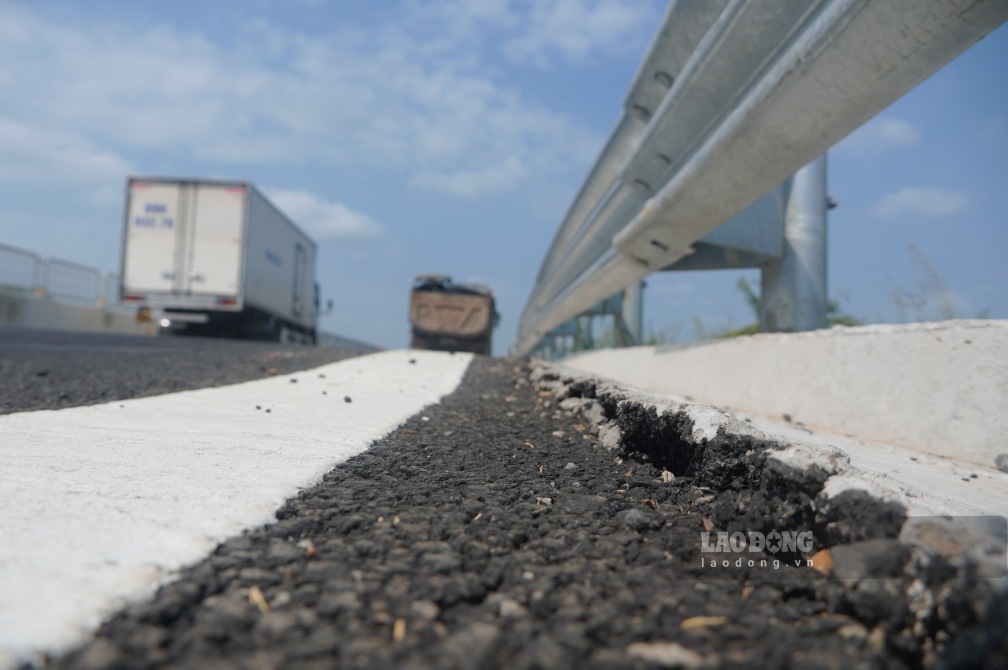
On March 13, Lao Dong Newspaper reporters' records on the Can Tho - Ca Mau expressway showed that at many bridge locations on the route, localized subsidence appeared in the approach road area of the bridge.
Specifically, at Ca Dam bridge, Tu Sang bridge, Kenh Ngang bridge, Nam Khau bridge... the road surface showed signs of subsidence in the adjacent part between the bridge and the access road. Meanwhile, some locations such as Muoi Thuoc bridge, Chap Tranh bridge, Sau Deo bridge, Co Nhi bridge... have been basically repaired by construction units.
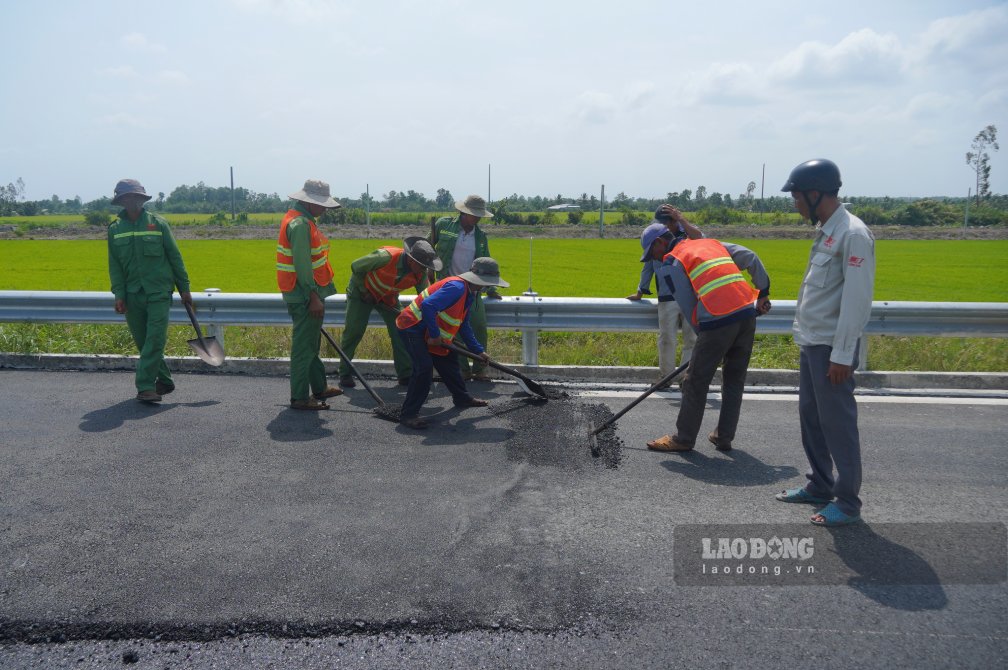
In the bridge 78 area, an official of VNCN E&C Company said that the unit is organizing the remediation of about 12 subsidence points on both sides of the route. Locations that are at risk of affecting traffic safety are prioritized for handling first to ensure safe traffic.
According to this official, the repair work at bridge 78, Duong Go bridge and box culvert area 30 is expected to be completed in about 2 days.
Regarding the above issue, the My Thuan Project Management Board informed that the expressway passes through an area with weak soil base geology with a thick layer of soft mud, low load-bearing capacity and long consolidation time. Therefore, on the route, there are nearly 100 km of roadbed that must be treated with weak soil by complex technical solutions such as load-bearing subsidence combined with boring and cement pile drilling; the remaining 10 km are bridge works.
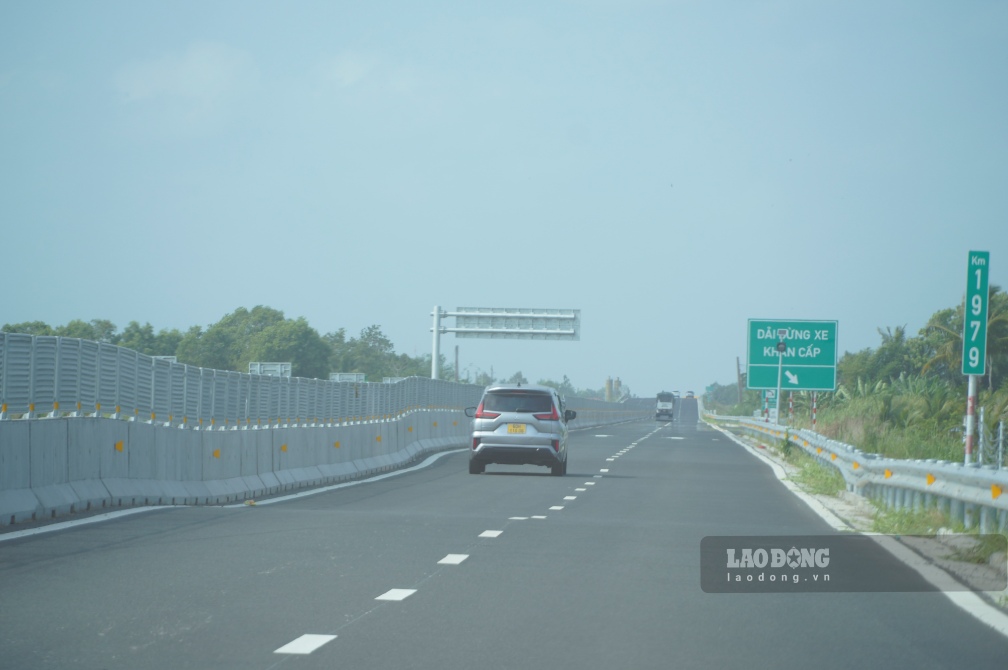
According to the My Thuan Project Management Board, in the initial exploitation phase, the appearance of some points that were not really smooth, mainly at the high embankment positions of the bridge, is a phenomenon that was predicted in the design documents and is not unusual.
Technically, the bridge structure is treated with foundation with deep piles and cement earth pillars, so it has the ability to withstand large loads, small residual subsidence and fast stability. However, the approach road at the beginning of the bridge is a foundation on weak soil, so even if it has been treated according to the design, it still takes time for the soil foundation to continue to be consolidated.
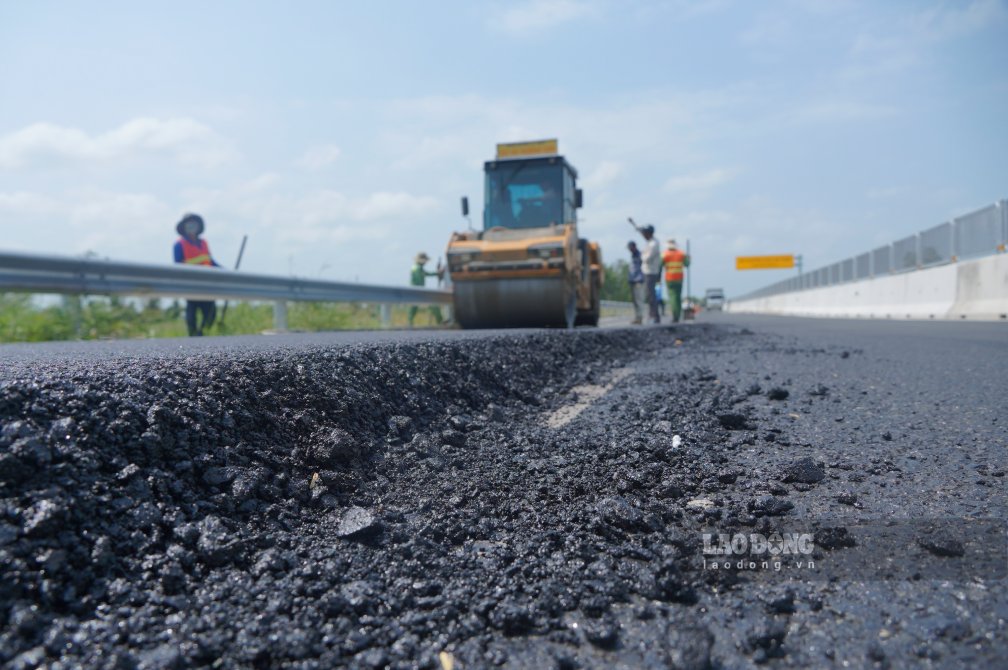
Especially, in the transitional areas between the roadbed treated with cement soil pillars and the treatment foundation with bored soil, the load-bearing conditions and consolidation speed of the soil foundation are different, leading to a difference in the subsidence speed between the bridge and the road. This is the direct cause of local subsidence and uneven smoothness at some bridgehead positions in the early exploitation phase.
In addition, the completion time of the asphalt concrete pavement of the project falls at the end of the rainy season, when the groundwater level is still high, so the consolidation process of the soil foundation takes place slowly. When the dry season enters, the groundwater level decreases, combined with the actual vehicle load, the consolidation process takes place faster, causing localized subsidence to appear more clearly at some transitional locations.
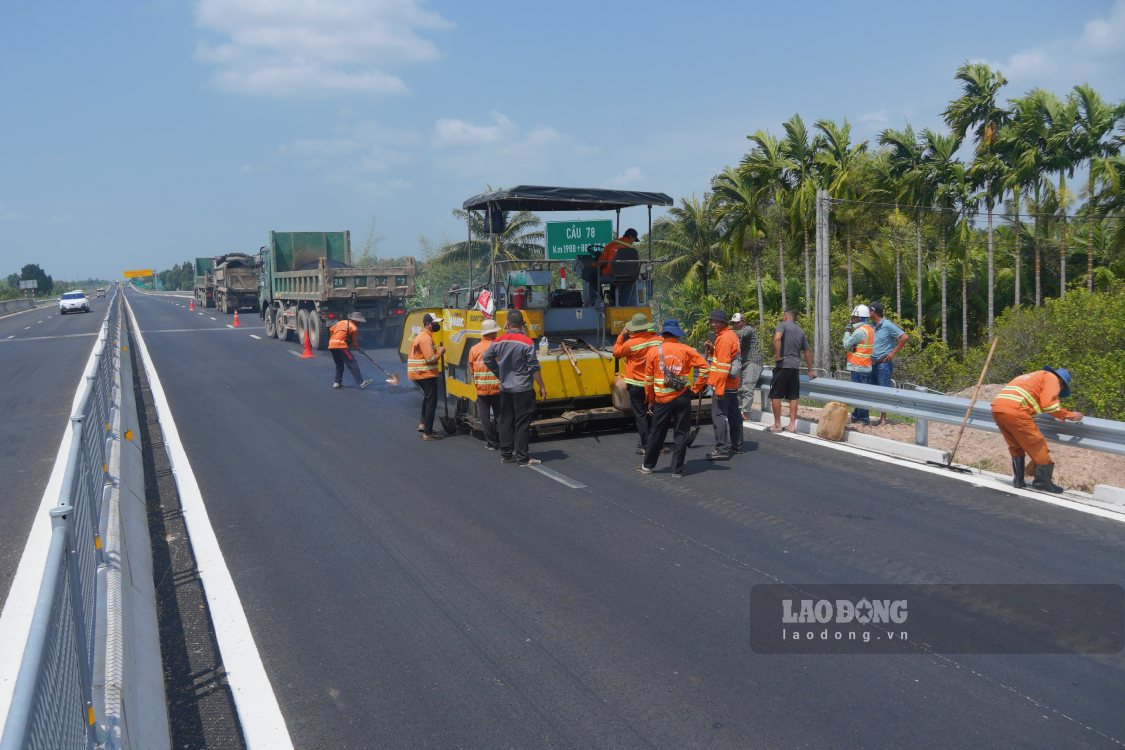
Faced with the above situation, the My Thuan Project Management Board has directed contractors to strengthen subsidence monitoring, closely monitor developments at the bridgeheads, and at the same time organize asphalt concrete pavement according to warranty responsibilities to ensure smoothness for the route.
According to this unit, when the soil foundation gradually stabilizes, local subsidence locations will not significantly affect the exploitation process, ensuring the expressway operates safely and smoothly.
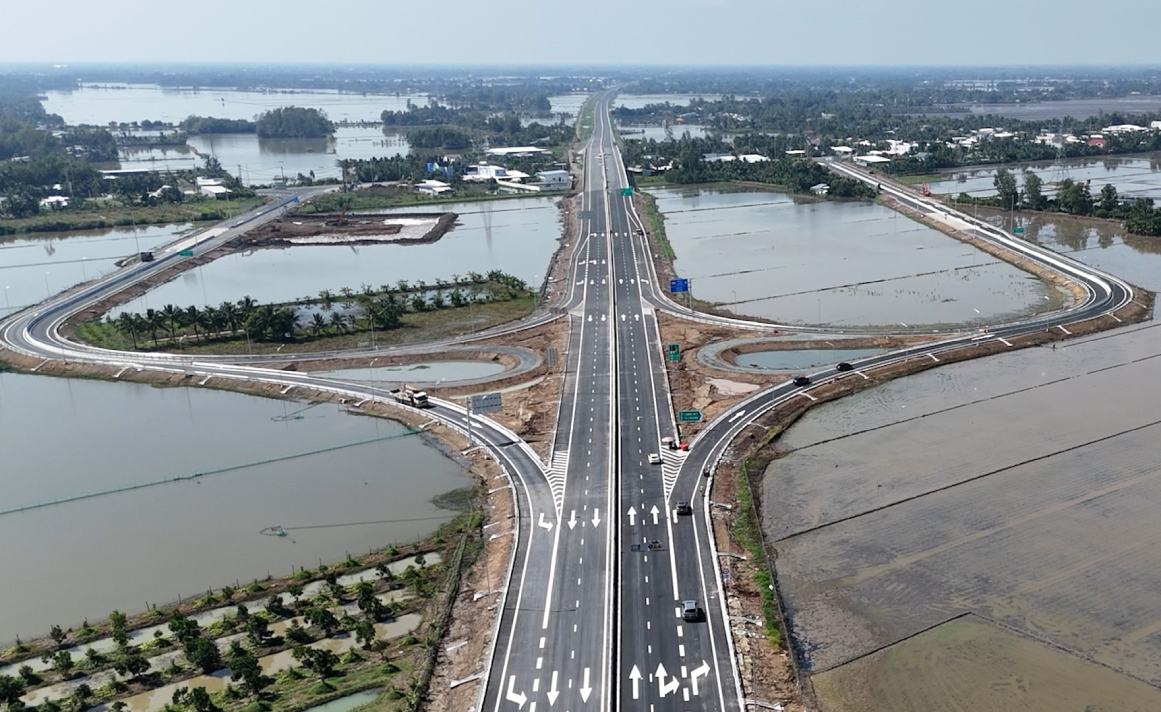
The Can Tho - Ca Mau Expressway project has a main route length of 110.85 km, divided into two component projects including the Can Tho - Hau Giang section, 37.07 km long, and the Hau Giang - Ca Mau section, 73.2 km long. The route is invested with a scale of 4 lanes, and is one of the key national transport projects in the Mekong Delta region.


