
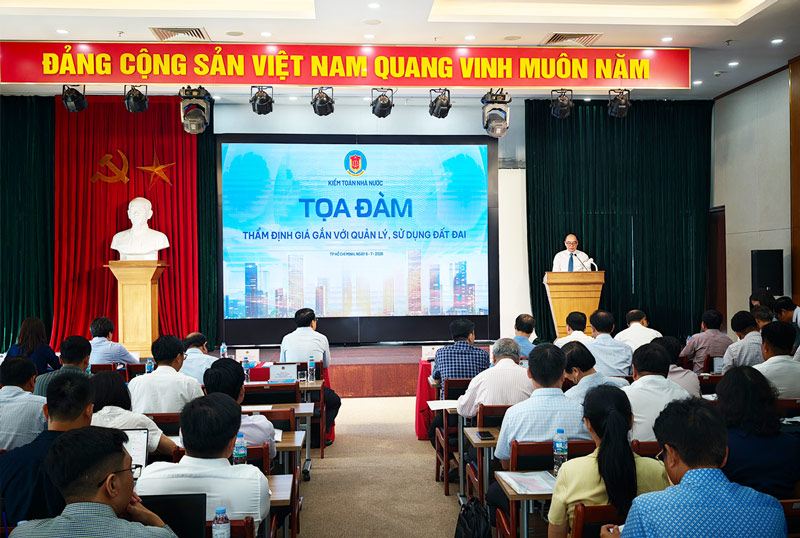
Speaking at the opening of the seminar, Deputy State Auditor General Bui Quoc Dung said that after two seminars in Hanoi and Khanh Hoa, SAV received hundreds of questions, practical situations and recommendations from ministries, branches, localities, businesses, consulting organizations and SAV units. Through this, a number of major issues emerged that need to be further studied and improved.
According to the Deputy State Auditor General, the biggest problem currently is not the lack of valuation methods but the lack of a reliable data system for methods to be effective. This is the highest consensus point between state management agencies, localities, consulting enterprises and SAV.
In some localities, some projects throughout the 24-month period according to regulations still cannot find enough comparable assets; some places are forced to expand the search scope to other localities... According to Mr. Dung, this reality shows that if input data does not accurately reflect market developments, even if applying the comparative method, the surplus method or the adjustment coefficient method, it is difficult to ensure that the valuation results are realistic.
Credit institutions also shared that what they lack now is not a pricing tool but a standardized, interconnected and verifiable data system. This shows that the task of building a national database on land, a land price database and a data sharing mechanism between state management agencies should be considered one of the key tasks in the coming time.
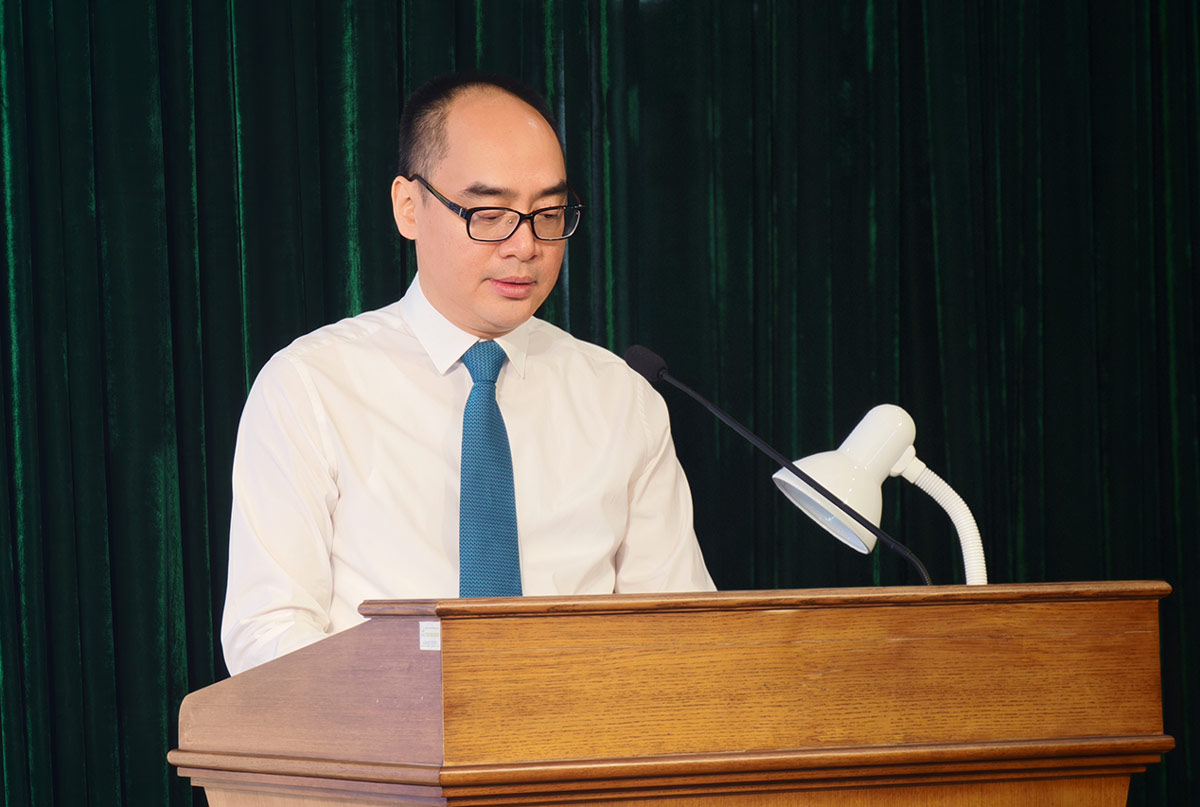
The Deputy State Auditor General also said that the gap between legal regulations and practical organization of implementation is still quite large. Through two seminars, SAV listened to many very specific situations. This shows that many regulations have been issued but still need to continue to be guided more fully, clearly and uniformly.
Referring to the transition to applying land price lists combined with adjustment coefficients from July 1, 2026, the Deputy State Auditor General said that this is a very important innovation but also poses many new requirements. After many years of mainly applying specific land price determination methods, the transition to the mechanism of land price lists combined with adjustment coefficients will contribute to simplifying procedures, shortening the time to determine financial obligations for land and increasing publicity and transparency.
However, through two seminars, many localities are concerned about the basis for building land price adjustment coefficients, reliable data sources to determine coefficients as well as how to ensure that coefficients accurately reflect market fluctuations. For specific projects or mixed projects, many opinions also suggested clarifying how to apply them to be both in accordance with regulations and suitable for reality.
In addition, the Deputy State Auditor General emphasized the requirement to ensure a safe legal environment for those who comply with regulations.
Through two seminars, SAV recorded many opinions from localities and consulting businesses. Many businesses said that revenue from valuation activities is not large, but professional pressure and legal risks are very high, causing many units to be limited or no longer interested in this field.
A modern legal environment must simultaneously meet two requirements: It must be strict enough to control and handle violations. On the other hand, it must also be clear enough to protect cadres, civil servants, consulting organizations and law enforcement officers when they have implemented regulations, procedures and responsibilities correctly. Perhaps the most important thing we have achieved after the two seminars is not how many questions we have answered, but that we have shifted from thinking about finding the causes of each mistake to thinking about identifying bottlenecks of the entire system to jointly remove them" - Deputy State Auditor General Bui Quoc Dung emphasized.
Deputy State Auditor General said that SAV wishes to objectively reflect issues arising from practice through audit activities and through forums, contributing to perfecting mechanisms, policies and improving the effectiveness and efficiency of state management.
According to the Organizing Committee, nearly 140 questions sent to the seminar showed that the need to exchange and remove obstacles in valuation work associated with land management and use is very large.


