The project to build an inter-regional traffic route connecting Ho Chi Minh Road with National Highway 70B and National Highway 32C from Phu Tho province to Yen Bai province has a total adjusted investment of 2,120 billion VND.
After more than 3 years of construction, up to now, more than 50 km of the main route has been handed over and put into use, passing through the districts of Tam Nong, Cam Khe, Ha Hoa of Phu Tho province connecting to Tran Yen district, Yen Bai province.
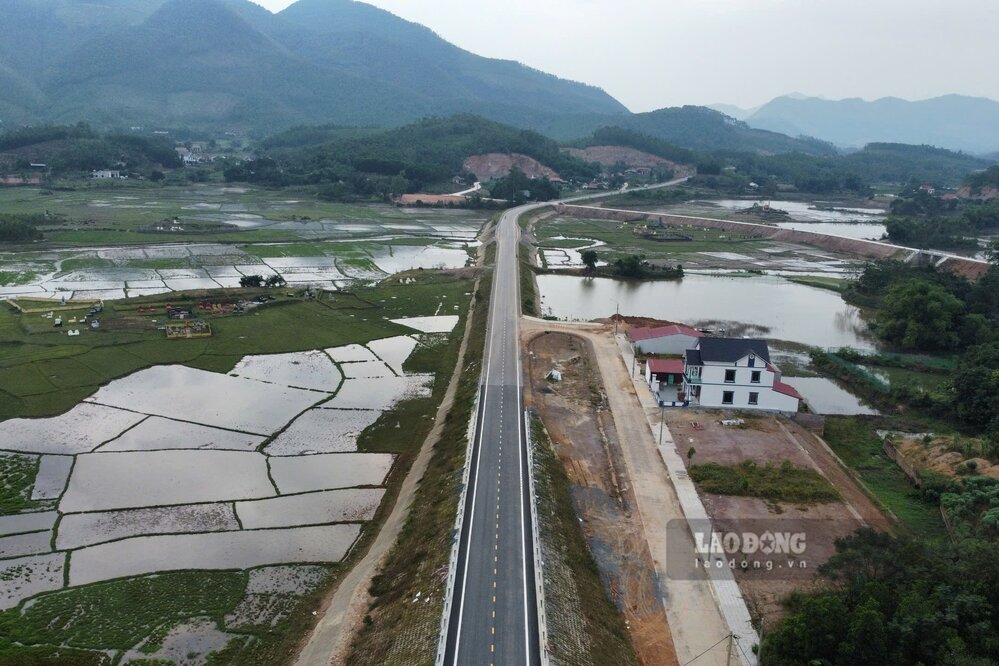
Along the entire route, there are many intersections with national highways, provincial roads, district roads... especially the section passing through Cam Khe district. According to statistics, the inter-regional road has nearly 30 km through Cam Khe district, there are about 120 intersections with inter-regional roads.
In fact, before being handed over and put into use, the route was thoroughly inspected for traffic safety, densely installed with warning signs/lights, painted with all kinds of road markings, speed bumps, etc.
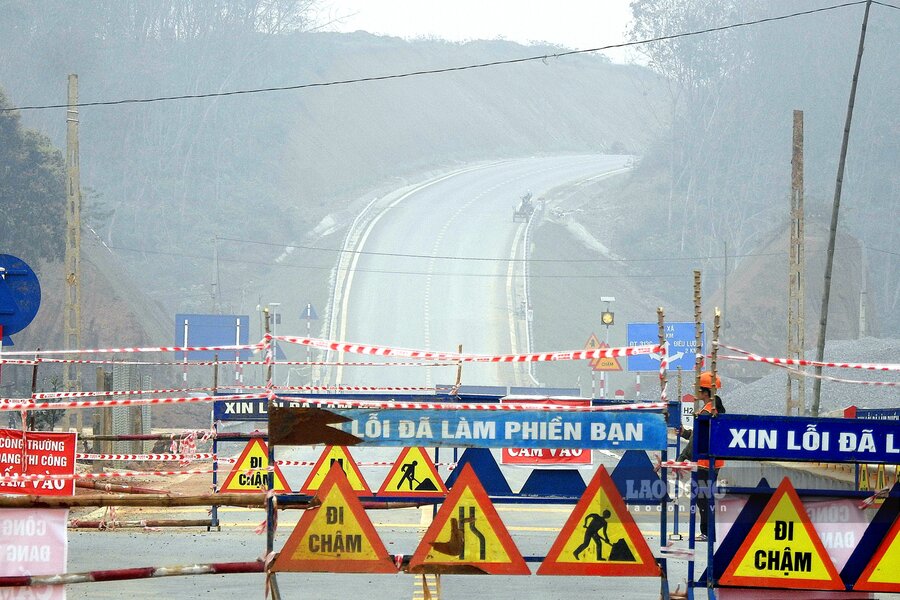
However, as a completely new route, plus there are many connection points and intersections as mentioned above, there have been traffic accidents in recent times.
Mr. Hoang Van Thanh - a resident of Zone 7, Phu Khe Commune (formerly Ta Xa Commune), Cam Khe District - said: "Recently, on the inter-regional road through Ta Xa Commune, bordering Chuong Xa Commune (now Nhat Tien Commune), there were 2 traffic accidents that killed 2 people. The road is very beautiful and convenient to travel, but because it is a new road, people have not yet formed awareness and habits. When going from the alley to the main road, they do not assess the danger, so they just rush out, so accidents can easily happen."
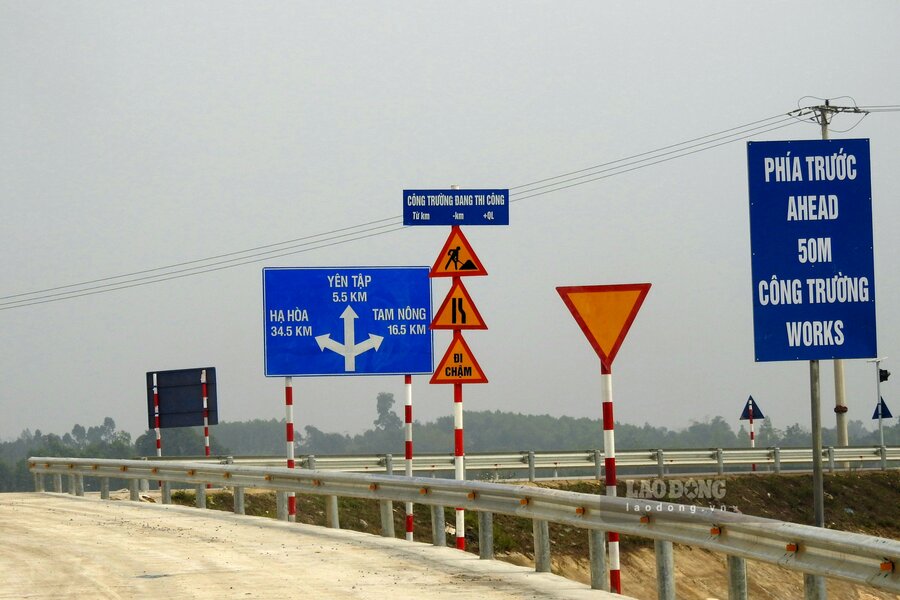
According to the reporter of Lao Dong Newspaper in late January, at the beginning of the roads intersecting with inter-regional roads where there are densely populated residential areas, many vehicles in Cam Khe district have been installed with speed bumps.
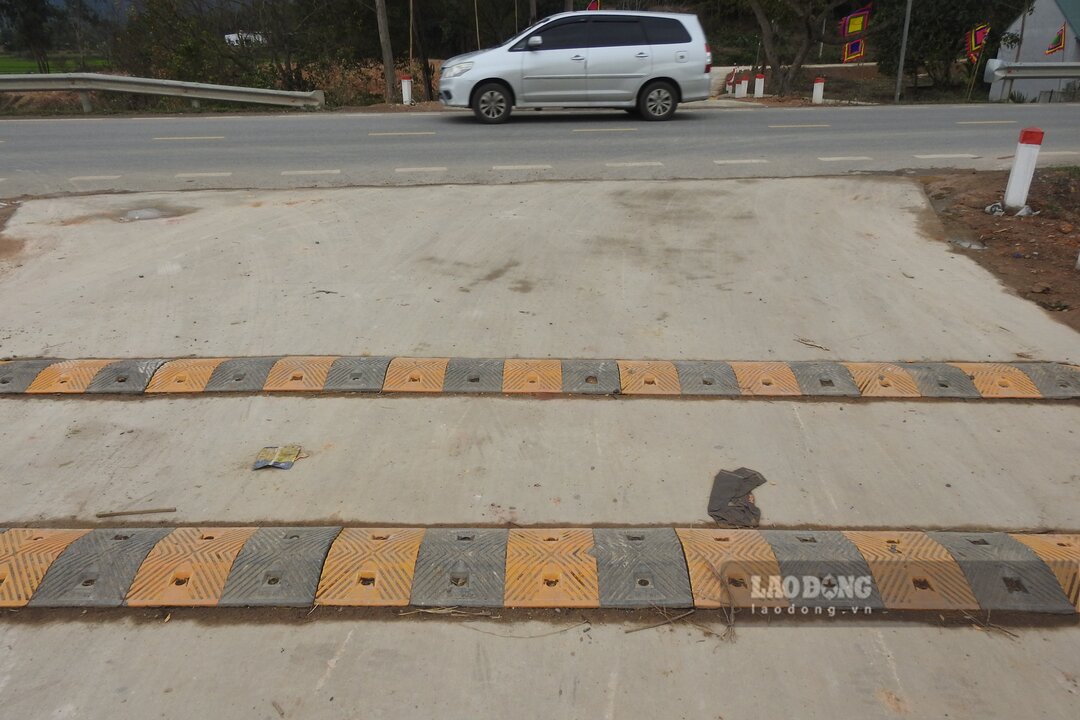
These speed bumps are arranged to suddenly change the road surface elevation, attracting the attention of drivers to warn and force them to reduce vehicle speed visually and physically when traveling from internal roads to main roads (inter-regional roads).
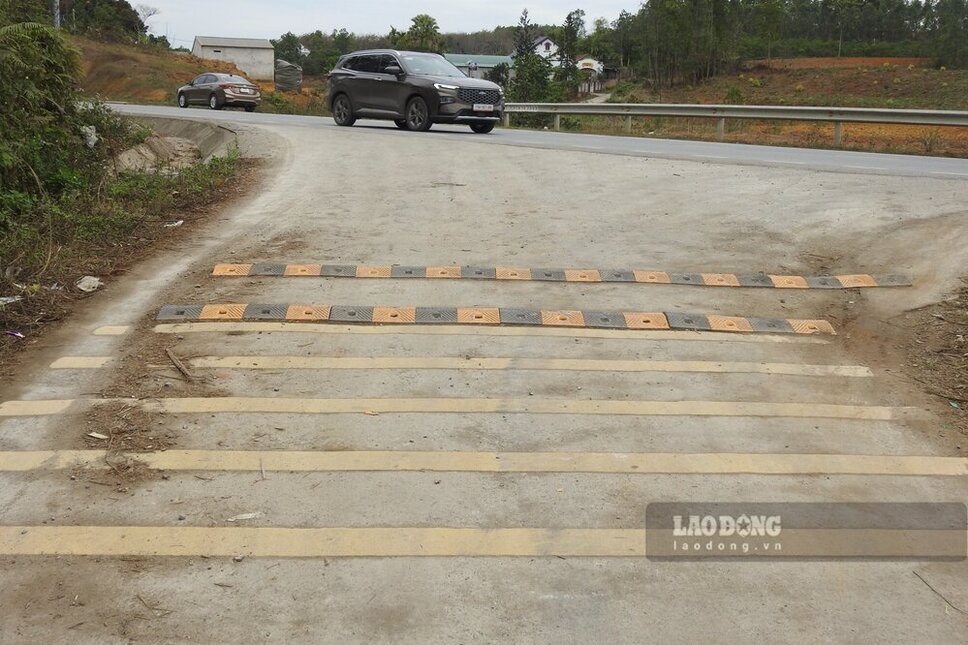
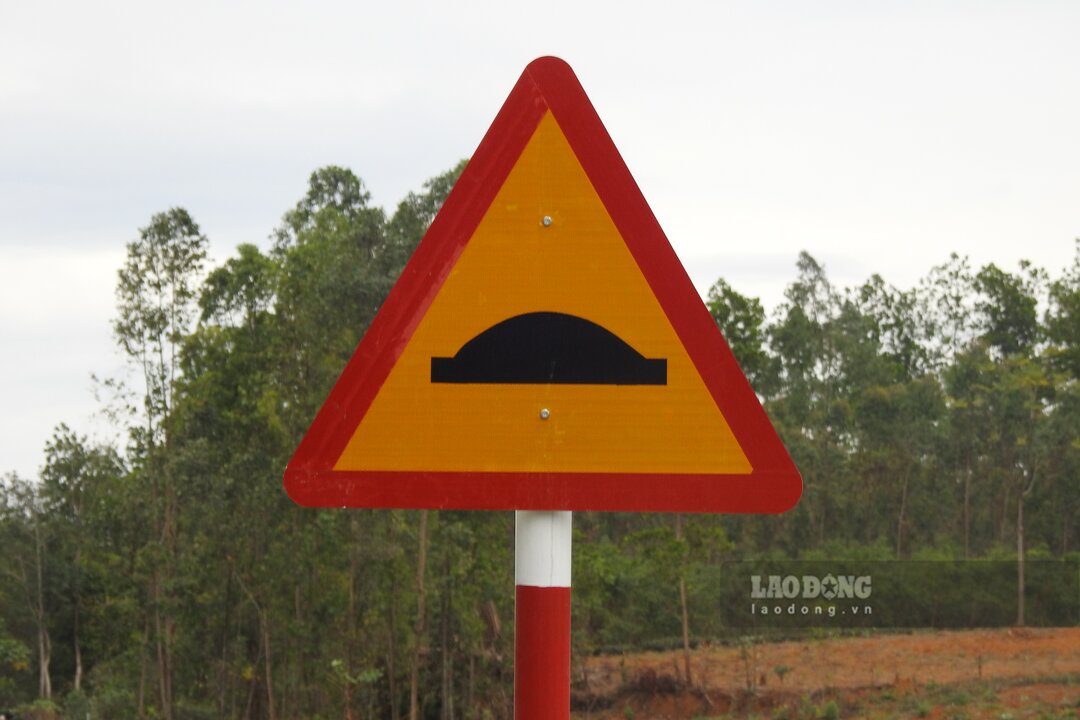
The number of speed bumps at the connection points is usually 2 sections. Before reaching these speed bumps, the authorities have arranged a number of speed bumps and posted signs to warn drivers.
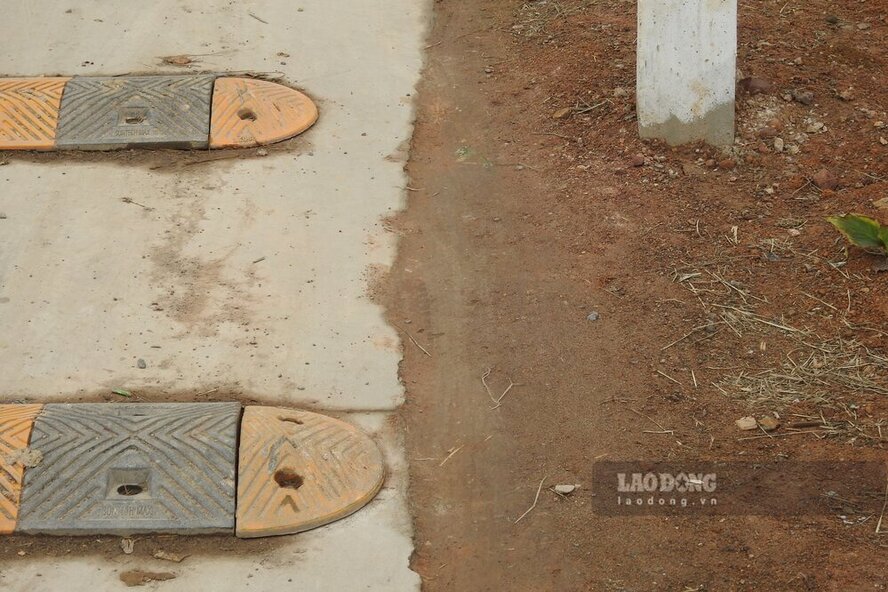
At some locations, speed bumps do not occupy the entire road surface but leave about 50 cm of space on both sides of the road so that non-motorized vehicles can still easily circulate.
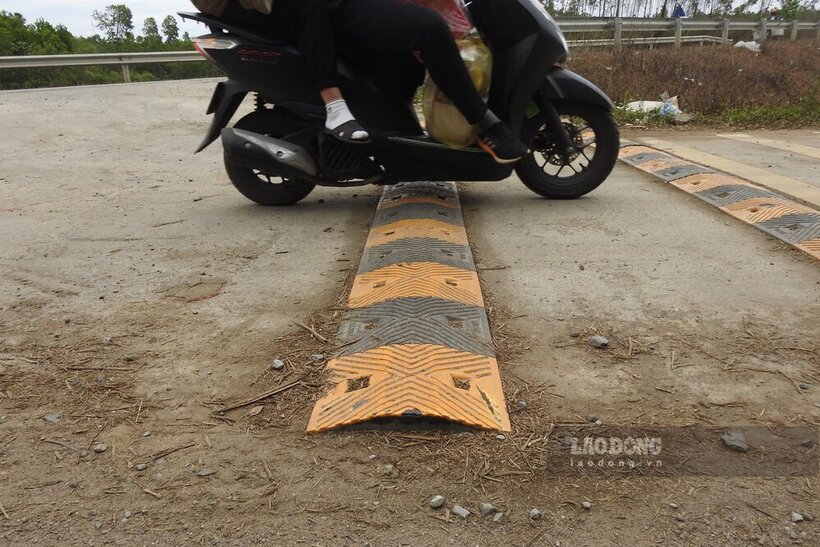
Through practical experience, it can be seen that the impact level on vehicle drivers is moderate, not too strong.