
Parents want, children don't agree
At nearly 70 years old, Mr. Phung Duc Hang (Long Bien ward, Hanoi) is receiving a pension of about 19 million VND per month after many years of working in the Army. He currently lives with his daughter, while his son has settled in Poland.
Mr. Hang said that he has thought many times about transferring to a nursing home. With his current pension, he can completely pay for living expenses and care at facilities with quite good quality.
I see that in nursing homes there are health care providers, there are peers to talk to. More importantly, not to bother children and grandchildren too much. But every time I think about going there, I feel hesitant," Mr. Hang shared.
According to him, what worries him most is not the cost but the social perception. Many people still think that only when children do not take care of their parents do they have to go to nursing homes.
I have asked my children for their opinion. The children all said they want their father to live with their family, not wanting their father to go to a nursing home. Therefore, until now, I have not decided," he said.
Sharing the same feeling, Ms. Nguyen Hong Loan (Tay Ho ward, Hanoi) said that after a stroke, her travel was difficult and she had to use a wheelchair.
Every day, the children take turns taking care of her, but she always feels guilty because it affects the work and private lives of her children and grandchildren.
Many times I think going to a nursing home may be more convenient. There are medical staff there, there are people to support daily life. But every time this is mentioned, children and grandchildren object because they are afraid of gossip from neighbors and acquaintances," Ms. Loan confided.
According to her, if society had a more open view of the nursing model, many elderly people would easily choose a place to live that suits their needs.
The biggest barrier is social psychology
Vietnam Social Security said that there are about 3.5 million people nationwide receiving monthly pensions. Of which, more than 11,500 people have pensions of over 20 million VND per month (before the time of pension increase adjustment).
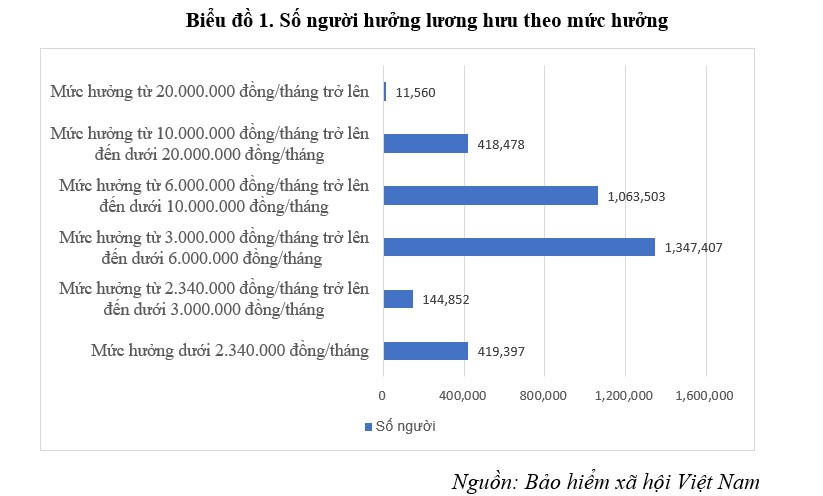
Along with the improvement in post-retirement income, Vietnam is also entering a period of rapid population aging.
The results of the Mid-Term Population and Housing Survey in 2024 show that the whole country has 14.2 million people aged 60 and over, a sharp increase compared to previous years. It is forecast that by 2030, this number will be approximately 18 million people.
The need for elderly care is also increasing. Currently, there are nearly 100 paid nursing homes nationwide, mainly concentrated in Hanoi and Ho Chi Minh City.
According to surveys from elderly care centers, the cost of nursing homes in 2026 ranges from 6-25 million VND per month depending on the type of service. With this fee level, people with pensions from 15-20 million VND or more can completely consider making a suitable choice.
In addition to accommodation services, nursing homes currently also provide regular medical care, rehabilitation, physical therapy and community activities for the elderly.
However, despite increasing demand, many experts believe that the biggest barrier today is still social psychology. For many Vietnamese families, parents living in nursing homes is still not considered a normal choice as in many developed countries.
For many people like Mr. Hang or Mrs. Loan, the decision to enter a nursing home is not simply a financial problem, but also a story about family affection and concepts that have existed for many generations.


