Silent pride

Under the erratic weather of the Mekong Delta region, at the IC5 intersection, Mr. Vo Van Son (46 years old, Vi Thuy commune, Can Tho city) is still steadily working with the construction team to complete the final items of the Can Tho - Ca Mau expressway. Having been attached to the project for about 2 years, Mr. Son understands each road section, each progress span and also the difficulties that workers have to go through.
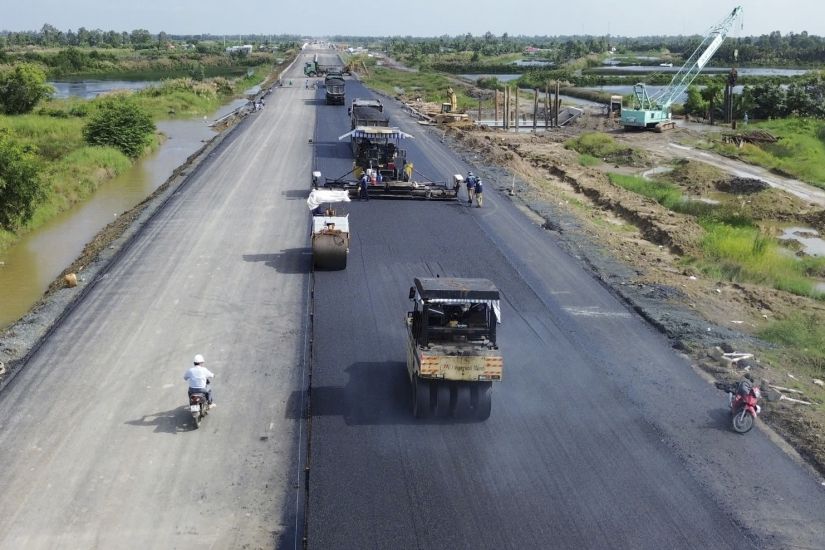
Compared to civil works, building highways is much more difficult. All day in the sun, and the pressure of progress, so everyone has to try twice as hard. But in return, the salary is stable, the work is regular every day, thanks to which I have been able to follow until now" - Mr. Son shared.
For workers like him, that hardship is completely deserved when the project is about to reach the finish line. "When the Can Tho - Ca Mau expressway is completed, my brothers and I are both proud to contribute a small part of our strength to the national key project, especially for our homeland in the Mekong Delta region" - Mr. Son added, his smile sparkling with joy.
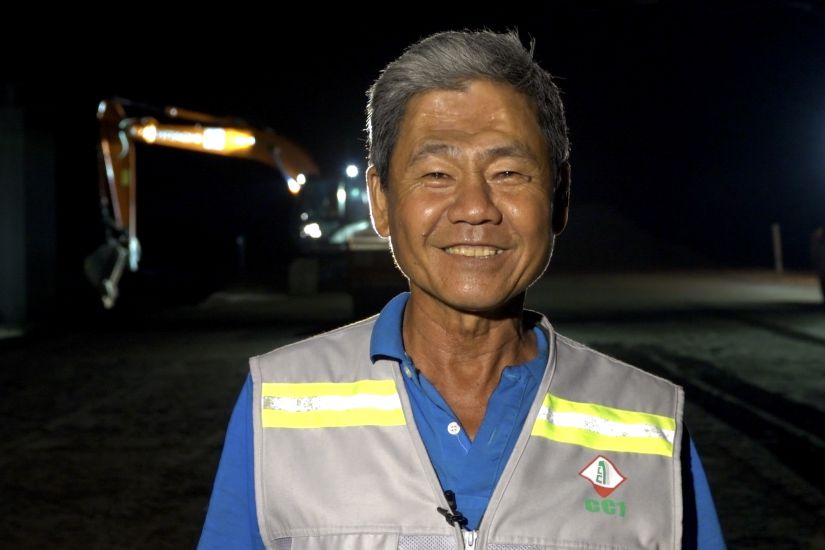
At the IC4 intersection, Mr. Nguyen Van Trieu - another worker - said that the collective of brothers has long considered the project not only as a workplace but also as a responsibility to the land they are living in. “Everyone understands the importance of the project, so no matter how hard it is, they work 3 shifts and 4 crews to keep up with the schedule. When thinking about the day the expressway will be put into operation, brothers are even more motivated” - Mr. Trieu shared.
The "heat" of the construction site, the race against time, layers of sweat burning on the road surface - all create a very real picture of workers contributing to changing the traffic face of the Mekong Delta.

Not only those directly involved in construction, people are also eagerly waiting for the expressway to officially operate. Mr. Huynh Bien Cuong (Bac Lieu ward, Ca Mau province) recounted that he and a group of nearly 10 friends had discussed driving from Ca Mau to Lang Son to admire the country along the expressway, something they only thought of in their dreams before.
The opening of the Can Tho - Ca Mau expressway is a great joy. It helps reduce traffic jams on National Highway 1, trade in goods is much more convenient, and the transportation time of agricultural products is shortened," Mr. Cuong excitedly said.
In Hong Dan commune (Ca Mau province), Mr. Nguyen Van Dam - who has followed the project every day - also could not hide his emotion. "For many years, people at the end of the country have only hoped for a good road to travel and work. With an expressway, the locality can attract industrial parks, and people have to travel far to earn a living less" - Mr. Dam shared.
Breakthrough expectations
Not only meaningful to people's lives, the Can Tho - Ca Mau expressway project is also seen as a new driving force for development for the entire region.
Mr. Lam Van Bi - Vice Chairman of Ca Mau Provincial People's Committee - said that major transportation projects being implemented in the province are of particular importance. Not only completing the strategic infrastructure system, creating a breakthrough in marine economic development, ensuring national defense and security, but also igniting a new vitality, consolidating the belief and excitement of the people in the southernmost part of the Fatherland.
According to the Vice Chairman of Ca Mau Provincial People's Committee, Ca Mau people expect the projects to open up new development space, strengthen inter-regional connectivity, promote tourism and trade, create more jobs and maximize the potential and available strengths of the locality.
From an economic perspective, Dr. Tran Khac Tam - Chairman of Soc Trang Business Association - assessed that the Can Tho - Ca Mau expressway will create changes that "liberate the development capacity" of the entire Mekong Delta region.
According to Dr. Tran Khac Tam, the first benefit is shortening travel time between economic centers of the region. This helps businesses save costs, while people travel conveniently. In addition, logistics and import-export businesses will benefit directly. “Speed limits help limit congestion, reduce transportation disruptions - factors that increase costs. When transportation costs decrease, our agricultural and aquatic products have an advantage in domestic and world market competition” - Mr. Tam analyzed.
When transportation infrastructure is favorable, the Mekong Delta region will become an attractive destination for domestic and foreign investment capital. Many industrial parks and agricultural and aquatic processing zones in Can Tho and Ca Mau will spring up around areas directly connected to the expressway. Reducing transportation risks helps investors boldly move to the Mekong Delta - a place with abundant raw materials but previously limited due to high logistics costs.
Dr. Tran Khac Tam predicts that when the Can Tho - Ca Mau expressway operates, combined with the expressways connecting the Mekong Delta - Ho Chi Minh City, a continuous transportation network will create favorable conditions for goods of the Mekong Delta to access large markets in Ho Chi Minh City and thereby spread to international markets.
However, according to the Chairman of the Soc Trang Business Association, opportunities only become real advantages if local businesses prepare carefully. “Businesses must comprehensively transform digitally, apply modern management methods to improve competitiveness. In addition, it is necessary to focus on building qualified human resources, especially digital governance skills” - Mr. Tam emphasized.
The Can Tho - Ca Mau expressway is not only a modern route, but also a symbol of the strong transformation of the land that was once "soaked" in infrastructure difficulties. The efforts of thousands of workers outside the construction site, the expectations of the people and the expectations of the government and businesses - all converge, creating special value for the project. When the last meters of road are completed, the Mekong Delta is facing a great opportunity to make a strong breakthrough in socio-economics. And above all, that road opens up a new future for millions of people at the end of the country - the future of connectivity, prosperity and sustainable change.