
After 1 year of operating the 2-level local government model, Gia Lai recorded many positive changes in organizational structure, management methods and service quality.
Promoting administrative reform, digital transformation along with decentralizing many administrative procedures (TTHC) to the commune level has helped people and businesses access public services more conveniently, shortening the time to process dossiers, reducing costs and improving publicity and transparency.
By May 10, 2026, the Index of serving people and businesses of the province reached 95.61 points, ranked Excellent.
Bringing public services to villages
In Canh Vinh commune - a locality with an area of nearly 260km2, a population of about 16,000 people, wide terrain, divided with many remote villages and hamlets, ethnic minority areas (EMCs), resolving administrative procedures was once an obstacle for many people.
After the merger, the expanded administrative boundaries make the distance to the Public Administrative Service Center (TTPVHCC) further. To support the people, Canh Vinh commune has arranged an additional reception and result return point at the old Canh Hiep Commune People's Committee headquarters, fully equipped with machinery and equipment, serving the people of 8 villages.
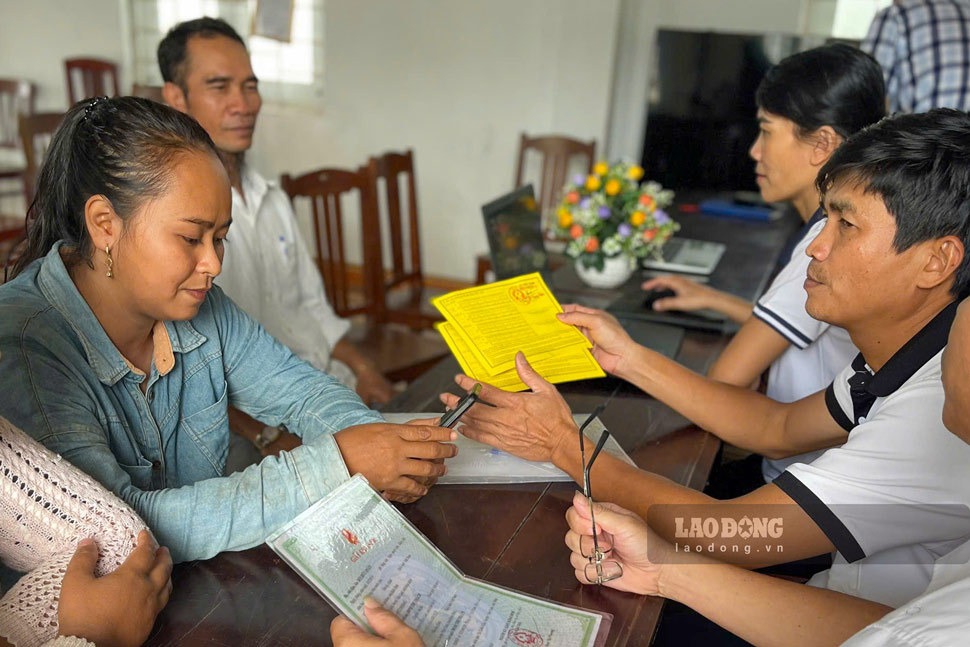
Especially in Canh Tien isolated village, about 35km from the commune center, the locality established a separate support team to guide and receive dossiers right in the village, helping people reduce time and travel costs.
In addition, the commune established mobile administrative procedure resolution teams to reach villages and hamlets to support people. From April 2026, the locality will implement a model to support vulnerable people to carry out procedures at home.
Thanks to these flexible approaches, in 2025, the Index of serving people and businesses of Canh Vinh commune reached 99.65 points, belonging to the group of 10 localities with the highest results in the whole province.
Ms. Dinh Thi Thach (born in 1993, residing in Canh Tien village) said that in the past, every time they made papers, people in the village had to travel a very long distance, while not understanding the process and procedures, so they encountered many difficulties.
After the merger, commune officials came to the village to support, so people made paperwork much more convenient. I did the procedures to change the ethnicity for my child and was guided very attentively, so I finished it very quickly," Ms. Thach shared.
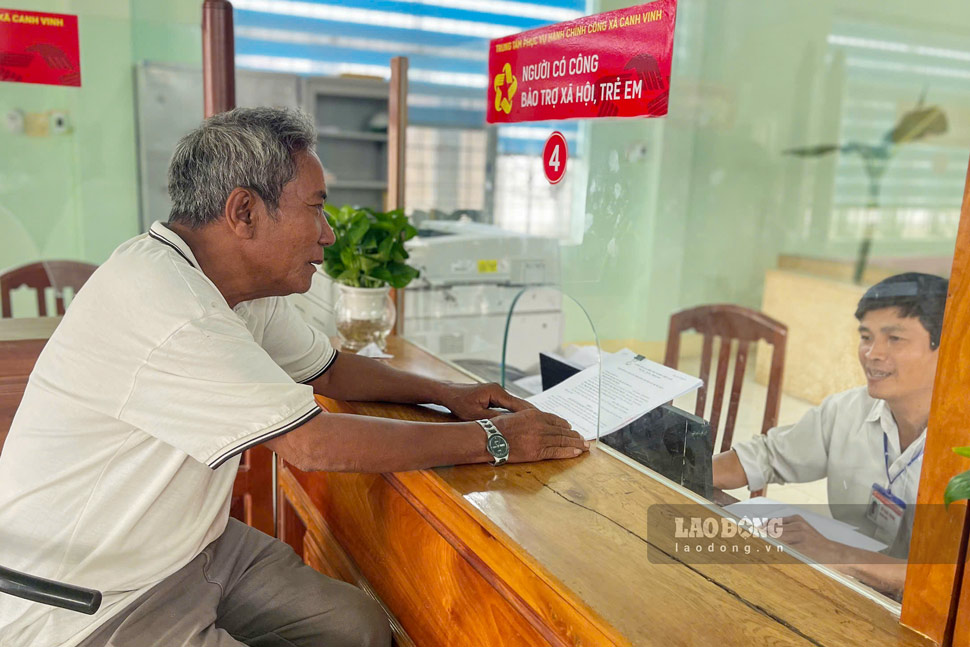
On the morning of July 9, Mr. Nguyen Van Bao (born 1962, residing in Hiep Hung village) came to TTPVHCC of Canh Vinh commune to complete procedures to receive allowances and was carefully guided by officials.
I am old, so I don't know how to implement the steps. If there are no supporting officials, I cannot do it myself," Mr. Bao said.
Mr. Luong Thanh Cuong - Deputy Director of the Canh Vinh Commune Public Administrative Service Center - said that from the local reality, the commune has established support teams to go to villages, hamlets, and each household to guide people to resolve administrative procedures.
According to Mr. Cuong, the common difficulty of many people, especially the elderly and EMCs, is that they cannot operate on the online public service system themselves.
When guided wholeheartedly, people highly appreciate the sense of responsibility and service attitude of officials at the center and members of support teams," Mr. Cuong said.
However, according to Mr. Cuong, the online administrative procedure resolution system is still in the process of completion, so errors sometimes arise such as synchronizing dossier results, paying fees and charges... causing the processing time of some dossiers to be prolonged, affecting service quality.
Taking people as the center of service
In Quy Nhon ward, the work of supporting people to resolve administrative procedures is also being implemented in a flexible direction, taking people as the center of service.
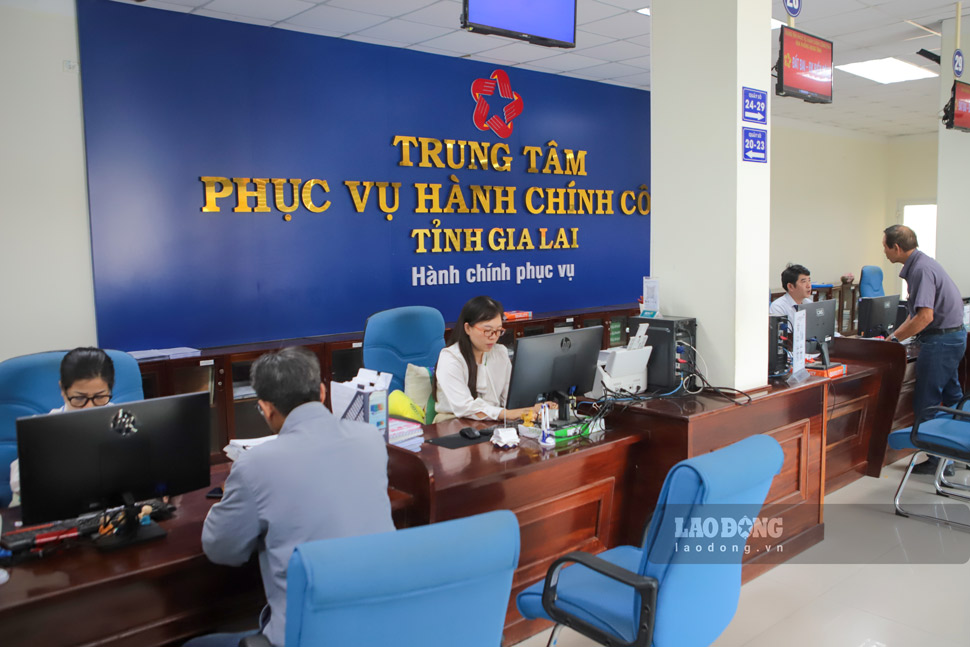
As one of the central wards of the province with about 130,000 people, each year the locality receives about 25,000 administrative procedure dossiers, belonging to the group with the largest number of dossiers in the whole province.
In particular, from the beginning of 2026, the ward has coordinated with Border Guard Flotilla 2 to effectively operate the public service kiosk model of the armed forces in Quarter 9 - Hai Minh fishing village on Phuong Mai peninsula, 15 minutes by boat from the mainland.
Thanks to this model, people are guided and submit dossiers online right at the facility, no longer having to spend time and costs by ferry to the mainland to carry out procedures as before.
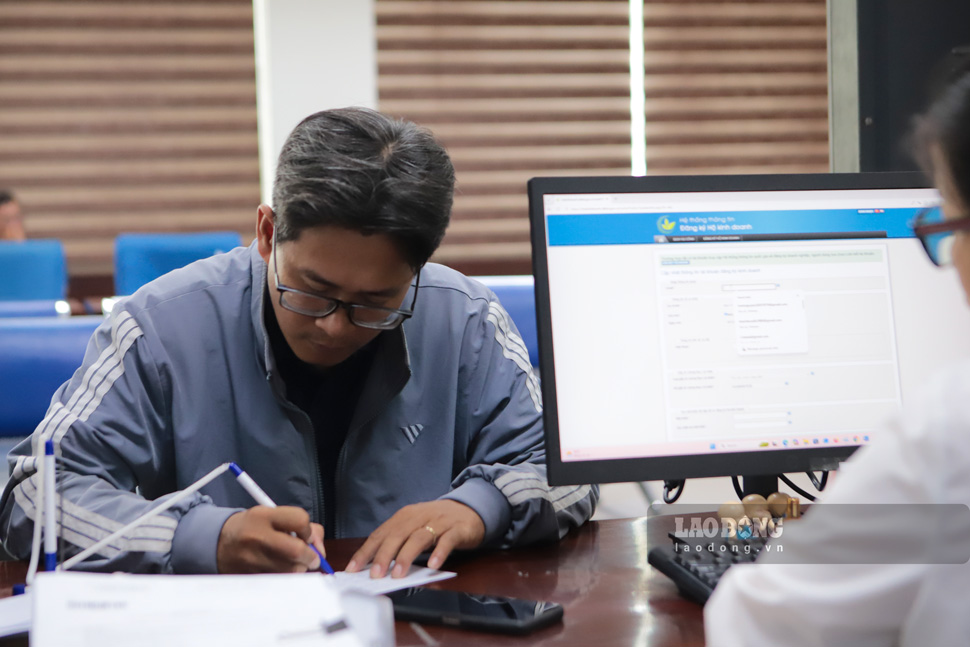
Coming to carry out business household registration procedures on the morning of July 9, Mr. Bui Thanh Tam (born 1986, residing in Quy Nhon Bac ward) was surprised when the entire process only took about 30 minutes.
I think household business registration takes 2-3 hours, but in reality it only takes about half an hour. The time to return results is also much faster than I expected," Mr. Tam shared.
Mr. Mai Dao Nguyen Kha - Director of the Quy Nhon Ward Public Administrative Service Center - said that in the early stages of operating the new model, the locality faced many difficulties because people were not familiar with online public services; some officials and civil servants were still confused and not proficient in receiving online dossiers...
Faced with that reality, the center has strengthened professional training, standardized the process of receiving and resolving dossiers, and thoroughly grasped the spirit of serving people. Up to now, the receipt and resolution of administrative procedures has become regular and operates smoothly.
All people coming to the center are enthusiastically guided by officials and civil servants. The service quality assessment result of 97.14/100 points is the clearest proof of people's satisfaction," Mr. Kha said.


