
Recently, in the process of deploying the collection of DNA biological samples of martyrs' remains to serve the work of identifying names at Tri Ton Martyrs' Cemetery (An Loi hamlet, Tri Ton commune, An Giang province), Team No. 01 of Steering Committee 515 of the Provincial Military Command of An Giang discovered a relic carrying personal information of a martyr.
The special discovery during the DNA sampling process at Tri Ton Martyrs' Cemetery not only opened up the opportunity to identify a martyr, but also ignited the hope of reunion for the family that had been waiting for decades.
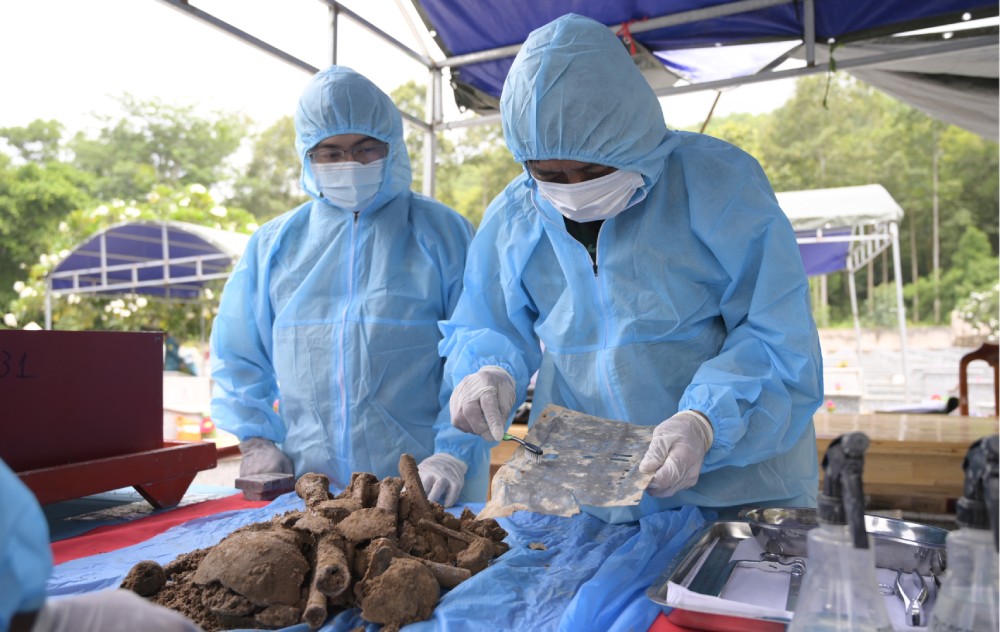
Among thousands of martyrs' graves excavated to take DNA biological samples, it is very rare for officers on duty to find a relic that still retains complete personal information. Therefore, the moment Team No. 01, Steering Committee 515 of the An Giang Provincial Military Command discovered a metal cardboard at Tri Ton Martyrs' Cemetery made the whole team speechless.
On the card that has faded with time, the words: "Nguyen Van Thuan - Long Thanh, Yen Thanh, Nghe An - Sacrificed on February 16, 1973" are still clearly visible.
That is not just a few lines of information but also a valuable clue that can bring a soldier back to his true name after more than half a century.
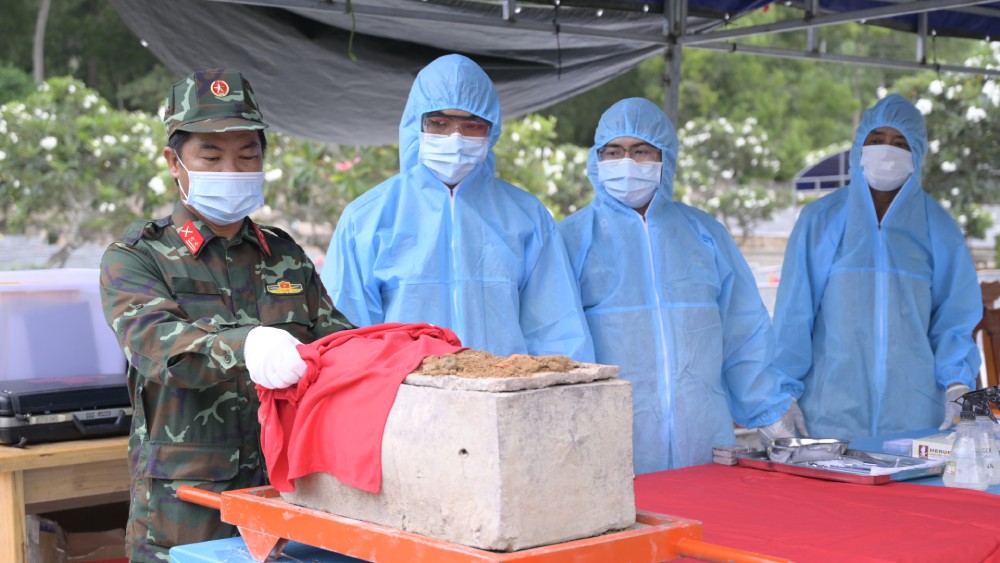
Immediately after the discovery, the entire professional process was urgently deployed. The artifacts were recorded, preserved in their original state; DNA biological samples of the remains were taken according to technical procedures. At the same time, the An Giang Provincial Military Command directed specialized agencies to review records, compare data on martyr management, and coordinate with local authorities in their hometowns to search for relatives.
According to officials directly in charge, each time a grave is opened, it is an additional hope, but also a concern because most of the remains have no identification marks left. Therefore, finding a card with intact information moves everyone.
When reading the name, hometown and date of sacrifice on the card, the whole team almost fell silent. We understood that behind those lines were so many years of waiting for a family. Doing this job, there is no greater joy than finding a clue that can help correctly call out a martyr's name" - Senior Lieutenant Colonel Duong Tong Chien, officer of the Sample Taking Team, shared.
That emotion was multiplied when the first phone calls were connected to the martyr's homeland. On the other end of the line, Mr. Nguyen Van Phuc (61 years old) - possibly martyr Thuan's younger brother - choked up after many years of no longer having hope of having more information about the person who sacrificed.
The family just hopes that they are indeed our relatives. For more than 50 years, just knowing where he is is satisfying for the whole family" - Mr. Phuc said emotionally.
According to Colonel Cao Minh Tam - Deputy Political Commissar of An Giang Provincial Military Command, the discovery of artifacts with full personal information is a special case, of great significance in the work of identifying martyrs' remains.
The Provincial Military Command will direct specialized agencies to urgently coordinate with relevant units and relatives of martyrs to carry out DNA comparison and testing according to regulations. The highest goal is to quickly accurately identify the martyrs, bring them back to their families and homeland soon, contributing to the implementation of the nation's morality of "When drinking water, remember the source", Colonel Cao Minh Tam emphasized.
In the "500 Days and Nights" Campaign being implemented by the An Giang Provincial Military Command, each DNA sample taken, each dossier compared and each clue discovered contribute to bringing the journey of gratitude to the final destination: so that those who sacrificed can return to their true names, and so that decades of searching can be closed with a reunion.


