
On January 8, the People's Committee of Dai Thanh commune (Hanoi) organized a community consultation conference within the framework of environmental impact assessment of the Olympic Sports Urban Area construction project in the area.
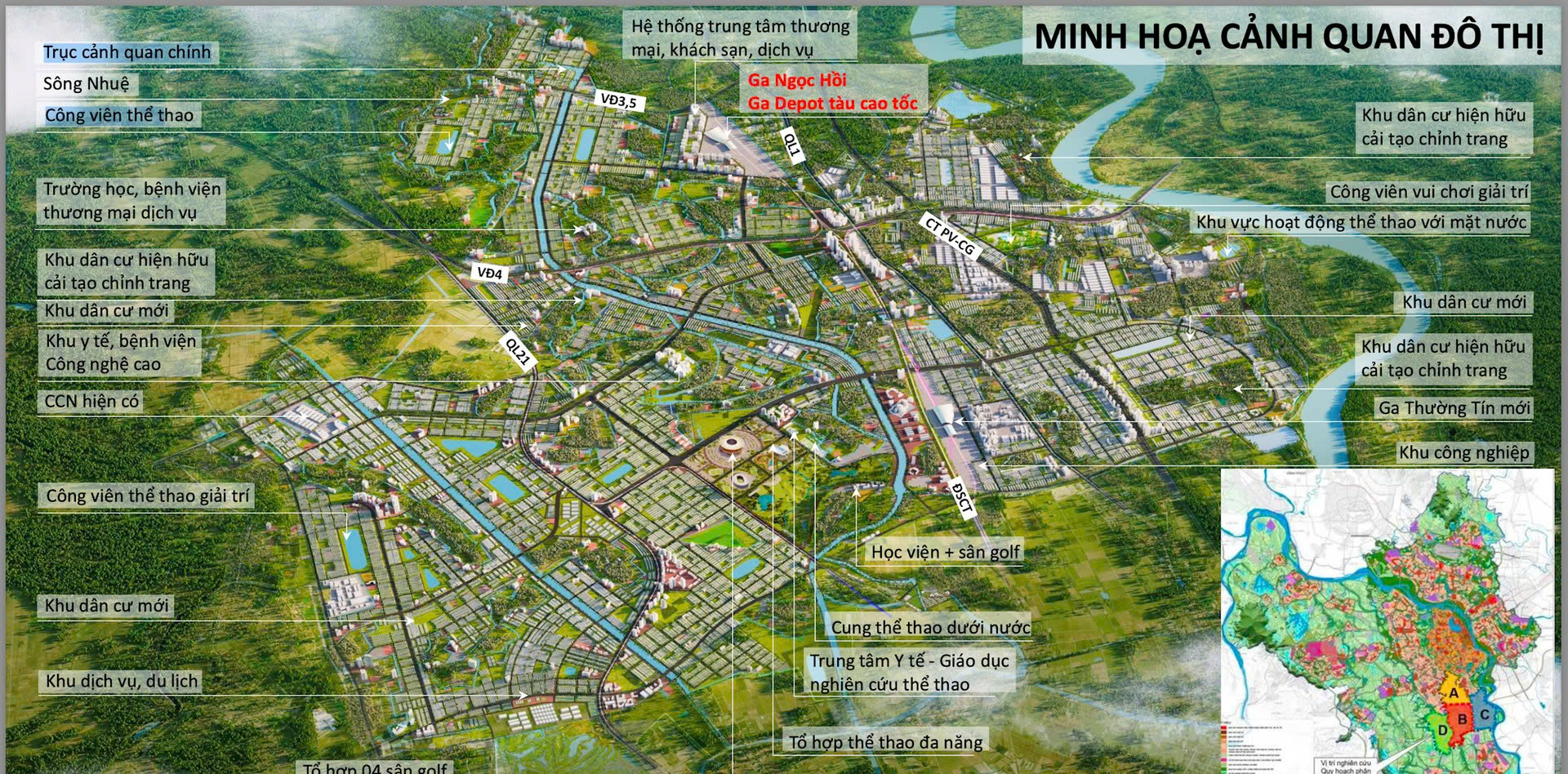
According to the general plan, Dai Thanh commune belongs to sub-zone A with an area of about 3,280 ha, and a projected population of about 310,000 people. This sub-zone is oriented to develop new urban areas associated with the TOD model (compressed urban area), and at the same time plays the role of a traffic hub connecting and supplementing the Sports Complex with an international-class stadium located in sub-zone B.
Sub-zone A is divided into 3 sub-zones with specific functions and development orientations, associated with the main traffic axes and the ring road system.
At the conference, people requested the investor to strictly implement measures to control fine dust and noise throughout the construction and operation process, ensuring that dust does not spread outside the construction site. Construction waste must be collected, shielded and transported in accordance with regulations, and not let it spill and cause environmental pollution.
In particular, many opinions expressed concern about the issue of wastewater and groundwater sources, because currently people in the area mainly use well water.
Delegates proposed that wastewater generated during the construction and operation of the project must be collected and treated to meet standards before discharging; the rainwater and wastewater drainage system must be designed separately, ensuring that it does not cause flooding and does not affect groundwater flow; it is necessary to have a plan to integrate the treatment of domestic wastewater of existing residential areas into the project's wastewater treatment system.
In addition, people also requested the investor to have a plan to protect, renovate and promptly restore the traffic system affected by vehicles transporting construction materials; implement compensation immediately when damage occurs, not waiting until the entire project is completed...
Some opinions related to planning cemeteries and surrounding residential areas in a civilized direction, without flooding, with suitable funeral homes; arranging open gates and connection points between new urban areas and existing residential areas, creating favorable conditions for people's travel and activities; ensuring compensation and site clearance support work is carried out publicly, transparently, and satisfactorily.
At the conference, the Commune People's Committee requested the investor to fully absorb the comments and commitments on environmental protection right from the construction phase; invest in a wastewater and garbage treatment system that meets standards; strictly control dust, noise, and soil waste; ensure traffic safety, not affecting people's daily life and production...
The Olympic Sports Urban Area project was started on December 19, with an area scale of more than 9,000 hectares, an expected population of about 751,000 people, becoming the largest urban development project ever in Hanoi.
The project spans 11 communes with a total investment of about 925,000 billion VND.
The project is expected to be divided into 4 component projects according to the main sub-zones, in which the highlight is the stadium with a capacity of 135,000 seats meeting FIFA standards built in sub-zone B, expected to be completed in 2028.
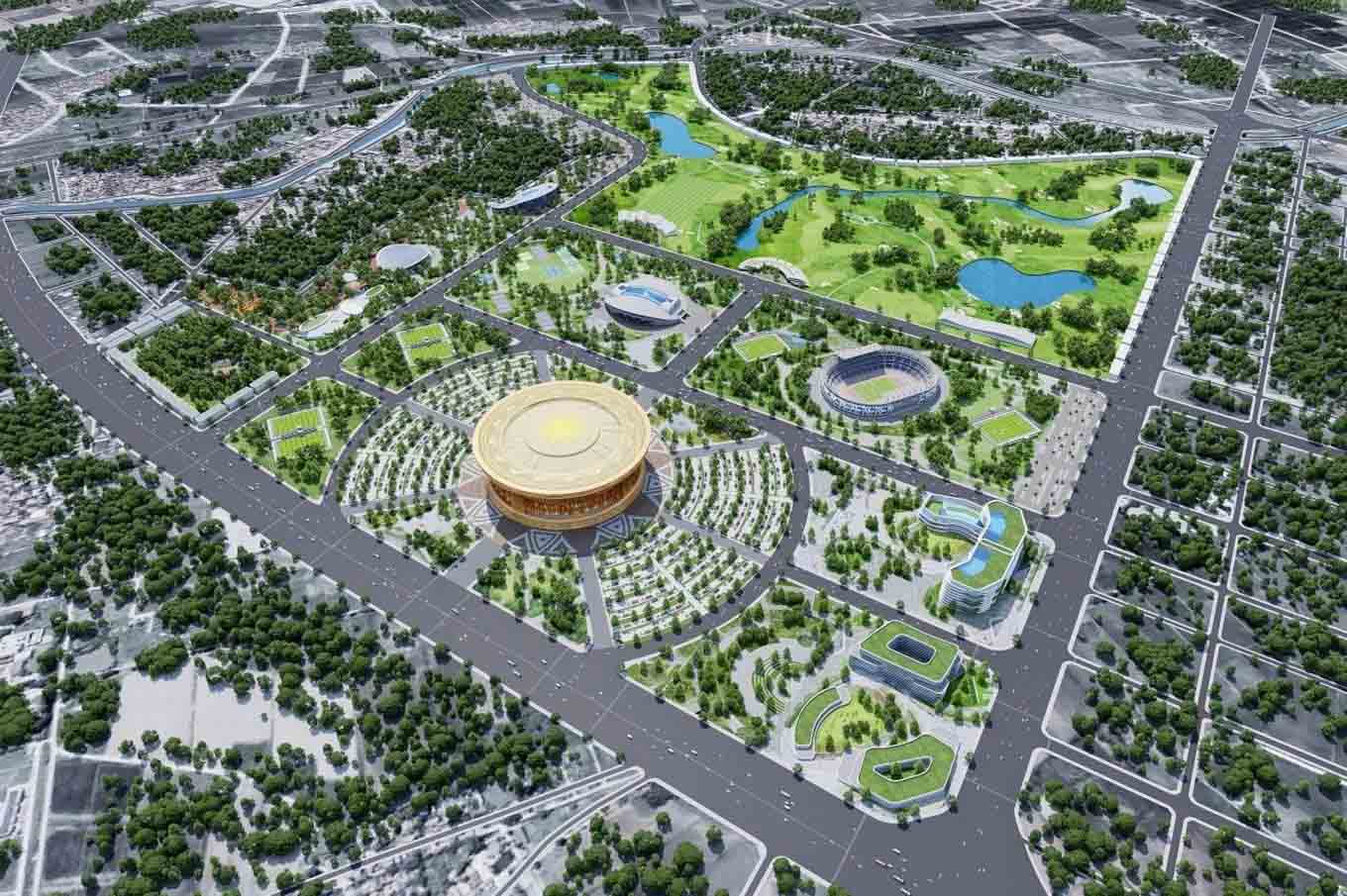
The Olympic sports urban area is built with the aim of allowing the Capital to be eligible to host major continental and international sports events.
The project is also expected to become the nucleus of new urban development, synchronously connecting the social infrastructure system, technical infrastructure of the research area and neighboring projects, ensuring a modern and uniform architectural - landscape space organization.


