
On April 23, Mr. Nguyen Manh Quyen - Chairman of Hung Yen Provincial People's Committee chaired a meeting of the Provincial People's Committee to listen to the Department of Agriculture and Environment report on the situation of arising, collecting, and treating domestic waste; progress of investment projects to build waste treatment areas; waste source zoning plan and solutions for treating residual waste in the province.
According to reports, the total volume of domestic waste generated is about 2,000 tons/day; the volume collected and transported reaches more than 1,909 tons/day, accounting for 95.5%. The amount of waste treated at centralized waste treatment areas is about 570 tons/day, reaching nearly 30%, including Di Su treatment area 48 tons/day, Dai Dong 192 tons/day, Quynh Phu (Thanh Dat Quynh Coi Company) 50 tons/day and Hoa Binh High-Tech Joint Stock Company 160 tons/day.
The remainder is treated scattered at households, small-scale incinerators of 43 communes and landfills, compost pits, and gathering points. The whole province currently has 461 landfills and landfills for accumulated waste with a total volume of about 1.68 million tons.
Waste treatment capacity in concentrated areas does not meet the requirements of treating the entire amount of waste generated daily. Meanwhile, most gathering points, incineration pits, and landfills in communes and villages are overloaded; many small-scale incinerators are degraded and damaged.
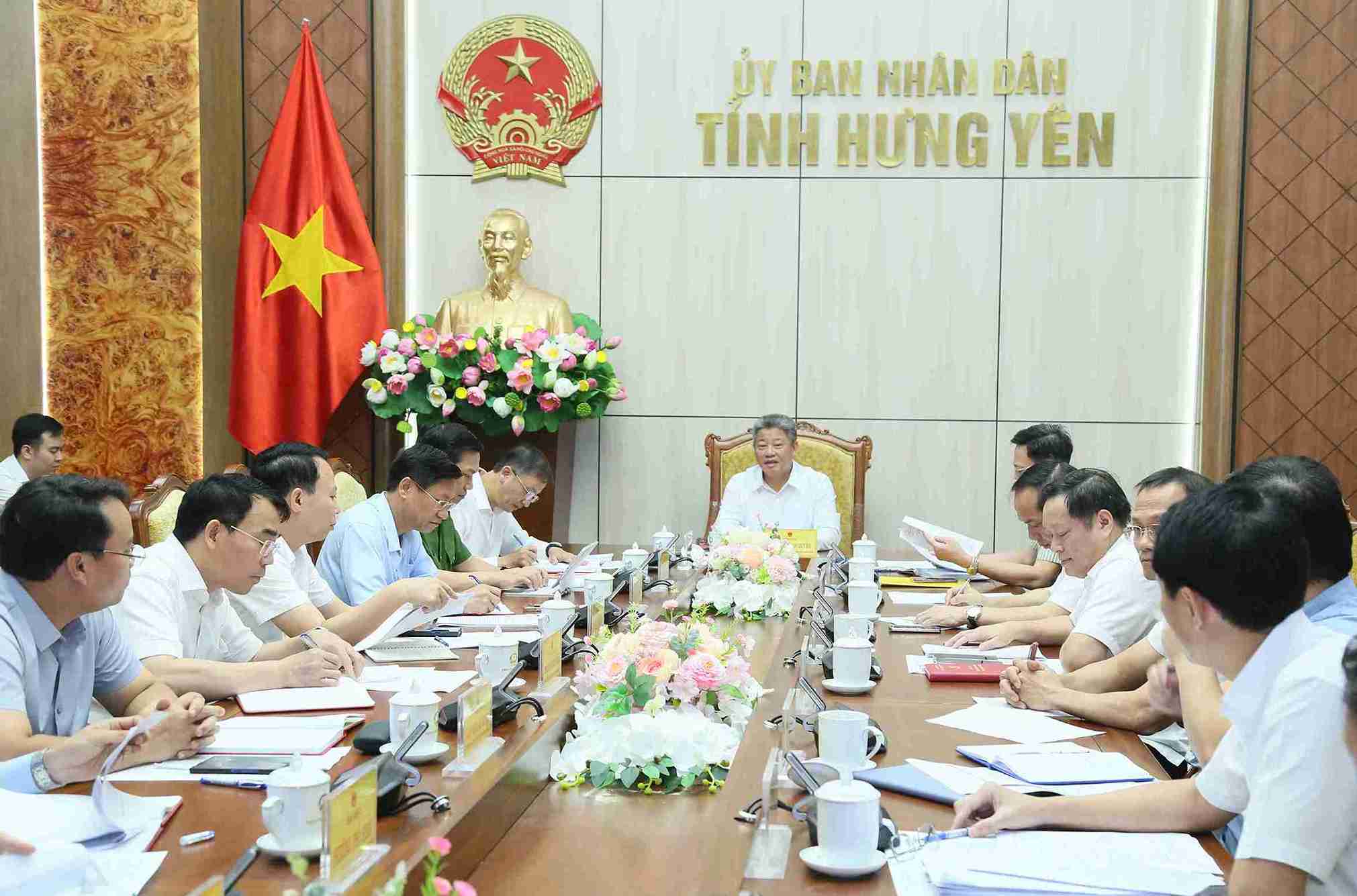
At the meeting, delegates focused on assessing the current situation, clarifying difficulties and obstacles in treatment infrastructure, mechanisms, policies and investment resources; and at the same time proposing options for collecting, transporting, and treating waste; selecting technology, planning locations for treatment areas; zoning waste sources for factories and solutions to treat residual waste.
Concluding the meeting, Chairman of the Provincial People's Committee Nguyen Manh Quyen noted that only 3 - 5 waste treatment plant investment locations should be planned, not spread out and fragmented; reasonably arranged in the North, Central and South areas. On that basis, clearly identify the area and volume of waste generated in each region to appropriately zone investment; urgently build a zoning map for waste treatment projects, integrated into the general planning of the province.
The Chairman of the Provincial People's Committee assigned the Department of Finance to review waste treatment projects. For projects that have not yet had investment policy decisions, guide investors to switch to other fields; projects that have had policies but are being implemented slowly or on a small scale, mobilize adjustments and appropriate direction changes.
For projects to be implemented in the coming time, the province orients towards building modern waste treatment complexes, applying waste burning technology for electricity generation, with sufficient scale, ensuring integrated treatment of many types of waste.
The Department of Agriculture and Environment is assigned to preside over and coordinate in completing the investment plan, reporting to the Provincial People's Committee in May 2026, striving to completely treat all residual waste by the end of 2027.


