From the "forest of the State" mentality
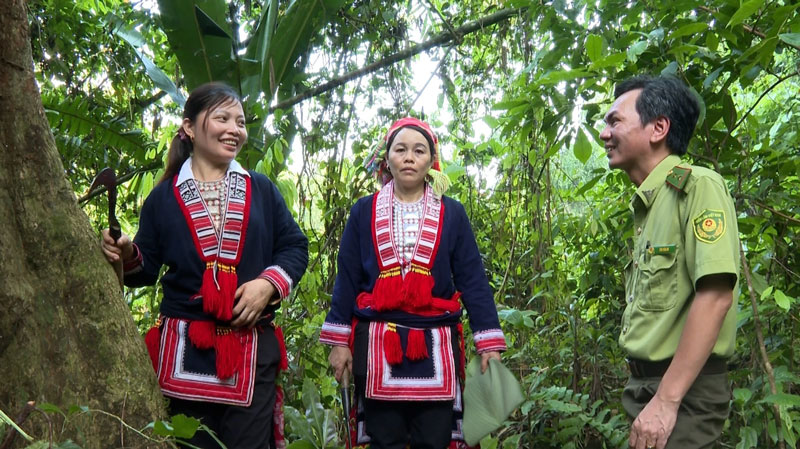
At 5 am, the mist still covered the mountainsides in Lam Thuong commune, Lao Cai province. Ms. Hoang Thi Chuyen - Head of the Nam Chan village forest protection team brought "tools" and members of the forest protection team along the small road leading into the forest.
The sound of grass cutters hitting reeds, the sound of wind blowers mixed with the rustling of footsteps in the dry leaf carpet shattered the silence of the mountains and forests in the early morning.
“We take turns patrolling every day. In the sunny season, we check forest fire risks, in the rainy season, we worry about landslides and strangers entering the forest to exploit timber,” Ms. Chuyen said.

Few people think that, many years ago, the villages here once had the thought: forests belong to the State, and protecting forests is the responsibility of forest rangers.
At that time, many households still maintained the habit of burning fields to make fields, taking firewood or exploiting forest products according to old habits. Every dry season comes, the risk of forest fires is always present.
Small fires and damaged forest areas once caused forest rangers many hardships. But then people's awareness gradually changed when they were propagated and participated in forest protection teams.
Now anyone who sees strangers entering the forest or shows signs of cutting down trees will report immediately. People understand that keeping the forest is also keeping water sources and keeping production land for their children and grandchildren," the female team leader shared.
Not only in Lam Thuong, in many highland localities, people are gradually becoming important "ears and eyes" in forest management and protection.
According to statistics from the forest protection sector, Lao Cai province currently maintains more than 2,300 forest protection and fire prevention and fighting teams with over 23,000 members.
This is considered the "extended arm" of forest rangers in high mountainous areas and dangerous terrain.
Going to protect the forest is to protect livelihoods
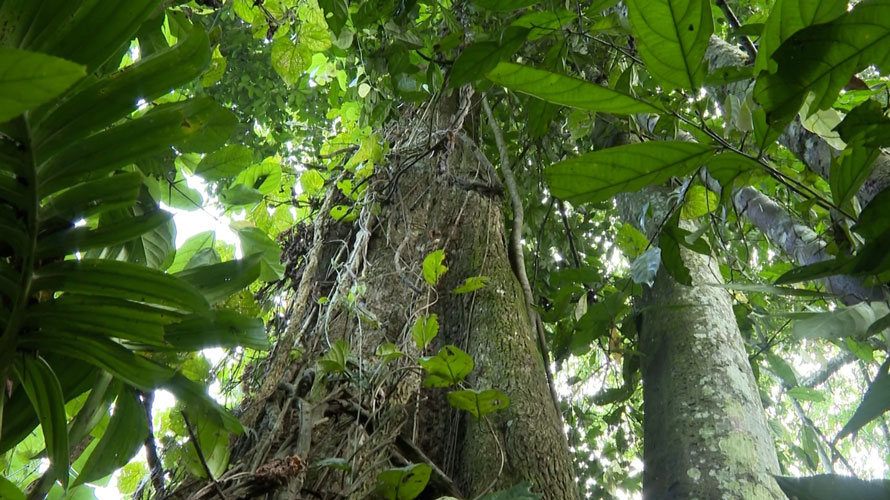
In Luc Yen - where there are more than 102,000 hectares of forest, community patrol teams still regularly cross the forest every day to inspect the scene, detect early risks of forest fires or illegal logging.
Mr. Ha Tien Cong - Head of Luc Yen Regional Forest Protection Department said that if only relying on specialized forces, it will be very difficult to effectively manage a large forest area.
The most encouraging thing is that community awareness has changed. People no longer stand outside but directly participate in forest protection. They are the ones who detect the risk of forest encroachment fastest," Mr. Cong said.
Not only changing perceptions, many highland localities are also gradually turning forests into sustainable livelihoods for people.
In Lim Thai village, Tu Le commune, that change is clearly shown in the way people manage and protect forests. The whole village currently has 219 households assigned to manage and protect 895 hectares of community forest.
For many years, there has been no situation of illegal logging or firewood removal in this area, even though the forest area is located near traffic routes and residential areas.
Not only preserving the forest, people also have a stable source of income from the forest environmental service payment policy. Each year, the forest area managed by the village brings in more than 525 million VND, contributing to improving life and creating motivation for people to be more attached to forest protection work.

According to the leader of the Lao Cai Provincial Department of Agriculture and Environment, to maintain sustainable forests, people must truly become the subjects protecting forests.
Reality shows that wherever the community participates actively, the forest is better protected. People living near the forest are the fastest force to detect and prevent risks of forest fires or illegal exploitation," the representative shared.