And Tan An did not disappoint the trust of the Party Committee. At 3:00 p.m. on August 21, 1945, the red flag with a Hammer and Swallow Star flew over the sky of Tan An town, opening the Uprising across the South. 80 years after the August Revolution, Tay Ninh is developing worthy of its heroic tradition.
Starting in the hometown of the Party Secretary
A day after the failed failed uprising to gain power in Hanoi, the Nam Ky Party Committee, headed by Mr. Tran Van Giau, held an expanded conference in Cho Dem (Tan Tuc commune, Cho Lon province, now under Ho Chi Minh City). The conference decided to choose Tan An Uprising as a pilot, because there is a very strong mass base here. Tan An is also the hometown of the Party Secretary - Mr. Tran Van Giau. If Tan An Uprising wins, the remaining provinces of the South will simultaneously rise up.
The decision to rise up from Cho Dem was passed on to Tan An on the night of August 20 and early morning of August 21, 1945 and the uprising broke out that morning. At noon on August 21, 1945, the uprising forces occupied the guard station in Tan An province, stripped the soldiers' equipment, and seized the treasure trove and weapons depot. By 3:00 p.m. the same day, the entire province had fallen into the hands of the insurgents. The head of Tan An province was arrested by the revolution.
The successful uprising in Tan An sent a signal for the uprising in Saigon - Cho Lon and the entire South. In the 1960s, Tan An province merged with part of Cho Lon province to form Long An province. Recently, Long An and Tay Ninh provinces have merged to become Tay Ninh provinces.
80 years later
Since the Vung Go River crossing was chosen as the headquarters of Tan An district (a province separated from Gia Dinh province) in 1869, for more than a hundred years, this province on the banks of the Vam Co Tay river has been almost forgotten and heavily devastated by war. It only lit up from the renovation process, especially since Long An joined the Southern Key Economic Zone, and Tan An became a city.
These days, when coming to Long An ward, Tay Ninh province (formerly the center of Tan An city), seeing this urban area leaning towards the development of the new Tay Ninh province. Hung Vuong Avenue is built spaciously, extending to the two ends, becoming the backbone of Long An urban area. The embankments of Bao Dinh and Vam Co Tay rivers are dozens of kilometers long, making this urban area truly charming and luxurious. The Monument Park "Long An Trung Dung Kien Cuong" is very worthy of the tradition of fighting to preserve the country of this land right at the gateway to Ho Chi Minh City and the West.
The new administrative center of the province along with the adjacent high-end urban area is being implemented on an area of hundreds of hectares, creating a highlight to bring Tay Ninh into the stage of industrialization - modernization. Loi Binh Nhon Urban - Industrial Park, Khanh Hau Industrial Cluster... have created more vitality for the city. Long An University of Industry and Economics with thousands of students helps this young city become more "professional"!
Tan An (now Long An ward, Tay Ninh province) was honored to mark the beginning of the uprising to gain power in the whole South during the August Revolution, but now it is not easy to find the traces of the uprising here.
The "banh chung" where the people held a rally to celebrate the Independence Day has now been replaced with construction works. The ancient-style majestic gate (now the headquarters of the Tay Ninh Provincial People's Committee) has also been "neutrally enriched" by upgrading from the inside out (including the fence), no different from an architectural work of the 21st century. The Tan An iron bridge, where the uprising arrested the Tan An provincial chief, famously built by Effel himself at the end of the 19th century, was also dismantled to build an eternal concrete bridge at that location.
The train station - the reading room every day has been dismantled to build a Post and Telecommunications Center. The Duc Bridge, the earliest and only bridge connecting the two banks of the Bao Dinh River at that time, where the rebels crossed and occupied the Japanese-French headquarters, was also replaced by a new, higher and wider bridge. The responsible people designed the new bridge very similar to the old bridge, including the kerosene lampposts from a hundred years ago.
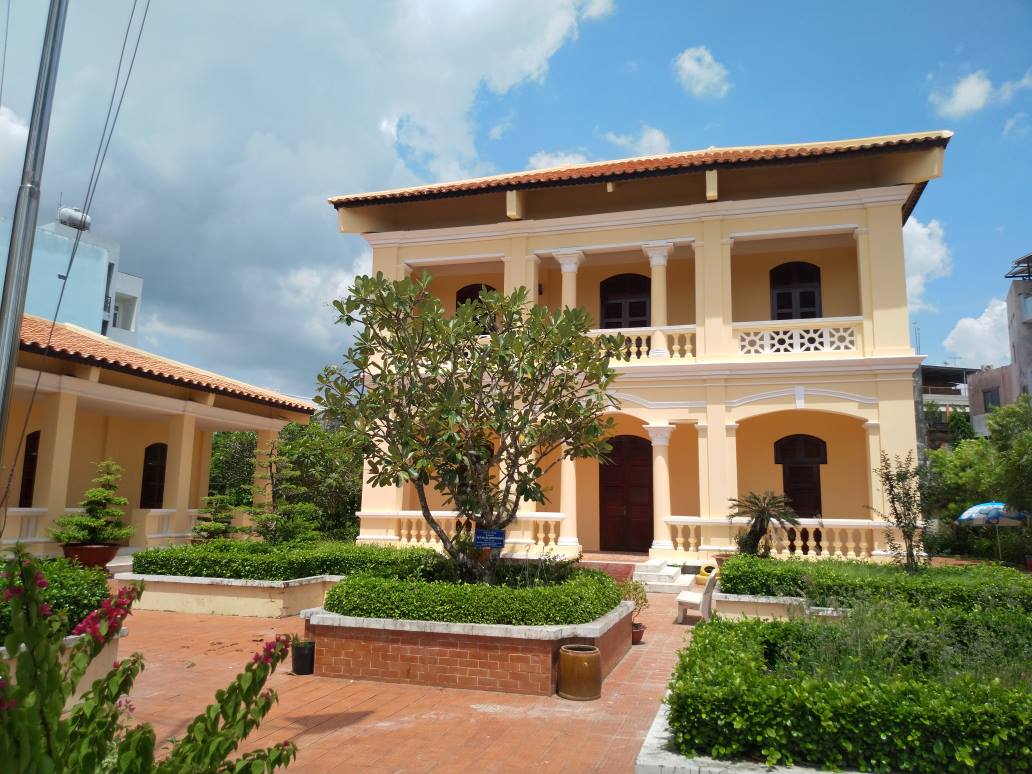
In the same situation was the General Hospital, where the resistance forces were headquartered in the early days of taking power. Because this house over a hundred years old was devastated and is still a ruined thing, it was demolished more than 10 years ago to rebuild according to the original, becoming a historical relic that attracts many visitors, especially on the occasion of the successful August Revolution - National Day September 2.