On the morning of May 13, Mr. Tran Quynh Thao - Chairman of Dan Hai Commune People's Committee - said that Ha Tinh Provincial People's Committee has just approved the investment policy for the project to restore and upgrade the Hoi Thong sea dike line, 5km long, with a total estimated investment of 550 billion VND.
According to the plan, the project is expected to be implemented in the period 2026 - 2028.
The restoration and upgrading of the Hoi Thong dyke section passing through Dan Hai commune will follow the current dyke line, divided into 3 sections based on terrain and landslide level to have appropriate handling solutions.
The top of the dyke is built with a reinforced concrete wave shield on the sea side, inside is a 9m wide dyke surface, made of asphalt concrete combined with rescue and relief traffic roads and serving people's livelihoods, tourism and service development.
The dyke body is embanked and expanded towards the sea. The dyke roof on the sea side is reinforced firmly with precast concrete components on a reinforced concrete frame system; the dyke roof inside is basically kept unchanged, only reinforced and repaired in damaged areas.
The foot of the dyke is protected by stone slabs, combined with prestressed concrete piles and piles in key coastal sections or concrete pipes in sections with large alluvial grounds.
Leaders of Dan Hai Commune People's Committee said that the investment in restoring and upgrading the Hoi Thong sea dike helps prevent waves and sea level rise due to storms, protecting the safety of about 1,700 households in the dike.
The project is expected to create more room to attract investment, develop tourism, services and coastal industries, contributing to promoting local socio-economic development.
Previously, Lao Dong Newspaper reflected on the landslide situation of the Hoi Thong sea dike section passing through Dan Hai commune, causing anxiety for hundreds of households living inside the dike.
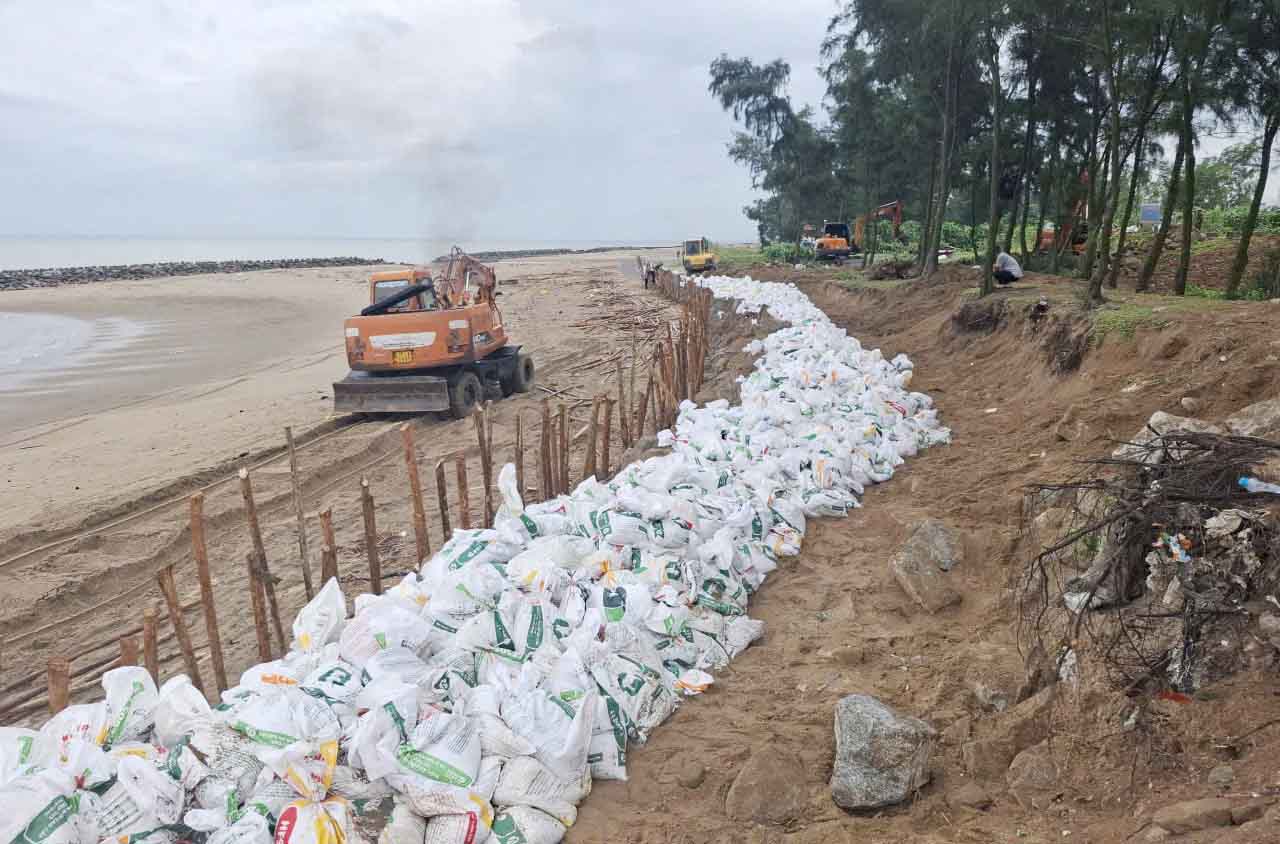
During the rainstorm at the end of 2025, the government mobilized hundreds of people including armed forces and local people to drive piles, stone cages, and build sandbags to temporarily reinforce the Hoi Thong dyke to protect the dyke from large sea waves.