
The gap in growth is still very large
In the first six months of 2026, Thanh Hoa's GRDP grew by 7.21%. In which, the industry - construction sector increased by 9.67%; services increased by 6.46%; agriculture, forestry and fishery increased by 3.13%. This increase is significantly lower than the provincial scenario set out and creates a large gap with the GRDP growth target for the whole year from 11% or more.
According to calculations by the statistics sector, to achieve a growth rate of 11% for the whole year, Thanh Hoa's GRDP in the last 6 months of the year must increase by 14.44%. In which, industry - construction must increase by 19.82%; industry alone increased by 22.18%; construction increased by 13.63%; services increased by over 11% and product tax increased by 17.5%.
This is a significant increase when the scale of Thanh Hoa's economy is currently about 330,000 billion VND. According to Mr. Thai Ba Minh - Head of Statistics of Thanh Hoa province - assessed that the larger the economic scale, the higher the added value to be created each year, requiring the formation of new growth drivers to be strong enough.
Plan No. 255/KH-UBND dated July 20, 2026 on implementing the economic growth scenario for the last 6 months of the year clearly quantified this gap. Accordingly, the added value of the economy in the second half of the year must reach at least 164,841 billion VND, 20,798 billion VND higher than the same period. Industry alone must create an additional 10,304 billion VND; construction 2,411 billion VND; services 5,754 billion VND.
Pressure is also reflected in a noteworthy paradox: Growth has not reached the scenario but budget revenue has set a very high level.
In the first six months of the year, state budget revenue in the province reached 34,202 billion VND, equal to 66.2% of the year's estimate and up 15.7% compared to the same period. However, this result has a very large contribution from specific revenues, while the part creating added value for the economy has not increased correspondingly.
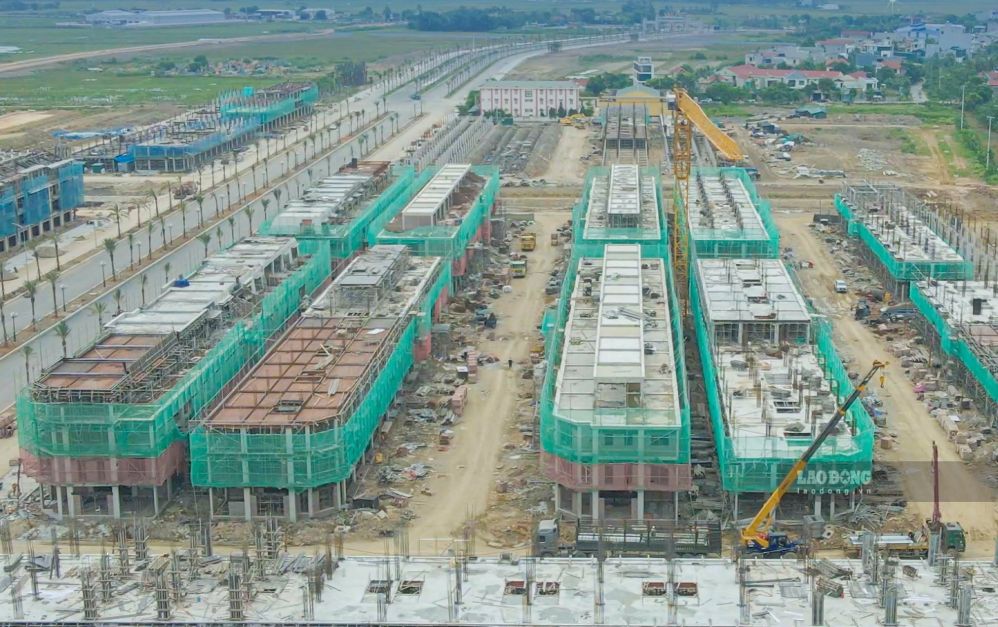
Notably, the product tax area only increased by 2.19%, lower than the scenario of 6.09%. Part of the reason is that more than 4,000 billion VND of land use fees of the Nguyet Vien Ward New Urban Area project helped the budget increase sharply, but revenue from land use right transfer was not directly included in the GRDP.
This shows that high budget revenue does not necessarily mean that the production capacity and added value of the economy have increased correspondingly.
Pressure poured on public investment
One of the tools expected to create momentum for growth is public investment. However, the rate of bringing this capital into the economy is slower than required.
At the milestone of June 30, 2026, Thanh Hoa has a planned public investment capital of more than 18,412 billion VND; disbursed value reached 6,066.7 billion VND, equivalent to 32.95% of the plan, while Plan No. 36/KH-UBND sets a target of disbursing about 50% by the end of June.
By July 24, after the capital plan was updated, the disbursed value reached 6,298 billion VND, equal to 33.42% of the plan. Thus, in nearly a month, the disbursement rate only increased insignificantly compared to the volume of capital to be implemented in the remaining months.
In particular, the group of investors holding large capital has low progress. The fifth largest investor was assigned nearly 8,000 billion VND, accounting for more than 43% of the total capital plan, but at the end of June, only about 22.5% was disbursed. On average, 9 key public investment projects of the province only disbursed 17.84%.
It is worth noting that public investment not only directly affects construction activities. Roads, industrial park infrastructure, seaports, water supply and drainage systems or connecting works when completed also open up new production space, reduce logistics costs and stimulate private investment.
Therefore, if capital is slowed down in site clearance, procedures or construction, the spillover effect to other areas of the economy will also be slowed down.
According to Plan 255, in the last 6 months of the year, the construction industry must increase by 13.63%. Disbursing 100% of public investment capital is identified as one of the important tasks to achieve this goal.
Meanwhile, Thanh Hoa still has to put about 30 production and business projects with a total capital of nearly 40,000 billion VND into operation; supplement about 13.5 million cubic meters of construction materials for the market; promote 19 key industrial products and maintain stable large production facilities.
The workload is therefore not only large in terms of numbers but also depends on whether the projects actually create products, revenue and added value in the last months of the year or not.
The 11% growth target is therefore still grounded for striving, but the gap between the plan and reality shows that the time gap is increasingly narrowing.
If public investment disbursement continues to be slow, new production projects do not operate on schedule, or large industrial locomotives reduce capacity, the pressure to compensate for the growth deficit will be concentrated more strongly in the fourth quarter.
The issue is not only how to complete the 2026 target, but also what motivation Thanh Hoa will rely on to maintain double-digit growth in the following years.


