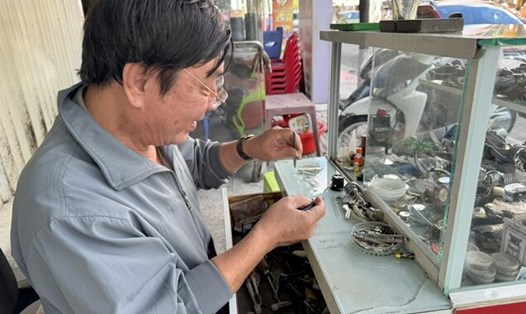
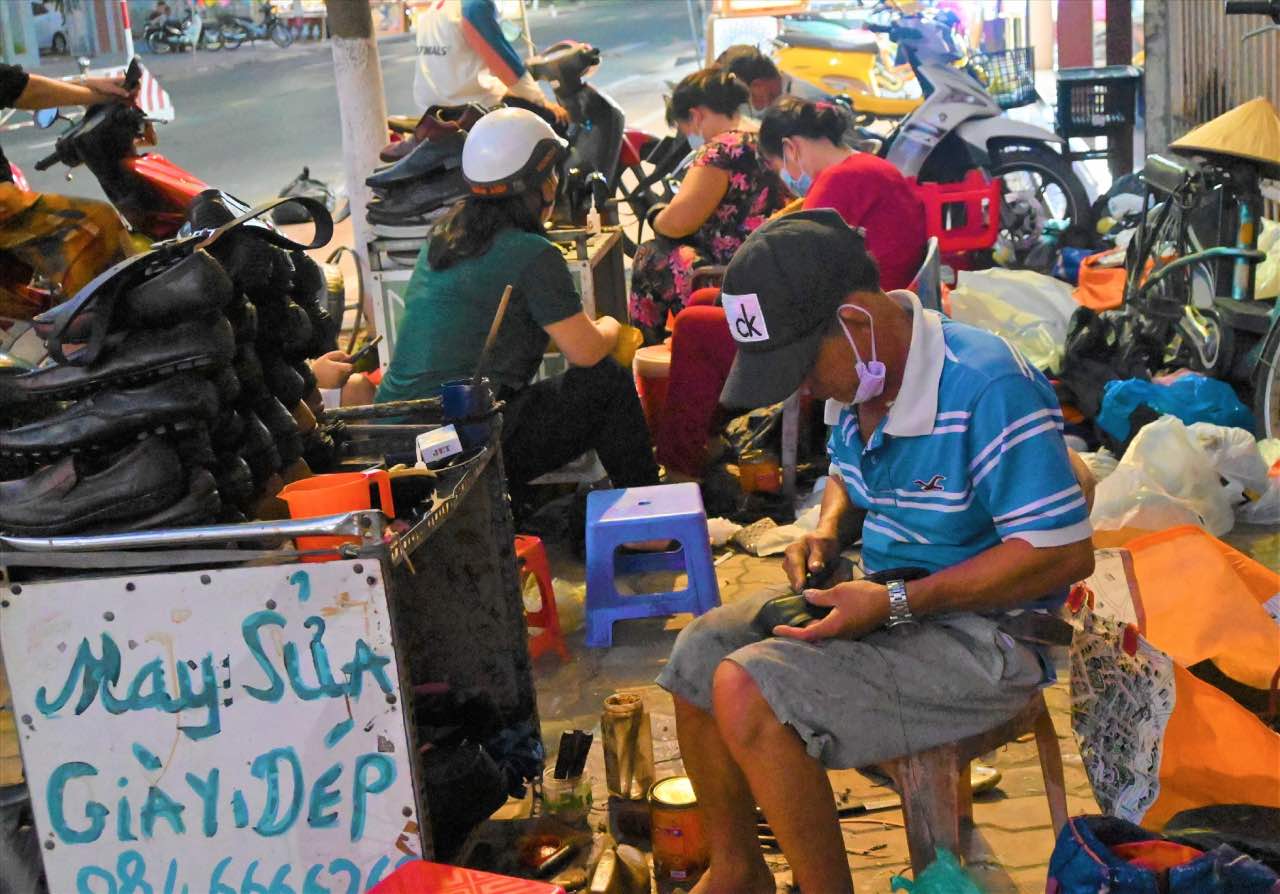
Sitting next to the shoe repair counter located right on the sidewalk in My Tho ward (Dong Thap province), Mr. Tran Hoang Hai was changing shoe soles for customers while taking the opportunity to chat. His hands are calloused, stained with glue and skin dust, but his operations are still quick and accurate to the tip of the needle.
“Normally, I repair about a few dozen pairs a day, the income is enough to cover living expenses. But from the time closer to Tet Nguyen Dan, the number of customers is 2-3 times higher. Some days I work from early morning until late at night, near Tet I almost can't breathe,” Mr. Hai shared.
According to Mr. Hai, customers carry shoes to repair on this occasion are of all ages. Young people repair Western shoes and high heels to go to work, attend year-end parties; students also take the opportunity to mend old shoes to save costs. "Everyone wants Tet to be decent, shoes to wear on the street must be decent. Buying new ones is expensive, but repairing them is both fast and cheap," Mr. Hai said.
Not only is there a lot of customers, but the price of shoe repair services near Tet is also slightly higher than usual days. Specifically, shoe sole replacement ranges from 50,000–120,000 VND/pair; glue, shoelace patching from 20,000–40,000 VND/time; cementing, surface renewal from 30,000–40,000 VND. For high-end leather shoes, branded shoes, the repair price may be higher, depending on the degree of damage.
Mr. Viet (55 years old, shoe repairman on Le Dai Hanh street, My Tho ward, Dong Thap province) said that every day he repairs about 30-50 pairs of shoes, with revenue reaching from 1–1.5 million VND. After deducting material costs, he still makes a profit of about 600,000–1 million VND. Especially on peak days near Tet, some days the income is nearly 2 million VND.
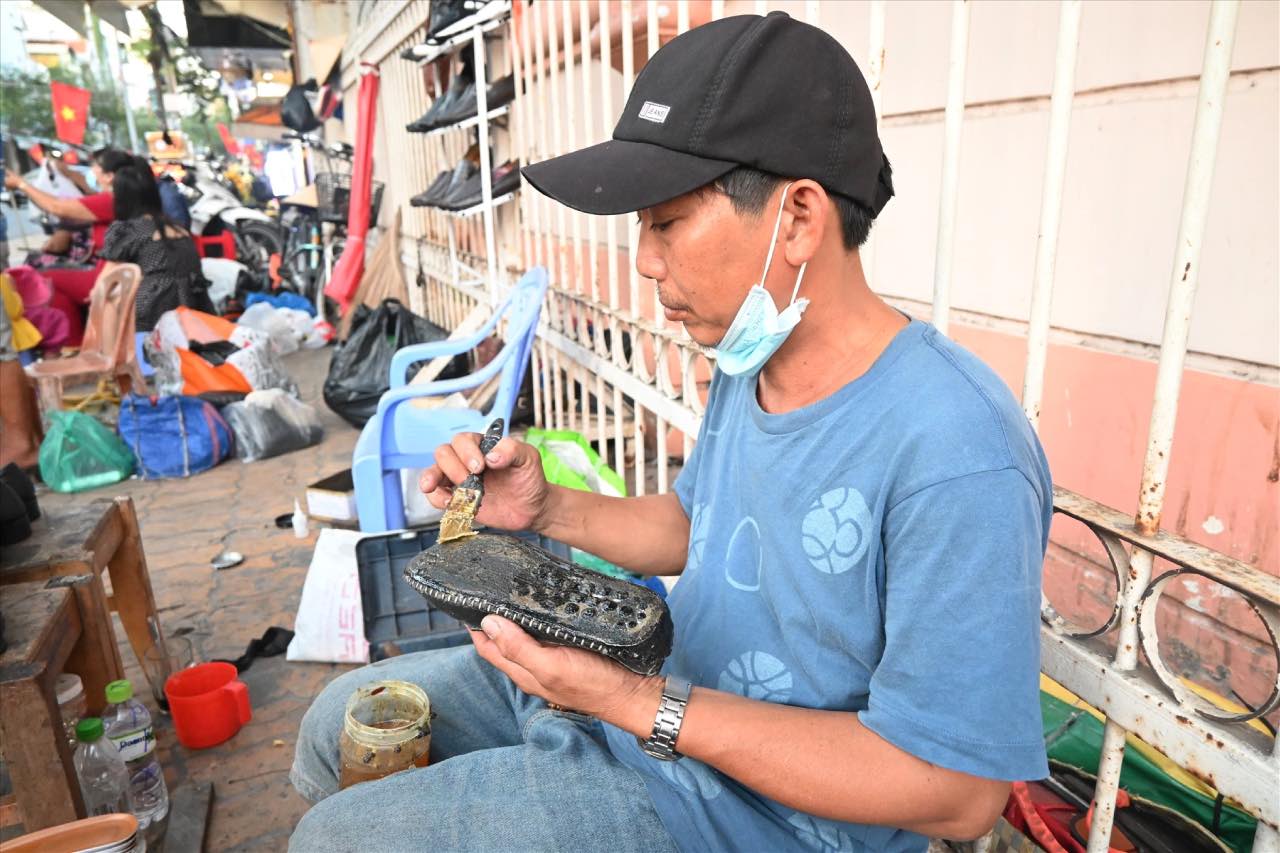
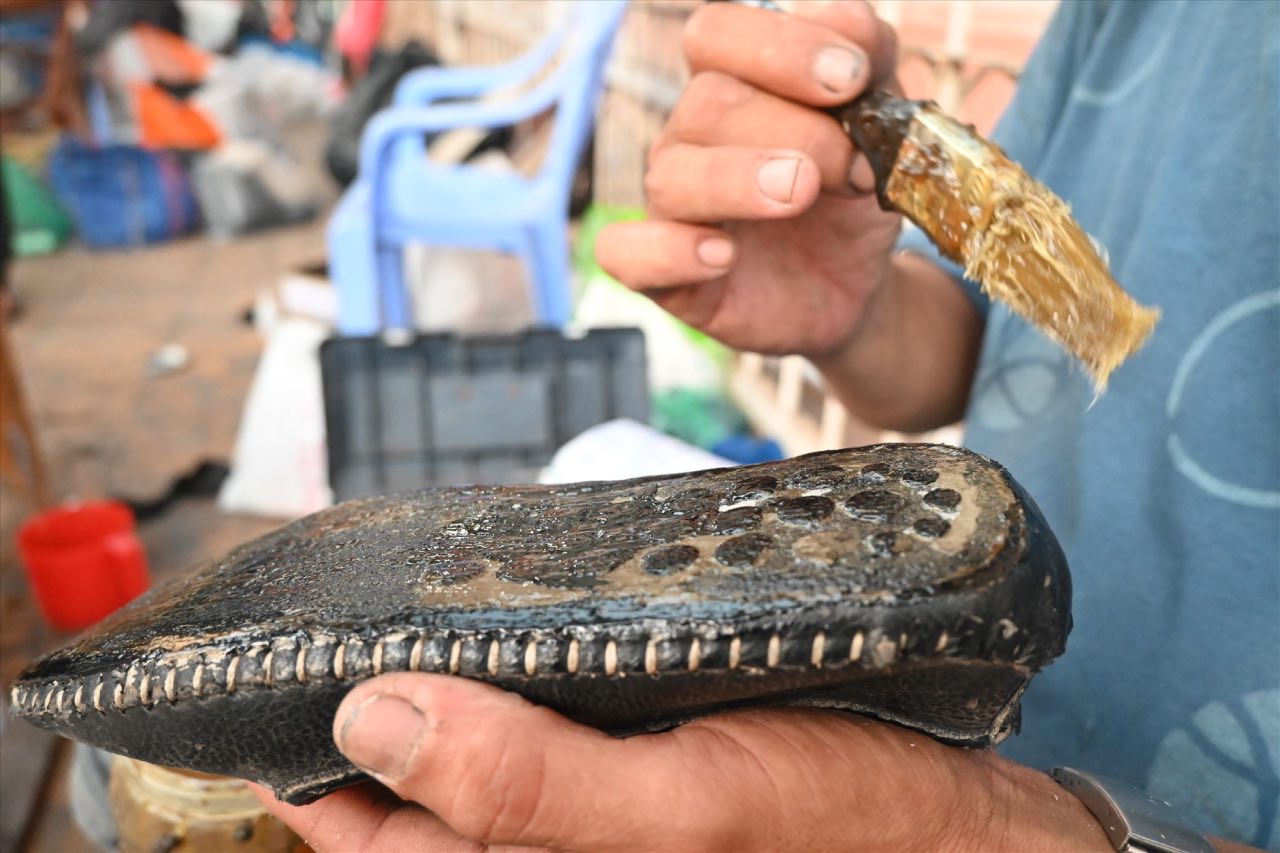
Not far from there, Ms. Nguyen Thi Phuong Mai - who has been attached to the shoe repair profession for more than 10 years - is also no less busy. Her shoe repair stall is packed with stacked shoes, customers coming in and out continuously.
“Normally women wear shoes to repair more often, but near Tet, there are all kinds of men and women. Some people bring 3-4 pairs of shoes from the house to repair once for convenience. If I can't handle it, I have to ask my husband to help,” Ms. Mai said.
Outwardly, the shoe repair job seems simple, just needing a compact set of tools and a little skill. However, according to people in the profession, to stand firm and live with this job is not easy at all.
You must have experience, know how to distinguish each type of leather and rubber material, as well as choose suitable glue. Gluing the wrong glue will damage the customer's shoes," Mr. Hai said.
Mr. Tran Hoang Hai added that high income mainly focuses on the days leading up to Tet, and in the peak months of the year, the shoe repair profession faces many difficulties. "Rainy or economically difficult, customers are significantly sparse. Many young people now also tend to buy new shoes instead of repairing them," Mr. Hai said.
According to Mr. Hai, to retain customers, shoe repairmen must constantly learn and improve their skills, accepting to repair even "difficult" shoes, imported shoes, and high-end leather shoes. Some repairmen also invest in machinery, polishing tools, deodorizing, and renewing shoes to diversify services.
Shoe repairing not only helps my family make a living but also contributes to reducing waste and protecting the environment by extending the life cycle of products. Repairing one pair of shoes reduces one pair of discarded shoes. This job is small but useful," Mr. Hai confided.